‘A Mistake That Shattered a Family’: Fury Erupts as Israeli Troops Kill 7-Month-Old Palestinian Baby in West Bank Shooting
- A seven-month-old Palestinian baby, Sam Fahd Abu Haikal, was killed and his parents wounded in a shooting by Israeli troops in the occupied West Bank.
- The baby’s father, Fahd Abu Haikal, refuses to believe the shooting was an accident, saying “He was the entire world” as he mourns the loss of his child.
- The incident has sparked outrage and raised questions about the Israeli military’s use of force in the occupied territories, with many calling for accountability and an end to the cycle of violence.
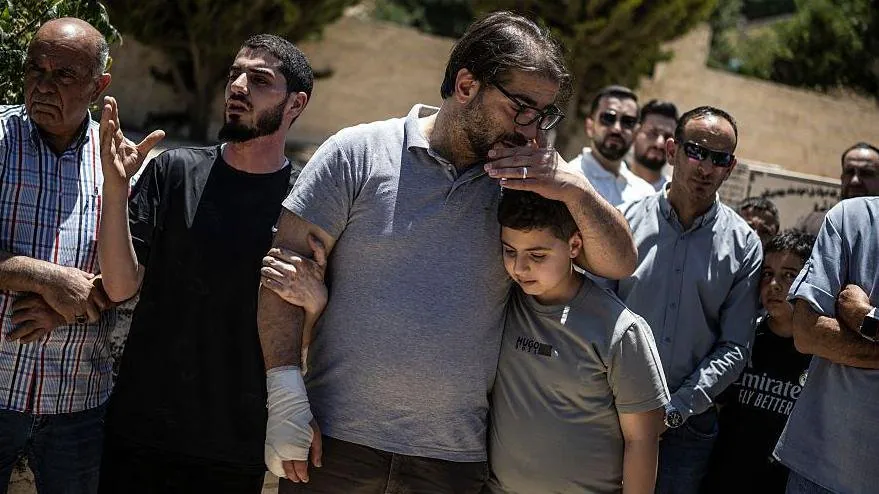
The funeral of Sam Fahd Abu Haikal, the seven-month-old Palestinian baby killed in a shooting by Israeli troops, was a heart-wrenching scene of grief and outrage.
Wrapped in a white shroud and a Palestinian flag, the tiny body was laid to rest in Hebron on Saturday, as mourners prayed and demanded justice for the senseless killing.
The baby’s father, Fahd Abu Haikal, was overcome with emotion as he carried his son’s body, his eyes filled with tears and his voice shaking with anger.
According to the Palestinian health ministry, the baby was killed when Israeli troops shot at a car in the occupied West Bank, hitting the infant in the face.
The baby’s parents, Fahd and his wife, were also wounded in the shooting, with the mother in critical condition due to shrapnel close to her heart.

The Israeli military claimed that soldiers shot at the vehicle after it was perceived to be accelerating towards them near Hebron, but an initial inquiry found that the three Palestinians wounded were uninvolved civilians.
The incident has sparked widespread outrage and condemnation, with many questioning the Israeli military’s use of force in the occupied territories.
The baby’s father, Fahd Abu Haikal, was adamant that the shooting was not an accident, saying “At the end, they tell you it was a mistake.” He demanded justice for his son’s killing, saying “He was the entire world” as he mourned the loss of his child.
The incident is just the latest in a long series of violent clashes between Israeli troops and Palestinians in the occupied West Bank. Since the war in Gaza began in October 2023, Israeli military activity and settler violence against Palestinians have surged in the territory.
The United Nations has reported that more than 1,000 Palestinians, including at least 240 children, have been killed in the West Bank and east Jerusalem since the war began.
The Israeli military’s actions have been widely criticized, with many accusing them of using excessive force and disregarding the human rights of Palestinians.
Israeli rights group Yesh Din has reported that soldiers accused of harming Palestinians are seldom penalized, and were indicted in fewer than 1 per cent of cases based on 2,427 complaints alleging wrongdoing between 2016 and 2024.
Analysis: What This Means for AustraliaThe killing of Sam Fahd Abu Haikal has significant implications for Australia’s relationship with Israel and its stance on the Israeli-Palestinian conflict.
As a key player in the international community, Australia has a responsibility to promote peace and stability in the region. However, the country’s support for Israel has been criticized by many, who argue that it enables the Israeli government’s aggressive actions in the occupied territories.
Security analysts say that the situation in the West Bank is a powder keg, with the potential for further violence and instability.
The killing of the seven-month-old baby has only added fuel to the fire, with many Palestinians calling for revenge and retaliation against Israeli forces.
Law enforcement insiders warn that the situation could escalate, with the potential for further bloodshed and chaos. The incident also has significant implications for Australia’s own national security.
The country has a large and diverse Muslim population, and the killing of the Palestinian baby has been widely condemned by Muslim leaders and communities. There are concerns that the incident could inflame tensions and create divisions within Australian society, potentially leading to further radicalization and extremism.
Industry observers believe that the incident highlights the need for a more nuanced and balanced approach to the Israeli-Palestinian conflict. Rather than simply supporting one side or the other, Australia should be working to promote peace and stability in the region, through diplomacy and dialogue.
This could involve supporting initiatives that bring Israelis and Palestinians together, and promoting economic development and cooperation in the occupied territories. Ultimately, the killing of Sam Fahd Abu Haikal is a tragic reminder of the human cost of the Israeli-Palestinian conflict.
As the international community, we must do more to promote peace and stability in the region, and to protect the human rights of all people, regardless of their nationality or ethnicity.
The funeral of Sam Fahd Abu Haikal, the seven-month-old Palestinian baby killed in a shooting by Israeli troops, was a heart-wrenching scene of grief and outrage. Wrapped in a white shroud and a Palestinian flag, the tiny body was laid to rest in Hebron on Saturday, as mourners prayed and demanded justice for the senseless killing. The baby’s father, Fahd Abu Haikal, was overcome with emotion as he carried his son’s body, his eyes filled with tears and his voice shaking with anger.
According to the Palestinian health ministry, the baby was killed when Israeli troops shot at a car in the occupied West Bank, hitting the infant in the face. The baby’s parents, Fahd and his wife, were also wounded in the shooting, with the mother in critical condition due to shrapnel close to her heart. The Israeli military claimed that soldiers shot at the vehicle after it was perceived to be accelerating towards them near Hebron, but an initial inquiry found that the three Palestinians wounded were uninvolved civilians.
The incident has sparked widespread outrage and condemnation, with many questioning the Israeli military’s use of force in the occupied territories. The baby’s father, Fahd Abu Haikal, was adamant that the shooting was not an accident, saying “At the end, they tell you it was a mistake.” He demanded justice for his son’s killing, saying “He was the entire world” as he mourned the loss of his child.
The incident is just the latest in a long series of violent clashes between Israeli troops and Palestinians in the occupied West Bank. Since the war in Gaza began in October 2023, Israeli military activity and settler violence against Palestinians have surged in the territory. The United Nations has reported that more than 1,000 Palestinians, including at least 240 children, have been killed in the West Bank and east Jerusalem since the war began.
The Israeli military’s actions have been widely criticized, with many accusing them of using excessive force and disregarding the human rights of Palestinians. Israeli rights group Yesh Din has reported that soldiers accused of harming Palestinians are seldom penalized, and were indicted in fewer than 1 per cent of cases based on 2,427 complaints alleging wrongdoing between 2016 and 2024.
The killing of Sam Fahd Abu Haikal has significant implications for Australia’s relationship with Israel and its stance on the Israeli-Palestinian conflict. As a key player in the international community, Australia has a responsibility to promote peace and stability in the region. However, the country’s support for Israel has been criticized by many, who argue that it enables the Israeli government’s aggressive actions in the occupied territories.
Security analysts say that the situation in the West Bank is a powder keg, with the potential for further violence and instability. The killing of the seven-month-old baby has only added fuel to the fire, with many Palestinians calling for revenge and retaliation against Israeli forces. Law enforcement insiders warn that the situation could escalate, with the potential for further bloodshed and chaos.
The incident also has significant implications for Australia’s own national security. The country has a large and diverse Muslim population, and the killing of the Palestinian baby has been widely condemned by Muslim leaders and communities. There are concerns that the incident could inflame tensions and create divisions within Australian society, potentially leading to further radicalization and extremism.
Industry observers believe that the incident highlights the need for a more nuanced and balanced approach to the Israeli-Palestinian conflict. Rather than simply supporting one side or the other, Australia should be working to promote peace and stability in the region, through diplomacy and dialogue. This could involve supporting initiatives that bring Israelis and Palestinians together, and promoting economic development and cooperation in the occupied territories.
Ultimately, the killing of Sam Fahd Abu Haikal is a tragic reminder of the human cost of the Israeli-Palestinian conflict. As the international community, we must do more to promote peace and stability in the region, and to protect the human rights of all people, regardless of their nationality or ethnicity.