
One Nation’s Stunning Surge to 31% Exposes Deep-Seated Voter Frustration with Major Parties
- One Nation’s primary vote soars past Labor, with 31% of respondents backing the party in a historic Newspoll result
- Fiery on-air clash erupts between Social Services Minister Tanya Plibersek and One Nation MP Barnaby Joyce over immigration and population growth
- 70% of respondents believe Australian politics is overdue for a shake-up, with many feeling “the people who built this mess aren’t going to fix it”
- Prime Minister Anthony Albanese’s net approval rating plummets to a record low of minus 24, as voters express disillusionment with the government
The latest Newspoll survey has sent shockwaves through the Australian political landscape, with One Nation’s primary vote surging to a staggering 31%. The result has left many in the major parties reeling, as voters increasingly turn their backs on traditional politics.
At the heart of the drama is a fiery on-air clash between Social Services Minister Tanya Plibersek and One Nation MP Barnaby Joyce, who locked horns over immigration and population growth.
The heated exchange on Sunrise came as the poll revealed a seismic shift in voter sentiment, with One Nation now edging past Labor on 30% and well ahead of the Liberals on 18%.
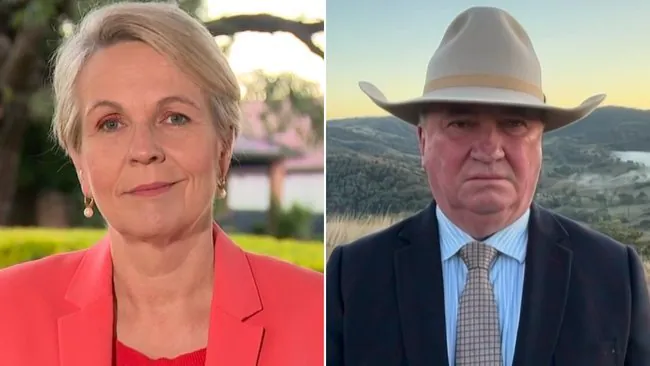
The result has sparked a frenzy of debate, with many questioning what’s driving the surge in support for Pauline Hanson’s party. At the centre of the controversy is the issue of immigration, with Joyce arguing that Australia’s population growth is outpacing housing construction.
“You’ve got to do a stocktake of what Australia can absorb; the Labor Party has been bringing in the population of Canberra each year without the houses being built,” Joyce said, dismissing Plibersek’s claims that migrants are needed to fill critical workforce shortages.
The debate turned personal when Plibersek accused Joyce of not listening to women, prompting a pointed response from the One Nation MP. “You don’t like listening to women much, do you, Barnaby?” Plibersek asked, to which Joyce shot back, “Oh of course…
I’m a sexist.” The exchange capped a combative discussion about the poll, which found 70% of respondents believed Australian politics was overdue for a shake-up.
Respondents said the people who “built this mess aren’t going to fix it”, a sentiment Plibersek argued Labor was already addressing through housing and cost-of-living reforms.
“The housing system has been busted for people trying to buy a home of their own. It’s been great for investors but not great for people who want to buy their first home,” she said.
However, Joyce was quick to hit back, accusing Plibersek of peddling “talking points” and failing to deliver real change. “Thank you for the talking points, Tanya…
next time just email me them,” he said. “The polling is a reflection of the sentiment of the people…
the polling is over Labor.”
Analysis: What This Means for AustraliaSo, what’s driving the surge in support for One Nation, and what does it mean for Australian politics?
According to security analysts, the result is a clear indication of voter disillusionment with the major parties. “Australians are crying out for change, and One Nation is tapping into that sentiment,” one analyst said.
“The major parties need to take a hard look at themselves and ask why they’re not connecting with voters.”
Law enforcement insiders warn that the rise of One Nation could have significant implications for national security.
“If voters are turning to fringe parties, it’s a sign that they’re not feeling safe or secure,” one insider said. “The government needs to take a more nuanced approach to addressing the concerns of everyday Australians.”
Industry observers believe the result is also a reflection of the government’s failure to address key issues like housing affordability and cost of living. “The housing system is broken, and people are feeling the pinch,” one observer said.
“If the government doesn’t start delivering real solutions, voters will continue to look elsewhere.”
As the debate rages on, one thing is clear: the Australian political landscape is shifting, and the major parties need to adapt or risk being left behind.
With One Nation’s surge in support, the question on everyone’s lips is: what’s next for Australian politics?
The latest Newspoll survey has sent shockwaves through the Australian political landscape, with One Nation’s primary vote surging to a staggering 31%. The result has left many in the major parties reeling, as voters increasingly turn their backs on traditional politics. At the heart of the drama is a fiery on-air clash between Social Services Minister Tanya Plibersek and One Nation MP Barnaby Joyce, who locked horns over immigration and population growth.
The heated exchange on Sunrise came as the poll revealed a seismic shift in voter sentiment, with One Nation now edging past Labor on 30% and well ahead of the Liberals on 18%. The result has sparked a frenzy of debate, with many questioning what’s driving the surge in support for Pauline Hanson’s party. At the centre of the controversy is the issue of immigration, with Joyce arguing that Australia’s population growth is outpacing housing construction.
The debate turned personal when Plibersek accused Joyce of not listening to women, prompting a pointed response from the One Nation MP. “You don’t like listening to women much, do you, Barnaby?” Plibersek asked, to which Joyce shot back, “Oh of course… I’m a sexist.” The exchange capped a combative discussion about the poll, which found 70% of respondents believed Australian politics was overdue for a shake-up.
However, Joyce was quick to hit back, accusing Plibersek of peddling “talking points” and failing to deliver real change. “Thank you for the talking points, Tanya… next time just email me them,” he said. “The polling is a reflection of the sentiment of the people… the polling is over Labor.”
So, what’s driving the surge in support for One Nation, and what does it mean for Australian politics? According to security analysts, the result is a clear indication of voter disillusionment with the major parties. “Australians are crying out for change, and One Nation is tapping into that sentiment,” one analyst said. “The major parties need to take a hard look at themselves and ask why they’re not connecting with voters.”
Law enforcement insiders warn that the rise of One Nation could have significant implications for national security. “If voters are turning to fringe parties, it’s a sign that they’re not feeling safe or secure,” one insider said. “The government needs to take a more nuanced approach to addressing the concerns of everyday Australians.”
As the debate rages on, one thing is clear: the Australian political landscape is shifting, and the major parties need to adapt or risk being left behind. With One Nation’s surge in support, the question on everyone’s lips is: what’s next for Australian politics?