
Pauline Hanson’s One Nation Seizes Top Spot in Polls: Is This the End of the Two-Party System in Australia?
- One Nation surges to 31% in latest Newspoll, overtaking Labor and leaving the Coalition in the dust
- Major parties scramble to address voter concerns on migration and the economy as trust in politics hits an all-time low
- Coalition signals willingness to work with Pauline Hanson to oust Labor from power in a shocking twist
- Experts warn of a perfect storm of economic woes and populist sentiment that could upend the Australian political landscape
The Australian political landscape is on the brink of a seismic shift as One Nation, led by the outspoken Pauline Hanson, has surged to the top spot in the latest Newspoll.
The anti-immigration party’s 31% showing has left Labor and the Coalition in its wake, with the latter trailing at a distant 18%.
As the major parties scramble to address voter concerns on migration and the economy, the Coalition has made a stunning revelation: it is open to working with Hanson to oust Labor from power.
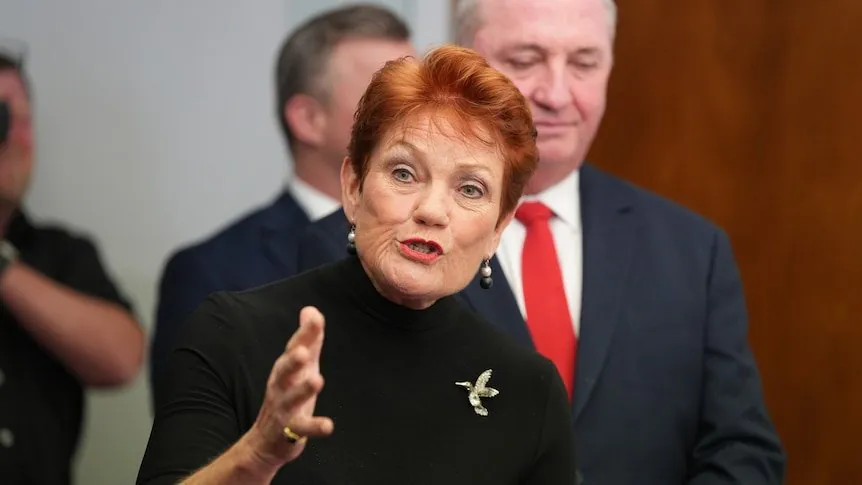
The news has sent shockwaves through the nation’s capital, with many questioning the implications of such a move.
As the country grapples with economic woes and a growing sense of disillusionment with the two-party system, One Nation’s rise to prominence has left many wondering if this is the end of politics as we know it.
The latest Newspoll, published in The Australian, paints a dire picture for the Coalition, with support for the party plummeting to an all-time low. In contrast, One Nation’s primary vote has skyrocketed, with many attributing the rise to the party’s hardline stance on migration and the economy.
Labor, too, has seen its support dwindle, with the party’s handling of the economy and migration policy coming under intense scrutiny.
As the major parties struggle to regain traction, the Coalition has made a bold move, signaling its willingness to work with Hanson to take down Labor.
Opposition Leader Angus Taylor said the budget had further eroded trust in politics, and that the Coalition would work with others to defeat Labor at the next federal election.
When asked if a preference deal with One Nation was on the cards, Taylor refused to rule it out, saying, “People are angry around Australia…
They’ve had enough of this rotten Labor government that’s taking this country in the wrong direction.”
Analysis: What This Means for AustraliaThe implications of One Nation’s rise to prominence are far-reaching, with many experts warning of a perfect storm of economic woes and populist sentiment that could upend the Australian political landscape.
As the country grapples with rising living costs, stagnant wages, and a growing sense of disillusionment with the two-party system, One Nation’s hardline stance on migration and the economy has resonated with many voters.
Security analysts say the rise of One Nation is a symptom of a broader malaise in Australian politics, with many voters feeling disenfranchised and disillusioned with the major parties.
“The fact that One Nation is polling so highly is a clear indication that people are looking for alternatives to the traditional two-party system,” said one analyst.
“The major parties need to take heed of this and start listening to the concerns of ordinary Australians.”
Law enforcement insiders warn that the rise of One Nation could also have serious implications for community cohesion and social stability.
“The kind of rhetoric being peddled by One Nation is divisive and inflammatory, and it’s only a matter of time before it spills over into violence and unrest,” said one insider.
Industry observers believe that One Nation’s rise could also have significant economic implications, particularly if the party’s hardline stance on migration is implemented. “A reduction in migration would have a devastating impact on the economy, particularly in industries that rely heavily on migrant labor,” said one observer.
“It’s a recipe for disaster.”
As the country teeters on the brink of a political earthquake, one thing is clear: the rise of One Nation is a wake-up call for the major parties to start listening to the concerns of ordinary Australians.
Whether they will heed the warning remains to be seen.
The Australian political landscape is on the brink of a seismic shift as One Nation, led by the outspoken Pauline Hanson, has surged to the top spot in the latest Newspoll. The anti-immigration party’s 31% showing has left Labor and the Coalition in its wake, with the latter trailing at a distant 18%. As the major parties scramble to address voter concerns on migration and the economy, the Coalition has made a stunning revelation: it is open to working with Hanson to oust Labor from power.
The news has sent shockwaves through the nation’s capital, with many questioning the implications of such a move. As the country grapples with economic woes and a growing sense of disillusionment with the two-party system, One Nation’s rise to prominence has left many wondering if this is the end of politics as we know it.
The latest Newspoll, published in The Australian, paints a dire picture for the Coalition, with support for the party plummeting to an all-time low. In contrast, One Nation’s primary vote has skyrocketed, with many attributing the rise to the party’s hardline stance on migration and the economy. Labor, too, has seen its support dwindle, with the party’s handling of the economy and migration policy coming under intense scrutiny.
As the major parties struggle to regain traction, the Coalition has made a bold move, signaling its willingness to work with Hanson to take down Labor. Opposition Leader Angus Taylor said the budget had further eroded trust in politics, and that the Coalition would work with others to defeat Labor at the next federal election. When asked if a preference deal with One Nation was on the cards, Taylor refused to rule it out, saying, “People are angry around Australia… They’ve had enough of this rotten Labor government that’s taking this country in the wrong direction.”
The implications of One Nation’s rise to prominence are far-reaching, with many experts warning of a perfect storm of economic woes and populist sentiment that could upend the Australian political landscape. As the country grapples with rising living costs, stagnant wages, and a growing sense of disillusionment with the two-party system, One Nation’s hardline stance on migration and the economy has resonated with many voters.
Security analysts say the rise of One Nation is a symptom of a broader malaise in Australian politics, with many voters feeling disenfranchised and disillusioned with the major parties. “The fact that One Nation is polling so highly is a clear indication that people are looking for alternatives to the traditional two-party system,” said one analyst. “The major parties need to take heed of this and start listening to the concerns of ordinary Australians.”
Law enforcement insiders warn that the rise of One Nation could also have serious implications for community cohesion and social stability. “The kind of rhetoric being peddled by One Nation is divisive and inflammatory, and it’s only a matter of time before it spills over into violence and unrest,” said one insider.
Industry observers believe that One Nation’s rise could also have significant economic implications, particularly if the party’s hardline stance on migration is implemented. “A reduction in migration would have a devastating impact on the economy, particularly in industries that rely heavily on migrant labor,” said one observer. “It’s a recipe for disaster.”
As the country teeters on the brink of a political earthquake, one thing is clear: the rise of One Nation is a wake-up call for the major parties to start listening to the concerns of ordinary Australians. Whether they will heed the warning remains to be seen.