
Iran Conflict Sparks Global Economic Chaos as Albanese Warns of ‘Massive Impact’ on Australia
- Prime Minister Anthony Albanese expresses deep concern over the escalating conflict between the US and Iran, warning of a “massive impact” on the global economy and Australia.
- The conflict has entered its third month, with fresh US strikes on Iran prompting fears of further escalation and uncertainty in global markets.
- Australia’s economy is already feeling the effects, with Albanese highlighting the difficulties of responding to US President Donald Trump’s repeated peace deal announcements.
- The Islamic Revolutionary Guard Corps claims to have attacked a US Navy base with drones in Bahrain, further heightening tensions in the region.
The conflict between the US and Iran has sparked global economic chaos, with Prime Minister Anthony Albanese warning of a “massive impact” on Australia. The conflict has entered its third month, with fresh US strikes on Iran prompting fears of further escalation and uncertainty in global markets.
Albanese expressed deep concern over the escalating situation, highlighting the human cost and economic implications of the conflict.
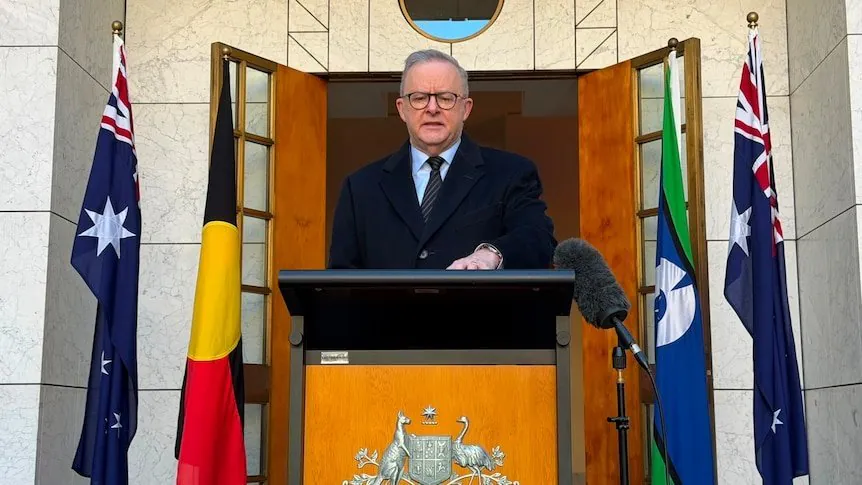
In a statement to the ABC, Albanese said, “We’re very worried both about the human impact of course that comes with war, but also the economic impact, that is having a massive impact on the global economy, will get worse rather than better.” He emphasized that markets were having difficulties following the changes to peace deals, and that repeated US statements about a resolution in the conflict carried a “caveat” that there was uncertainty about whether the agreements would hold.
The latest escalation began with the downing of an American helicopter in the Strait of Hormuz near Oman, prompting the US to order fresh strikes on Iran.
The US described the strikes as a “proportional response to unjustified Iranian aggression.” Iran’s Foreign Minister Abbas Araghchi said the country’s military would “leave no attack or threat unanswered.”
Analysis: What This Means for Australia
The conflict has significant implications for Australia’s economy and national security. As a major trading nation, Australia is heavily exposed to fluctuations in global markets.
The conflict has already led to increased uncertainty and volatility, making it challenging for businesses to operate and invest. Furthermore, the conflict has the potential to disrupt global supply chains, which could have a direct impact on Australian consumers.
Law enforcement insiders warn that the conflict could also have implications for national security, with the potential for increased terrorism and cyber threats.
The conflict has already led to increased tensions in the region, and there are concerns that it could spill over into other parts of the world.
Security analysts say that the conflict highlights the need for Australia to maintain a strong and independent foreign policy, and to work closely with its allies to address global security challenges.
The conflict also underscores the importance of investing in Australia’s defense and national security capabilities, to ensure that the country is prepared to respond to emerging threats.
Industry observers believe that the conflict could also have significant economic consequences for Australia, particularly in the energy sector. The conflict has already led to increased oil prices, which could have a direct impact on Australian businesses and consumers.
Furthermore, the conflict has the potential to disrupt global energy supplies, which could have a significant impact on Australia’s economy.
As the conflict continues to escalate, it is clear that Australia will need to navigate a complex and challenging geopolitical landscape.
The government will need to work closely with its allies and partners to address the economic and national security implications of the conflict, and to ensure that Australia’s interests are protected.