
Bird Flu Outbreak in Western Australia: Fears of Catastrophic Consequences as Deadly Virus Spreads
- A second bird found on a remote WA beach has tested positive for the deadly H5N1 avian influenza, sparking fears of a catastrophic outbreak.
- The discovery has prompted Ingham’s, one of Australia’s largest poultry producers, to lock down its entire WA operations in a desperate bid to contain the spread of the disease.
- Experts warn that the region’s unique geography, with its major migratory routes and internationally protected wetlands, makes it a ticking time bomb for the spread of bird flu.
- Local authorities are criticizing the lack of communication and collaboration from state and federal governments, warning that they will be the ones on the frontlines of the crisis.
The discovery of a second bird infected with the deadly H5N1 avian influenza in Western Australia’s south coast has sent shockwaves through the community, with fears of a catastrophic outbreak spreading rapidly.
The bird, a northern giant petrel, was found on a remote beach in Esperance, about 700 kilometres south-east of Perth, and has tested positive for the virus.
Federal Agriculture Minister Julie Collins confirmed the news, stating that testing at the CSIRO had also confirmed that a brown skua found in the same region had tested positive for the disease.
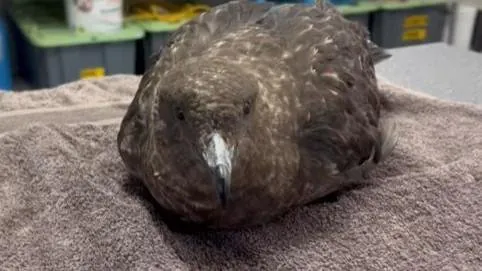
While there is currently no evidence of mass mortalities in wildlife, and the Australian poultry and agricultural systems remain free from bird flu, the situation is being closely monitored.
The region’s unique geography makes it a high-risk area for the spread of bird flu.
Esperance is a major migratory route and nesting ground for seabirds from around the world, with hundreds of species visiting the internationally protected RAMSAR-listed wetlands each year.
The Recherche Archipelago, located just off the coast, is also a key breeding ground for many species. Despite the growing concerns, local authorities are criticizing the lack of communication and collaboration from state and federal governments.
Esperance Shire president Ron Smith expressed frustration at the lack of information being shared with local leaders and officials. “It would be really good to see that now start to flow down to local governments…
they’re probably going to be the ones that get hit fairly hard for information,” he said.
In response to the growing threat, Ingham’s has implemented a complete lockdown of its WA operations, preventing all non-essential access to its farms and processing facilities.
The company has also moved to a state of heightened biosecurity vigilance to mitigate against any potential risks.
While the company’s operations are mostly located in the Wheatbelt region, about 700 kilometres from Esperance, the move is a clear indication of the gravity of the situation.
Analysis: What This Means for AustraliaThe discovery of bird flu in Western Australia has significant implications for the country’s national security, law enforcement, and community safety.
The disease has the potential to devastate the poultry industry, with catastrophic consequences for the economy and food supply. Furthermore, the region’s unique geography makes it a high-risk area for the spread of the disease, with the potential for widespread contamination.
Security analysts say that the situation highlights the need for improved communication and collaboration between state and federal governments, as well as with local authorities. “The lack of information sharing and coordination is a major concern,” said one expert.
“It’s essential that we have a coordinated response to this crisis to prevent the spread of the disease and minimize the impact on the community.”
Law enforcement insiders warn that the situation also has implications for border control, with the potential for the disease to be spread through human activity.
“We need to take a proactive approach to preventing the spread of the disease, including increased surveillance and monitoring of high-risk areas,” said one source.
Industry observers believe that the outbreak has the potential to have a significant impact on the poultry industry, with potential losses running into millions of dollars.
“The industry is already on high alert, and the discovery of a second infected bird will only add to the concerns,” said one expert.
As the situation continues to unfold, one thing is clear: the discovery of bird flu in Western Australia has the potential to have far-reaching consequences for the country.
With the region’s unique geography and the lack of communication and collaboration between authorities, the situation is a ticking time bomb waiting to happen.
The discovery of a second bird infected with the deadly H5N1 avian influenza in Western Australia’s south coast has sent shockwaves through the community, with fears of a catastrophic outbreak spreading rapidly. The bird, a northern giant petrel, was found on a remote beach in Esperance, about 700 kilometres south-east of Perth, and has tested positive for the virus.
Federal Agriculture Minister Julie Collins confirmed the news, stating that testing at the CSIRO had also confirmed that a brown skua found in the same region had tested positive for the disease. While there is currently no evidence of mass mortalities in wildlife, and the Australian poultry and agricultural systems remain free from bird flu, the situation is being closely monitored.
The region’s unique geography makes it a high-risk area for the spread of bird flu. Esperance is a major migratory route and nesting ground for seabirds from around the world, with hundreds of species visiting the internationally protected RAMSAR-listed wetlands each year. The Recherche Archipelago, located just off the coast, is also a key breeding ground for many species.
Despite the growing concerns, local authorities are criticizing the lack of communication and collaboration from state and federal governments. Esperance Shire president Ron Smith expressed frustration at the lack of information being shared with local leaders and officials. “It would be really good to see that now start to flow down to local governments… they’re probably going to be the ones that get hit fairly hard for information,” he said.
In response to the growing threat, Ingham’s has implemented a complete lockdown of its WA operations, preventing all non-essential access to its farms and processing facilities. The company has also moved to a state of heightened biosecurity vigilance to mitigate against any potential risks. While the company’s operations are mostly located in the Wheatbelt region, about 700 kilometres from Esperance, the move is a clear indication of the gravity of the situation.
The discovery of bird flu in Western Australia has significant implications for the country’s national security, law enforcement, and community safety. The disease has the potential to devastate the poultry industry, with catastrophic consequences for the economy and food supply. Furthermore, the region’s unique geography makes it a high-risk area for the spread of the disease, with the potential for widespread contamination.
Security analysts say that the situation highlights the need for improved communication and collaboration between state and federal governments, as well as with local authorities. “The lack of information sharing and coordination is a major concern,” said one expert. “It’s essential that we have a coordinated response to this crisis to prevent the spread of the disease and minimize the impact on the community.”
Law enforcement insiders warn that the situation also has implications for border control, with the potential for the disease to be spread through human activity. “We need to take a proactive approach to preventing the spread of the disease, including increased surveillance and monitoring of high-risk areas,” said one source.
Industry observers believe that the outbreak has the potential to have a significant impact on the poultry industry, with potential losses running into millions of dollars. “The industry is already on high alert, and the discovery of a second infected bird will only add to the concerns,” said one expert.
As the situation continues to unfold, one thing is clear: the discovery of bird flu in Western Australia has the potential to have far-reaching consequences for the country. With the region’s unique geography and the lack of communication and collaboration between authorities, the situation is a ticking time bomb waiting to happen.