
Venezuela Earthquake Horror: Death Toll Soars to 1943 as Desperate Search for Survivors Enters Seventh Day
- Death toll from Venezuela earthquakes rises to at least 1943, with over 10,500 injured and 10,000 still missing
- Nearly 30,000 people were in two towns in La Guaira when the magnitude 7.2 and 7.5 earthquakes struck
- Hope of finding survivors is fading, with rescue teams halting operations in some areas after over 40 hours of work
- UN estimates death toll could run into tens of thousands, with 10,000 body bags being procured
The devastating earthquakes that struck Venezuela have left a trail of destruction and death, with the death toll soaring to at least 1943 and over 10,500 people injured.
The National Assembly President Jorge Rodriguez revealed the grim scenario on Tuesday, with around 10,000 people still missing in the badly affected La Guaira region.
The earthquakes, which struck on Wednesday evening, have left entire towns in ruins, with nearly 855 buildings completely destroyed or severely damaged.
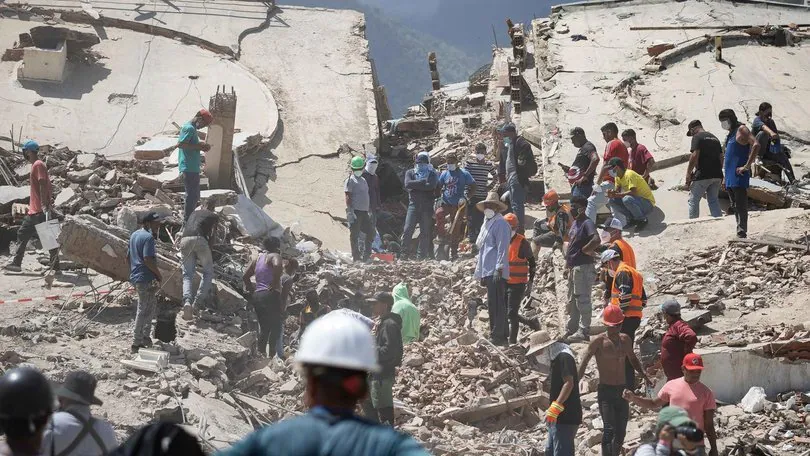
In the two towns of Catia La Mar and Caraballeda, around 30,000 people were estimated to have been present when the earthquakes struck.
Of those, around 13,500 had managed to reach safety on their own, while around 6400 more had been rescued by emergency services in the days that followed.
However, the fate of the remaining 10,000 people remains unknown, with rescue teams struggling to locate survivors amidst the rubble.
As the search for survivors enters its seventh day, hope is fading fast.
Rescue teams from Ecuador and the United States halted operations in Macuto, a town in La Guaira state, after over 40 hours of work, when they stopped receiving responses from a mother and her three children trapped beneath a nine-storey building.
“In the end, we believe the days have already passed and that what we will find now is death,” said Major Jorge Montanero, leader of the EQ11 team from Guayaquil.
Despite the challenges, rescue teams are continuing to search for survivors, with some remarkable stories of hope emerging.
A 44-year-old man was rescued from the rubble of a shopping centre in Maiquetia, while a 12-year-old boy was also rescued by workers from the fire brigade in Quito.
Even a dog, named Giselle, was pulled from the rubble in Caraballeda after a five-hour operation.
The United Nations has warned that the death toll could be much higher than initially reported, with UN resident co-ordinator in Venezuela, Gianluca Rampolla, estimating that 10,000 body bags may be needed.
The government of acting President Delcy Rodriguez has already reported at least 1943 deaths, with thousands more injured.
Analysis: What This Means for Australia
The devastating earthquakes in Venezuela have significant implications for Australia, particularly in terms of humanitarian aid and disaster response. As a major player in the Asia-Pacific region, Australia has a responsibility to provide support to affected countries in times of crisis.
The Australian government has already provided aid to Venezuela, but the scale of the disaster may require further assistance.
Security analysts say that the disaster also highlights the need for Australia to review its own disaster response strategies, particularly in the face of increasing natural disasters.
“The Venezuela earthquakes are a stark reminder of the importance of being prepared for the worst,” said one analyst. “Australia needs to ensure that its emergency response systems are robust and able to cope with large-scale disasters.”
Industry observers believe that the disaster may also have economic implications for Australia, particularly in terms of trade and investment. Venezuela is a significant player in the global oil market, and the disaster may impact oil prices and supply chains.
“The Venezuelan earthquakes are a wake-up call for Australian businesses to review their risk management strategies and ensure that they are prepared for unexpected disruptions,” said one observer.