
Seafood Scandal: New Labelling Laws Expose Fishy Business Practices in Australian Restaurants and Takeaways
- From today, all seafood sold in Australian restaurants, pubs, and takeaways must be labelled with its country of origin, exposing a long-standing industry secret.
- Industry insiders claim that up to 90% of seafood served in Australian eateries is imported, with some venues passing off foreign fish as locally caught.
- The new labelling laws aim to promote transparency and fairness, but some businesses are warning of challenges in implementing the changes.
The days of unknowingly devouring imported fish masquerading as Australian seafood are over. As of today, all seafood sold in Australian restaurants, pubs, and takeaways must be labelled with its country of origin.
The move is set to shake up the industry, with some insiders claiming that up to 90% of seafood served in Australian eateries is imported.
Phil and Penny Dean, owners of Sea Salt Fish and Chips in Coffs Harbour, New South Wales, have been promoting the origin of their seafood for years.
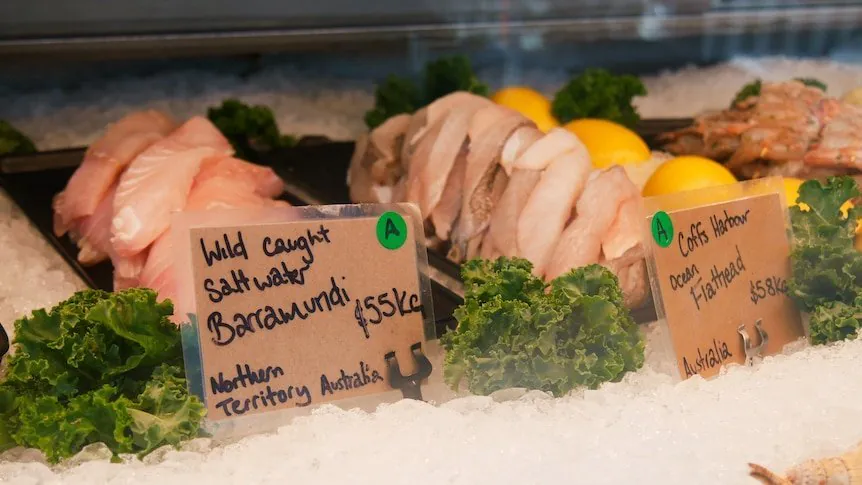
“We have a major resource on our doorstep, the Coffs Marina, and we wanted to exploit that,” Mr Dean said. “I think it’s Australian seafood’s chance to shine now.” The Deans’ commitment to transparency is not the norm, however.
Victorian fisherman and executive officer of the SE Trawl Industry Fishing Association Simon Boag revealed that customers are often served imported fish without their knowledge.
“When you go to a pub or a club or a sushi restaurant … who knows what you’re getting?” Mr Boag asked. He recalled a personal experience where he ordered a piece of snapper, only to discover it was a farmed basa from Vietnam.
The new labelling laws aim to prevent such deception and promote fairness in the industry. Joe De Belen, a former restaurant owner and now a seafood exporter, welcomed the changes.
“I reckon 85 to 90 per cent is imported,” he said. “Australian barramundi are bigger, and the fillets are fatter, but customers were getting imported fish and having a poor experience.”
Analysis: What This Means for Australia
The introduction of country-of-origin labelling laws for seafood is a significant development for Australian consumers. The move is expected to promote transparency and fairness in the industry, allowing diners to make informed choices about the food they eat.
However, some businesses are warning of challenges in implementing the changes. John Hart, chair of Restaurant & Catering Australia, said that there would be difficulties in enforcing the new laws due to gaps in the supply chain.
“A number of products are coming in without appropriate declarations of where they’re from,” he said.
The Australian Marine Conservation Society has also expressed concerns that the new laws do not go far enough. Campaign communications specialist Peta Morton said that just knowing the country of origin was not enough for consumers to make good choices.
“It would be great to see states, if it’s from Australia, … and a standard name so everyone knows what fish is what,” she said. The society warned that threatened species of sharks are sometimes labelled as “flake” in some fish and chips.
Security analysts say that the new labelling laws could also have implications for national security. The lack of transparency in the seafood industry has raised concerns about the potential for illicit activities, such as money laundering and tax evasion.
The introduction of country-of-origin labelling laws is a step towards addressing these concerns and promoting a fair and transparent industry.
Industry observers believe that the new laws will drive demand for Australian seafood, boosting the local industry and promoting sustainable fishing practices. Fishmonger Joshua Cook said that the industry was already seeing a surge in interest in Australian seafood and food businesses were changing their labels.
“I suppose [businesses] don’t want to get caught out having to say ‘imported,'” he said. “[I’m] not saying that imported is a bad thing, but it’s just about transparency.”