
‘Sick to Their Guts of You’: Fierce Warning to Teenage Car Thieves as Police Crack Down on Youth Crime in Queensland
- A Queensland police officer has unleashed a scathing verbal attack on three teenage boys arrested for allegedly stealing a car and driving recklessly.
- The dramatic confrontation was caught on police body-worn cameras, with the officer branding the teens ‘pork chops’ and warning them the community has ‘had enough’ of their behaviour.
- The three boys, aged 16 and 17, have been charged with multiple offences including car theft, trespassing, and entering premises with intent to commit a crime.
- The incident is the latest in a string of car thefts and youth crime incidents plaguing Queensland, sparking concerns about community safety and the need for tougher law enforcement.
The streets of Cairns were the scene of a tense confrontation between police and three teenage boys, accused of stealing a Toyota Kluger and driving it recklessly through the city.
The dramatic incident was captured on police body-worn cameras, revealing a fierce verbal spray from a senior officer who branded the teens ‘pork chops’.
The officer’s outburst has sparked a heated debate about the need for tougher law enforcement and community action to address the growing problem of youth crime in Queensland.
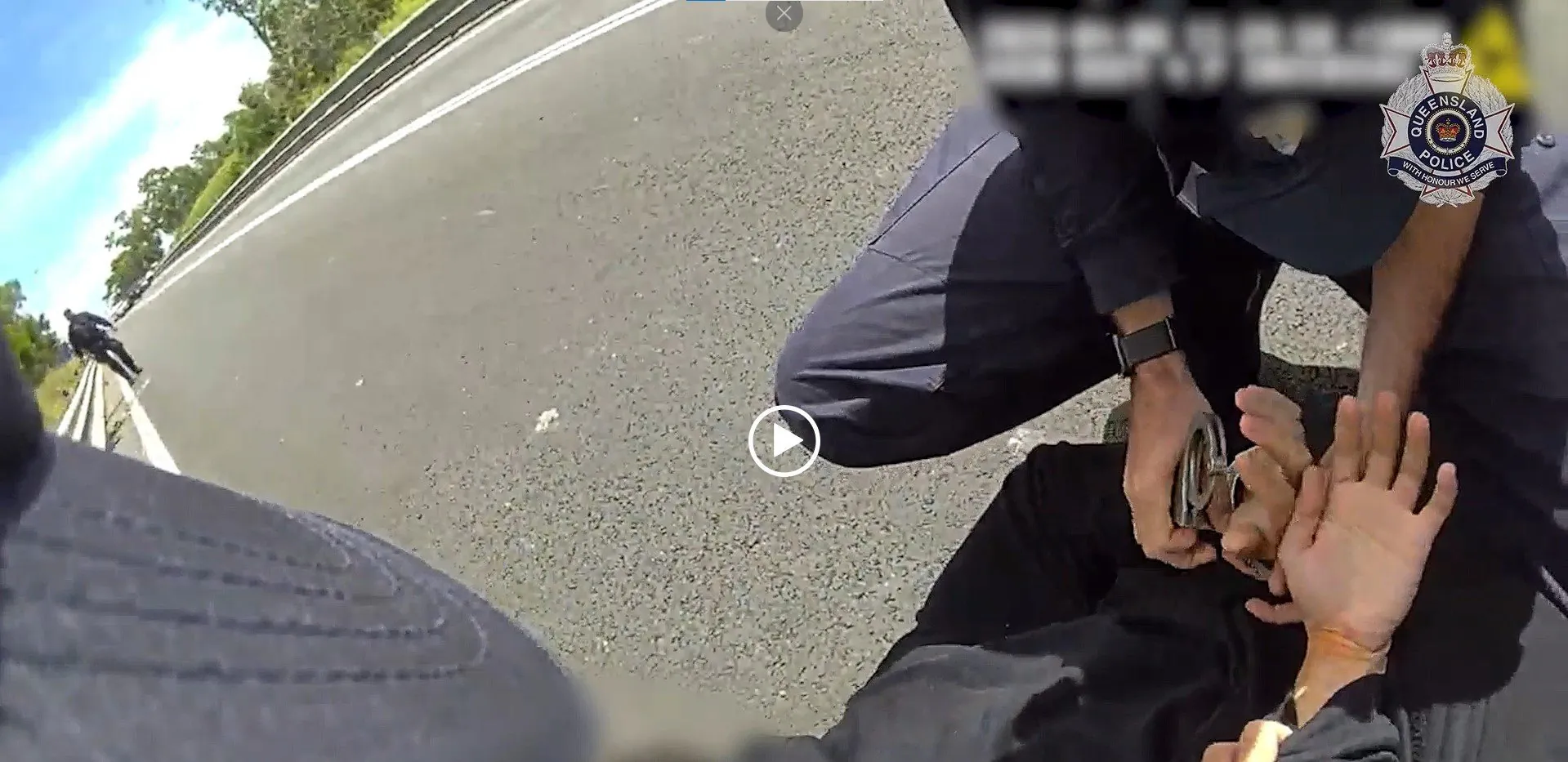
The incident began on Sunday when the Toyota Kluger was stolen from Edge Hill in Cairns. The vehicle was later abandoned in Yorkeys Knob after running over a tyre deflation device.
Police quickly tracked down the alleged offenders, finding them nearby and arresting them. The confrontation that followed was intense, with the officer yelling at one of the boys to get on the ground while radioing for backup.
As the officer’s anger boiled over, he launched into a scathing verbal attack on the teens, telling them the community had ‘had enough’ of their behaviour.
‘They’re sick to their guts of you jumping in cars, driving around like pork chops, putting everyone else at risk, going into people’s homes,’ he can be heard yelling.
‘Who the hell do you think you are, mate?’ The officer’s words were met with silence from the teens, who were later charged with multiple offences including car theft, trespassing, and entering premises with intent to commit a crime.
The incident has sparked a wider debate about the growing problem of youth crime in Queensland, with many calling for tougher law enforcement and community action to address the issue.
Security analysts say the problem is complex and multifaceted, requiring a coordinated approach from law enforcement, community groups, and government agencies.
‘We need to take a holistic approach to addressing youth crime, one that involves not just punishment but also prevention and rehabilitation,’ said one analyst.
‘This includes providing young people with access to education and job training, as well as supporting families and communities to help prevent youth crime.’
Analysis: What This Means for Australia
The incident in Cairns is just the latest in a string of car thefts and youth crime incidents plaguing Queensland, sparking concerns about community safety and the need for tougher law enforcement.
The problem is not unique to Queensland, with youth crime a growing concern across Australia. Law enforcement insiders warn that the trend is unlikely to reverse without a concerted effort from government, community groups, and individuals.
‘We need to take a tough but fair approach to addressing youth crime, one that balances punishment with prevention and rehabilitation,’ said one insider.
‘This includes investing in community programs and services that support young people and their families, as well as providing law enforcement with the resources they need to tackle the problem.’
Industry observers believe that the problem of youth crime is closely linked to broader social and economic issues, including poverty, unemployment, and lack of access to education and job training.
‘We need to address the underlying causes of youth crime, rather than just treating the symptoms,’ said one observer. ‘This includes investing in programs and services that support young people and their families, as well as providing access to education and job training.’