
China’s Chilling Warning to Australia: ‘We Can Strike You from the Sea’
- China has successfully launched a warhead-carrying missile from a nuclear-powered submarine, sending a stark warning to Australia and the Pacific region.
- The missile’s 10,000km range puts Australia firmly within its striking capability zone, sparking fears of a growing military threat.
- Experts warn that China’s rapidly advancing nuclear and military modernisation poses a significant challenge to regional security and stability.
- The test has sparked widespread condemnation from Australia and its neighbours, with New Zealand’s Foreign Affairs Minister labelling the move “concerning, unwelcome and destabilising”.
The world has been put on notice: China is now a nuclear-armed naval power with the capability to strike from the sea.
In a chilling demonstration of its growing military might, Beijing has successfully launched a warhead-carrying missile from a nuclear-powered submarine, sending a stark warning to Australia and the Pacific region.
The test, which was carried out in the Pacific Ocean, marks a significant milestone in China’s military modernisation program.
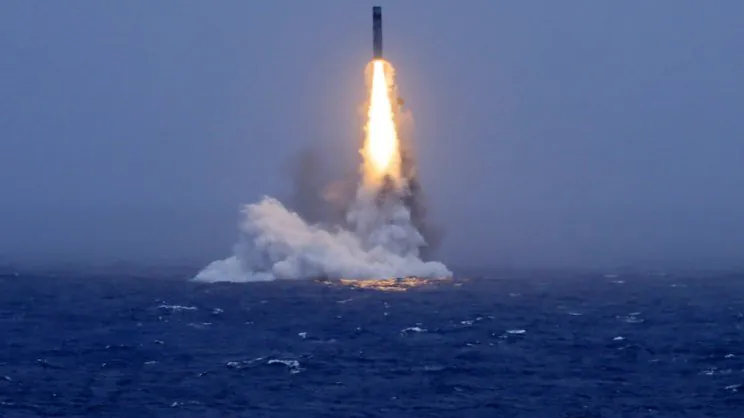
According to Chinese state media, the missile carried a dummy warhead and flew over multiple Pacific nations before landing in waters close to Tuvalu’s Exclusive Economic Zone (EEZ).
The exact location of the impact is still unknown.
This is not just a demonstration of China’s military capabilities – it’s a clear message to the region that Beijing is willing to assert its dominance through any means necessary.
The test comes as China continues to expand its military presence in the Pacific, with a growing number of warships, aircraft, and troops being deployed to the region.
China’s military ambitions in the global south have become increasingly visible and insistent over the past year. In 2022, three Chinese warships sailed to the edge of Australia’s waters, sparking concerns about Beijing’s burgeoning military capacity.
This latest test takes those ambitions to a new level, demonstrating China’s ability to launch missiles towards Australia’s region from land and sea.
The implications for Australia are clear: China’s rapidly advancing nuclear and military modernisation poses a significant challenge to regional security and stability.
As one of the region’s most powerful traditional allies, the United States, struggles to maintain its reputation as a reliable partner, Australia and its neighbours are left wondering who will stand up to China’s growing military ambitions.
Analysis: What This Means for Australia
China’s latest military flex has significant implications for Australia’s national security. With a growing military presence in the Pacific, Beijing is increasingly able to project its power and influence in the region.
This raises concerns about Australia’s ability to defend its interests and protect its citizens.
Security analysts say that China’s military modernisation program poses a significant challenge to Australia’s defence capabilities. “China’s ability to launch missiles from the sea is a game-changer for regional security,” said one analyst.
“It means that Australia’s military needs to be able to respond quickly and effectively to a range of potential threats.”
Law enforcement insiders warn that China’s military ambitions in the region also have implications for Australia’s border security.
“If China is able to launch missiles towards Australia’s region, it’s only a matter of time before they start to test our borders,” said one source.
The economic implications of China’s military modernisation are also significant. With a growing military presence in the Pacific, Beijing is increasingly able to exert its influence over regional trade routes and critical infrastructure.
This raises concerns about Australia’s ability to maintain its economic relationships with other countries in the region.
Industry observers believe that China’s military ambitions in the region will have a significant impact on Australia’s economy. “China’s military modernisation program is a clear threat to regional stability and security,” said one observer.
“If Australia is unable to respond effectively to this threat, it could have significant implications for our economy and our relationships with other countries in the region.”