
Electric Vehicles Spark Crisis for Australia’s Petrol Industry: Projections Suggest Fossil Fuel’s Days are Numbered as Profits Plummet
- Australia’s petrol industry is facing an existential crisis as electric vehicles (EVs) gain unprecedented traction, with Ampol CEO Matt Halliday warning that refining and selling petrol may one day be phased out.
- The country’s two operational oil refineries, which produce only 20% of the nation’s fuel needs, are struggling to remain profitable amidst record EV sales and ongoing uncertainty over crude oil supplies from the war-torn Middle East.
- As petrol profits decline, Ampol is shifting its focus to its charging business, which is expected to become a major player in the EV market, with over 350 charging bays already in operation across the country.
- The rise of EVs has led to a significant shift in the market, with petrol-powered vehicle sales plummeting by up to 30% in recent months, while EVs claim a record market share of 23.3% in June.
For decades, the petrol industry has been the backbone of Australia’s transportation sector, but the writing is on the wall – the era of fossil fuels is slowly coming to an end.
Ampol CEO Matt Halliday has sounded the alarm, warning that refining and selling petrol is becoming less profitable and may one day be phased out.
The company’s public charging network, which includes over 350 charging bays across the country, is expected to play a major role in the EV market, but it’s a bittersweet victory for the industry.
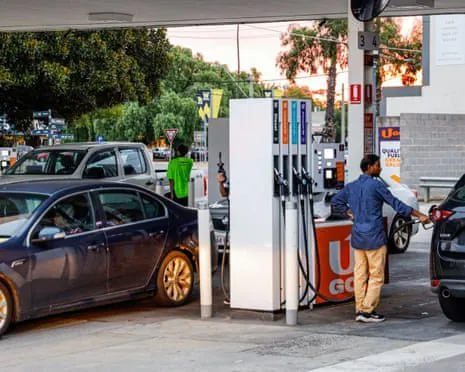
The numbers are stark – petrol profits are dwindling, and the market share of petrol-powered vehicles is plummeting.
In recent months, petrol-powered vehicle sales have fallen by up to 30%, while EVs have claimed a record market share of 23.3% in June.
The Tesla Model Y has topped overall vehicle sales in May and June, marking a significant milestone for the EV industry.
The shift is not just limited to passenger vehicles – the higher price of diesel has had a knock-on effect across the economy, contributing to higher prices for supermarket goods and other essentials.
So, what’s driving this seismic shift? The answer lies in the data.
Ampol tracks postcodes and data to identify areas with high EV uptake, and the company is strategically locating its charging stations accordingly.
The goal is to replicate the current petrol station model, but with a twist – EV charging stations will be placed in areas with high demand, rather than simply following the existing petrol station network.
But the transition won’t be seamless. Halliday acknowledges that the business model for EV charging is different from petrol sales, with lower margins and a greater need for frequent charging.
However, he’s optimistic that Ampol can make reasonable returns on its investment, leveraging its convenience offer and existing footprint to make good returns over time.
Analysis: What This Means for Australia
The implications of this shift are far-reaching. As the petrol industry declines, Australia’s fuel security and supply chain will need to adapt.
The country’s reliance on imported fuel will need to be reassessed, and the government will need to consider alternative energy sources to meet the nation’s growing energy demands.
The rise of EVs also raises questions about the future of Australia’s transportation sector, including the potential for job losses and the need for retraining programs.
Law enforcement insiders warn that the shift to EVs also raises concerns about the potential for increased congestion on the nation’s roads, particularly in urban areas.
As more people switch to EVs, the demand for charging infrastructure will increase, putting pressure on the existing grid.
Industry observers believe that the government will need to take a proactive approach to addressing these challenges, including investing in EV infrastructure and providing incentives for companies like Ampol to develop their charging networks.
The future of Australia’s petrol industry may be uncertain, but one thing is clear – the era of electric vehicles is here to stay.
As the nation navigates this transition, it’s essential to consider the broader implications for Australia’s energy security, economic stability, and environmental sustainability.
The shift to EVs is not just a matter of personal choice; it’s a critical step towards reducing the country’s carbon footprint and meeting its climate change commitments.
In the end, the decline of the petrol industry may be a blessing in disguise for Australia. As the nation transitions to a more sustainable energy future, it will be forced to innovate and adapt, creating new opportunities for growth and development.
The future may be uncertain, but one thing is clear – the era of electric vehicles is here to stay, and Australia must be ready to lead the charge.