
Australia’s Building Industry in Crisis as Cheap Chinese Imports Fail Safety Tests and Put Lives at Risk
- Alarming new tests reveal 87% of imported Chinese building materials fail to meet Australian standards
- Cheap aluminium windows and doors collapse in extreme weather conditions, posing serious safety risks
- Local manufacturers sound the alarm as China’s property slump floods the Australian market with substandard materials
- Experts warn of catastrophic consequences, including water damage, mould, and even loss of life
The Australian building industry is facing a crisis of confidence as shocking new tests reveal that cheap Chinese imports are failing to meet safety standards, putting lives at risk.
Independent laboratory tests commissioned by local manufacturers have exposed a hidden problem, with pressure testing showing catastrophic failures in imported aluminium windows and doors. The results are a wake-up call for the industry, with experts warning of serious safety implications and potential consequences for property owners.
The testing, which simulated extreme weather conditions, including the equivalent of a thunderstorm and strong winds battering a 108-kilogram door panel, revealed that 87% of the imports failed to meet minimum Australian standards.
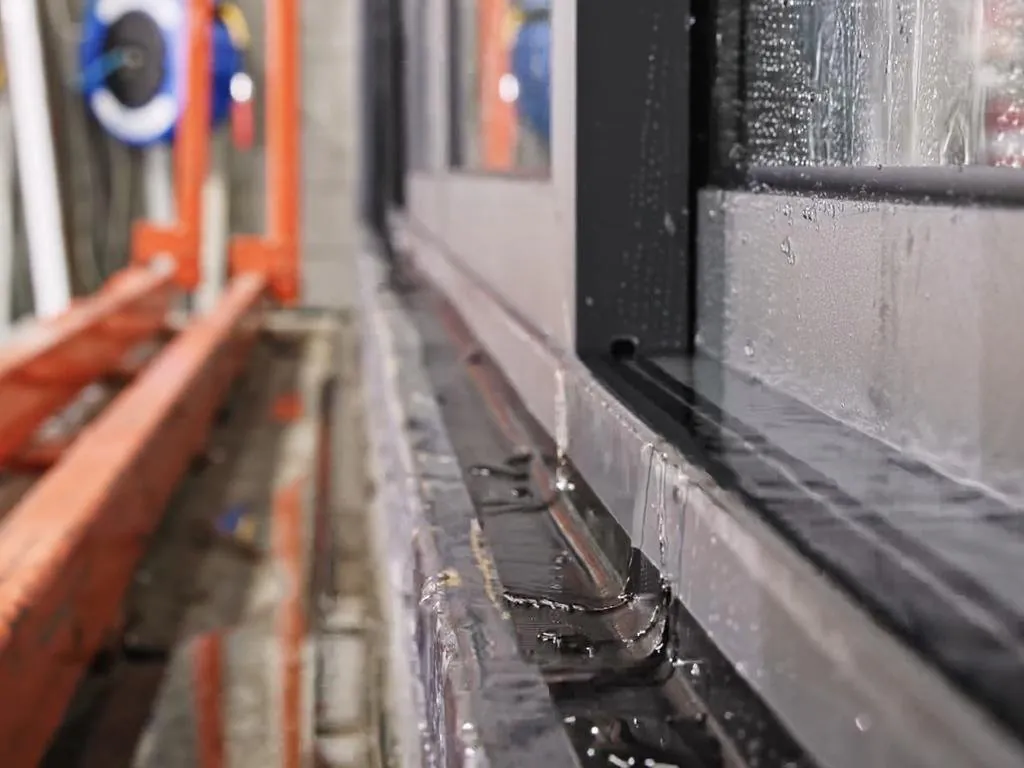
The failures were not just minor, with some windows and doors collapsing under pressure, posing a serious risk to occupants. “My gut reaction was one of just pure shock,” said Scott Kelly, CEO of Ventora Group.
“If you have water ingress into a home, the carpets get wet, the walls get wet, and before you know it, you’ve got mould in your house.”
The safety implications are equally concerning, with experts warning that the failures could have devastating consequences. “If there’s a young child walking past there at that point in time, I think it’s a huge safety issue,” Kelly said.
The issue remains largely undiscussed by builders, developers, and certifiers until catastrophic failures occur, such as the imported steel roof on a Melbourne leisure centre that collapsed mid-construction in 2022.
The blame game for that incident continues.
So, what’s behind the influx of substandard building materials?
China’s property slump has resulted in an influx of surplus building materials landing in Australia, including engineered timber and aluminium windows and doors selling for around half price.
This has badly hurt local manufacturers, who are struggling to compete with the cheap imports.
“I think we have a lot of new entrants in the market that probably haven’t dealt in Australia previously,” said Clinton Skeoch, CEO of the Australian Glass and Window Association.
But the consequences go beyond just the industry. Property owners are being urged to ensure that what they install is up to scratch, or risk facing costly repairs and even safety risks.
“Well, I think it’s damaging to the entire industry and, importantly, damaging to the Australian economy,” Kelly said.
As the industry grapples with the issue, one thing is clear: something needs to be done to address the crisis and ensure that Australian buildings are safe and secure.
Analysis: What This Means for Australia
The failure of cheap Chinese building materials to meet Australian safety standards has serious implications for national security and public safety. The fact that 87% of imports failed to meet minimum standards is a staggering statistic that should raise alarm bells.
The potential consequences of these failures are not just limited to property damage, but also pose a risk to human life.
As Australia’s population continues to grow, the demand for new buildings and infrastructure will only increase, making it imperative that the industry gets its act together to ensure that all materials meet the highest safety standards.
Law enforcement agencies and regulatory bodies need to take a closer look at the issue and ensure that all imports are thoroughly tested and certified before they enter the market.
The fact that these materials are being sold at half price should be a red flag, and property owners need to be aware of the risks associated with using cheap imports.
The Australian government needs to take a proactive approach to address the issue and ensure that the industry is held to account for any failures.
Security analysts say that the influx of substandard building materials is a classic case of a “race to the bottom,” where companies prioritize profits over safety and quality.
“It’s a ticking time bomb waiting to happen,” said one analyst. “The consequences of these failures will be catastrophic, and it’s only a matter of time before we see a major disaster.”
Industry observers believe that the issue is not just limited to building materials, but also highlights a broader problem with Australia’s regulatory framework.
“We need to take a closer look at our certification processes and ensure that they are robust enough to prevent these types of failures,” said one expert.
“The fact that these materials are being allowed into the market without proper testing and certification is a major concern.”
As the industry grapples with the issue, one thing is clear: the Australian public deserves better.
Property owners have a right to expect that the buildings they live and work in are safe and secure, and it’s up to the industry to ensure that this is the case.