‘Send Them to an Island’: Pauline Hanson’s Shocking Solution to Dealing with Political Opponents Sparks Outrage and Concerns for Australian Democracy
- One Nation leader Pauline Hanson suggests rounding up and isolating environmental activists and independent politicians on an island, sparking widespread condemnation
- Hanson’s comments come amid a UK media tour, where she has been meeting with conservative commentators and activists, including controversial figure Tommy Robinson
- The Queensland senator’s remarks have raised concerns about her party’s stance on democracy, human rights, and the treatment of asylum seekers
- Hanson also calls for a reduction in the size of the federal public service, repeating her party’s promise of a “big clean-out” if they gain power
The notion of banishing political opponents to a remote island may sound like the stuff of dystopian fiction, but for One Nation leader Pauline Hanson, it’s a viable solution to dealing with those who dare to disagree with her views.
In a recent interview with former UK prime minister Liz Truss, Hanson suggested that environmental activists and independent politicians should be rounded up and given their own island, where they can “do what they want to do” without bothering the rest of society.
The comment, which was met with laughter from Truss, has sparked outrage and concern among Australians, who are questioning the implications of Hanson’s words for the country’s democracy and human rights record.
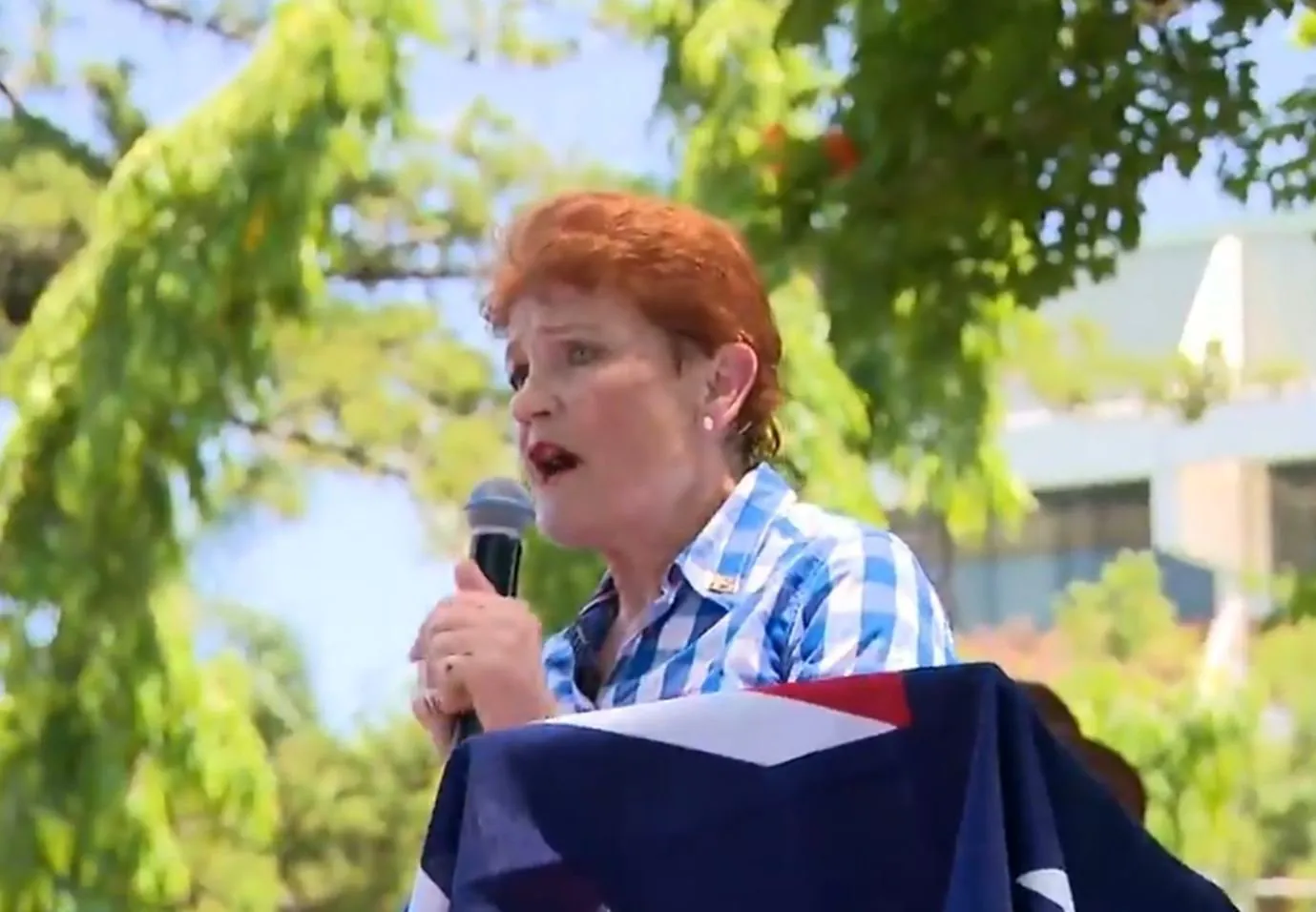
As the leader of a party that has long been accused of promoting divisive and discriminatory policies, Hanson’s remarks have only served to fuel fears about the direction in which her party is headed.
Hanson’s interview with Truss was part of a series of meetings with conservative British commentators and activists, including controversial figure Tommy Robinson, whom she described as “brave” during a visit to his hometown of Luton.



The One Nation leader has been on an overseas media tour, attending the UK’s Conservative Political Action Conference and promoting her party’s views on issues such as immigration and national security.
But it’s not just Hanson’s comments about sending her opponents to an island that have raised eyebrows.
Her interview with Truss also saw her repeat her call for Australia to withdraw from the 1951 UN Refugee Convention, which she claims is “out of date”.
Hanson’s stance on asylum seekers is well-known, but her latest remarks have sparked fresh concerns about her party’s commitment to human rights and the treatment of vulnerable individuals.
“I’m sorry, I don’t care about those people,” Hanson said of asylum seekers, adding that Australia should decide who enters the country without being bound by international agreements.
Analysis: What This Means for AustraliaHanson’s comments have serious implications for Australia’s democracy and human rights record.
Her suggestion that political opponents should be isolated and silenced is a worrying sign of the kind of authoritarianism that has become all too familiar in certain parts of the world.
As a country that prides itself on its commitment to democratic values and the rule of law, Hanson’s remarks are a stark reminder of the dangers of populist rhetoric and the erosion of civil liberties.
Law enforcement insiders warn that Hanson’s comments could embolden extremist groups and undermine efforts to combat hate speech and intolerance. “This kind of language is a recipe for disaster,” said one expert.
“It creates a culture of division and hostility, where certain groups are singled out for persecution and marginalization.”
Security analysts say that Hanson’s stance on asylum seekers and immigration could also have serious consequences for national security.
“Australia’s reputation as a safe haven for refugees and asylum seekers is at risk of being undermined by Hanson’s comments,” said one analyst.
“This could have serious implications for our relationships with other countries and our ability to combat transnational crime.”
As the federal election approaches, Hanson’s comments serve as a stark reminder of the kind of politics that Australians can expect from her party.
With her sights set on gaining power, Hanson is unlikely to back down from her divisive rhetoric, even as it sparks outrage and concern among voters.
The question remains: what kind of Australia does Hanson envision, and what will be the cost of her vision for the country’s democracy and values?
The notion of banishing political opponents to a remote island may sound like the stuff of dystopian fiction, but for One Nation leader Pauline Hanson, it’s a viable solution to dealing with those who dare to disagree with her views. In a recent interview with former UK prime minister Liz Truss, Hanson suggested that environmental activists and independent politicians should be rounded up and given their own island, where they can “do what they want to do” without bothering the rest of society.
The comment, which was met with laughter from Truss, has sparked outrage and concern among Australians, who are questioning the implications of Hanson’s words for the country’s democracy and human rights record. As the leader of a party that has long been accused of promoting divisive and discriminatory policies, Hanson’s remarks have only served to fuel fears about the direction in which her party is headed.
Hanson’s interview with Truss was part of a series of meetings with conservative British commentators and activists, including controversial figure Tommy Robinson, whom she described as “brave” during a visit to his hometown of Luton. The One Nation leader has been on an overseas media tour, attending the UK’s Conservative Political Action Conference and promoting her party’s views on issues such as immigration and national security.
But it’s not just Hanson’s comments about sending her opponents to an island that have raised eyebrows. Her interview with Truss also saw her repeat her call for Australia to withdraw from the 1951 UN Refugee Convention, which she claims is “out of date”. Hanson’s stance on asylum seekers is well-known, but her latest remarks have sparked fresh concerns about her party’s commitment to human rights and the treatment of vulnerable individuals.
“I’m sorry, I don’t care about those people,” Hanson said of asylum seekers, adding that Australia should decide who enters the country without being bound by international agreements.
Hanson’s comments have serious implications for Australia’s democracy and human rights record. Her suggestion that political opponents should be isolated and silenced is a worrying sign of the kind of authoritarianism that has become all too familiar in certain parts of the world. As a country that prides itself on its commitment to democratic values and the rule of law, Hanson’s remarks are a stark reminder of the dangers of populist rhetoric and the erosion of civil liberties.
Law enforcement insiders warn that Hanson’s comments could embolden extremist groups and undermine efforts to combat hate speech and intolerance. “This kind of language is a recipe for disaster,” said one expert. “It creates a culture of division and hostility, where certain groups are singled out for persecution and marginalization.”
Security analysts say that Hanson’s stance on asylum seekers and immigration could also have serious consequences for national security. “Australia’s reputation as a safe haven for refugees and asylum seekers is at risk of being undermined by Hanson’s comments,” said one analyst. “This could have serious implications for our relationships with other countries and our ability to combat transnational crime.”
As the federal election approaches, Hanson’s comments serve as a stark reminder of the kind of politics that Australians can expect from her party. With her sights set on gaining power, Hanson is unlikely to back down from her divisive rhetoric, even as it sparks outrage and concern among voters. The question remains: what kind of Australia does Hanson envision, and what will be the cost of her vision for the country’s democracy and values?