
One Nation’s Toxic Politics EXPOSED: How Pauline Hanson’s Divisive Rhetoric Is Alienating Voters and Threatening Australia’s Social Fabric
- One Nation’s primary vote plummets three percentage points as Senator Hanson’s blunt approach to politics sparks widespread criticism
- Women and migrants abandon One Nation in droves, citing concerns over multiculturalism, abortion, and paid parental leave
- Barnaby Joyce defends Senator Hanson, but experts warn her rhetoric is “damaging” and “dangerous” for Australia
- Community leaders and politicians slam One Nation’s attempts to pit multiculturalism against a shared national identity
One Nation’s latest polling disaster has exposed the toxic underbelly of the party’s politics, with Senator Pauline Hanson’s divisive rhetoric on multiculturalism, abortion, and paid parental leave sparking widespread criticism and alienating voters.
The party’s primary vote has slumped three percentage points, while the Coalition has gained three points, according to the latest Resolve poll.
The numbers are a stark warning for One Nation, with women and migrants abandoning the party in droves.
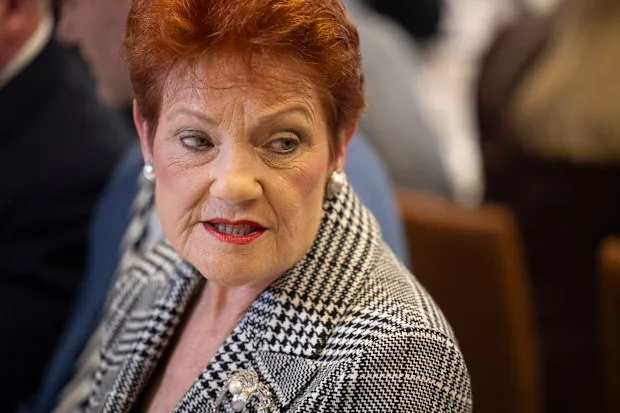
Senator Hanson’s comments on multiculturalism, in which she called for Australia to abandon its multicultural identity in favour of a single national culture, have been widely condemned.
Her proposal to scrap paid parental leave has also been slammed, with critics arguing it will hurt families and exacerbate the country’s childcare crisis.
But despite the backlash, Barnaby Joyce has defended Senator Hanson, telling Sunrise that her willingness to speak plainly is one of her defining qualities. “She doesn’t try and gild the lily,” Joyce said.
“She’s straight down the barrel.” Joyce argued that Senator Hanson’s views on Australian culture are necessary to prevent future acts of violence and maintain social cohesion.
However, experts warn that Senator Hanson’s rhetoric is not only damaging to Australia’s social fabric but also “quite dangerous”. Community Independent MP Allegra Spender accused Senator Hanson of unfairly targeting Muslims, warning that such rhetoric is “really damaging” and “quite dangerous” for Australia.
“If you’ve got politicians like Pauline Hanson saying that she doesn’t think there are any good Muslims, then it is about faiths.
It is about saying some people don’t belong here, and I think that is actually really damaging and actually quite dangerous for our country,” Spender said.
Spender also rejected the suggestion that Australia had to choose between multiculturalism and a shared national identity. “We were immigrants; my mum was Italian, stepped off the boat with no English, made a huge contribution to the country,” she said.
“We grew up in a culture where we had the best of Italian culture, but we knew every single day that we were Australian. We don’t need to have this fight of monoculturalism or multiculturalism.”
Security analysts say that Senator Hanson’s rhetoric is not only divisive but also counterproductive. “By pitting multiculturalism against a shared national identity, One Nation is creating a false dichotomy that ignores the complexities of modern Australia,” said one analyst.
“This kind of rhetoric can have serious consequences, including the marginalisation of already vulnerable communities and the erosion of social cohesion.”
Analysis: What This Means for Australia
The implications of One Nation’s toxic politics are far-reaching and alarming.
If left unchecked, this kind of rhetoric can have serious consequences for Australia’s social fabric, including the erosion of trust and the exacerbation of social tensions.
As experts warn, this kind of politics is not only damaging but also “quite dangerous” for Australia.
Law enforcement insiders warn that Senator Hanson’s comments on multiculturalism can also have serious implications for national security.
“By creating a sense of us versus them, One Nation is playing into the hands of extremists who seek to divide and conquer,” said one insider.
“This kind of rhetoric can have serious consequences, including the radicalisation of vulnerable individuals and the escalation of violence.”
Industry observers believe that One Nation’s antics are also having serious economic consequences.
“By alienating migrants and women, One Nation is not only hurting its own electoral prospects but also damaging Australia’s reputation as a welcoming and inclusive country,” said one observer.
“This can have serious implications for our economy, including the loss of skilled workers and the erosion of our international reputation.”
As Australia grapples with the challenges of a rapidly changing world, it is clear that One Nation’s toxic politics is not the answer. Instead of pitting multiculturalism against a shared national identity, we need to find ways to celebrate our diversity and promote social cohesion.
As Spender said, “We don’t need to have this fight of monoculturalism or multiculturalism. We can have both, and we must.” multiculturalism national identity Australian Bureau of Statistics