
Tasmanian Electoral Shakeup: 114,000 Voters to Switch Electorates in ‘Most Significant’ Redistribution in Recent History
- More than 100,000 Tasmanians will vote in different electorates after the Australian Electoral Commission’s boundary redistribution.
- The changes will see the Glenorchy council area move into the rural electorate of Lyons, and the Kingborough and Huon Valley areas shift into inner-city Clark.
- Public consultation will occur in Franklin to change the name of the electorate to Tongerlongeter, in honour of the Aboriginal leader and warrior who died in 1837.
- The changes will have significant implications for politicians, with several high-profile MPs set to live outside their current electorates.
The Australian Electoral Commission’s (AEC) long-awaited boundary redistribution has been met with a mix of shock and uncertainty, as more than 114,000 Tasmanians prepare to vote in different electorates.
The changes, which are the most significant in recent memory, aim to align communities of interest in southern Tasmania as much as possible. However, the decision to move the Glenorchy council area into the rural electorate of Lyons has prompted widespread community concern.
The AEC’s final decision, which was largely in line with the draft determination from February, includes some minor changes.
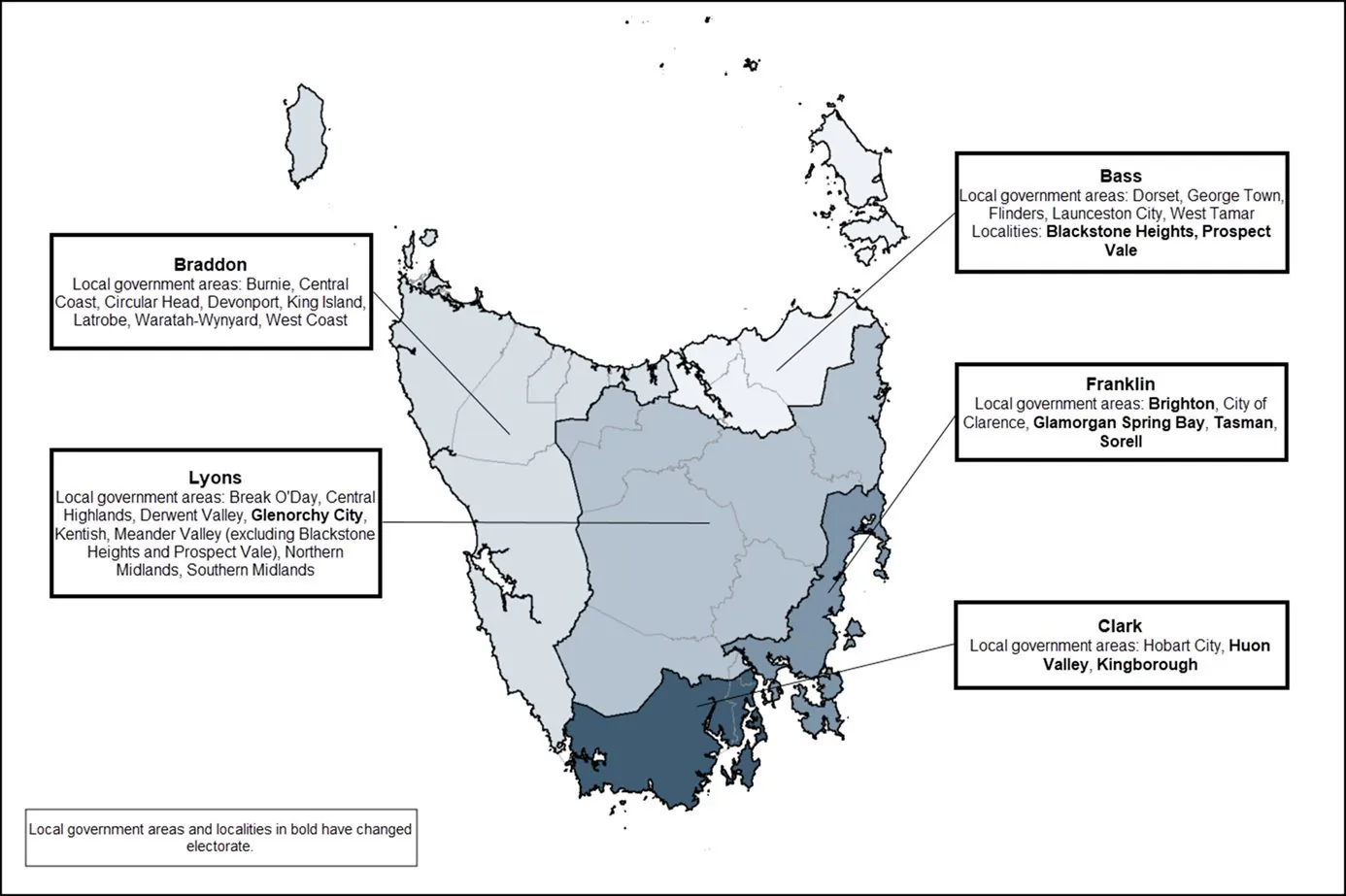
The Break O’Day council area will move from Lyons into the northern electorate of Bass, while Lyons will keep the suburbs of Blackstone Heights and Prospect Vale.
The decision also includes a name change, with Franklin to be renamed Tongerlongeter in honour of the Aboriginal leader and warrior who died in 1837.
Electoral Commissioner Jeff Pope said the changes are designed to address an issue where Franklin had sprawled on both sides of Hobart’s River Derwent, divided by the inner city electorate of Clark.
“Clark couldn’t numerically accommodate the changes required to align communities of interest in the rest of Kingborough and the Huon Valley, as well as the City of Glenorchy,” he said.
The changes will have significant implications for politicians, with several high-profile MPs set to live outside their current electorates.
Federal Assistant Health Minister Rebecca White will live in Franklin, rather than Lyons, while Treasurer Eric Abetz, Shadow Treasurer Dean Winter, and Greens Leader Rosalie Woodruff will all live in Clark, rather than Franklin.
Opposition Leader Josh Willie and Independent MP Kristie Johnston will both live in Lyons, rather than Clark.
Analysis: What This Means for AustraliaThe AEC’s boundary redistribution has significant implications for Tasmania’s electoral landscape.
The changes will see a major shift in the demographics of several electorates, which could impact the outcome of future elections.
The decision to move the Glenorchy council area into Lyons is likely to have the most significant impact, as it will bring a large number of urban voters into a rural electorate.
The changes also raise questions about the representation of Aboriginal Australians in Tasmania’s electoral system. The proposed name change from Franklin to Tongerlongeter is a significant step towards acknowledging the state’s Indigenous history.
However, it remains to be seen whether this change will have any tangible impact on the lives of Aboriginal Tasmanians. Security analysts say the changes could also have implications for national security, as they may affect the representation of certain communities in parliament.
“The changes could potentially lead to a shift in the balance of power in certain electorates, which could have implications for national security policy,” said one analyst.
Law enforcement insiders warn that the changes could also impact the way that law enforcement agencies operate in Tasmania.
“The changes could potentially lead to a shift in the way that police resources are allocated, which could impact the effectiveness of law enforcement in certain areas,” said one insider.
Industry observers believe that the changes could also have economic implications, particularly for businesses that operate in the affected electorates.
“The changes could potentially lead to a shift in the way that businesses operate in certain areas, which could impact the local economy,” said one observer.
In conclusion, the AEC’s boundary redistribution has significant implications for Tasmania’s electoral landscape, national security, law enforcement, and the economy.
As the changes take effect, it remains to be seen how they will impact the lives of Tasmanians and the way that the state is represented in parliament.
The Australian Electoral Commission’s (AEC) long-awaited boundary redistribution has been met with a mix of shock and uncertainty, as more than 114,000 Tasmanians prepare to vote in different electorates. The changes, which are the most significant in recent memory, aim to align communities of interest in southern Tasmania as much as possible. However, the decision to move the Glenorchy council area into the rural electorate of Lyons has prompted widespread community concern.
The AEC’s final decision, which was largely in line with the draft determination from February, includes some minor changes. The Break O’Day council area will move from Lyons into the northern electorate of Bass, while Lyons will keep the suburbs of Blackstone Heights and Prospect Vale. The decision also includes a name change, with Franklin to be renamed Tongerlongeter in honour of the Aboriginal leader and warrior who died in 1837.
Electoral Commissioner Jeff Pope said the changes are designed to address an issue where Franklin had sprawled on both sides of Hobart’s River Derwent, divided by the inner city electorate of Clark. “Clark couldn’t numerically accommodate the changes required to align communities of interest in the rest of Kingborough and the Huon Valley, as well as the City of Glenorchy,” he said.
The changes will have significant implications for politicians, with several high-profile MPs set to live outside their current electorates. Federal Assistant Health Minister Rebecca White will live in Franklin, rather than Lyons, while Treasurer Eric Abetz, Shadow Treasurer Dean Winter, and Greens Leader Rosalie Woodruff will all live in Clark, rather than Franklin. Opposition Leader Josh Willie and Independent MP Kristie Johnston will both live in Lyons, rather than Clark.
The AEC’s boundary redistribution has significant implications for Tasmania’s electoral landscape. The changes will see a major shift in the demographics of several electorates, which could impact the outcome of future elections. The decision to move the Glenorchy council area into Lyons is likely to have the most significant impact, as it will bring a large number of urban voters into a rural electorate.
The changes also raise questions about the representation of Aboriginal Australians in Tasmania’s electoral system. The proposed name change from Franklin to Tongerlongeter is a significant step towards acknowledging the state’s Indigenous history. However, it remains to be seen whether this change will have any tangible impact on the lives of Aboriginal Tasmanians.
Security analysts say the changes could also have implications for national security, as they may affect the representation of certain communities in parliament. “The changes could potentially lead to a shift in the balance of power in certain electorates, which could have implications for national security policy,” said one analyst.
Law enforcement insiders warn that the changes could also impact the way that law enforcement agencies operate in Tasmania. “The changes could potentially lead to a shift in the way that police resources are allocated, which could impact the effectiveness of law enforcement in certain areas,” said one insider.
Industry observers believe that the changes could also have economic implications, particularly for businesses that operate in the affected electorates. “The changes could potentially lead to a shift in the way that businesses operate in certain areas, which could impact the local economy,” said one observer.
In conclusion, the AEC’s boundary redistribution has significant implications for Tasmania’s electoral landscape, national security, law enforcement, and the economy. As the changes take effect, it remains to be seen how they will impact the lives of Tasmanians and the way that the state is represented in parliament.