

America’s Fast Food Nightmare: ‘Explosive’ Diarrhoea Outbreak Linked to Tainted Taco Bell Lettuce from Mexico
- More than 30 US states have reported a record-breaking outbreak of cyclospora infections, with over 4,700 cases so far this year
- Taco Bell’s shredded iceberg lettuce, sourced from a single Mexican supplier, has been identified as the culprit behind the widespread illness
- Experts warn that climate change and improved detection methods are contributing to a surge in cyclospora cases, which can cause ‘frequent and explosive bowel movements’
- The outbreak has prompted health officials to issue urgent warnings and Taco Bell to temporarily remove the tainted lettuce from its menus
The United States is in the grip of a fast food nightmare, with a record-breaking outbreak of cyclospora infections sweeping across the nation.
At the epicentre of the crisis is Taco Bell, the popular Mexican-inspired chain, whose shredded iceberg lettuce has been identified as the source of the illness.
The tainted lettuce, sourced from a single supplier in Mexico, has been served in Taco Bell locations across five US states, leaving a trail of diarrhoea-stricken customers in its wake.
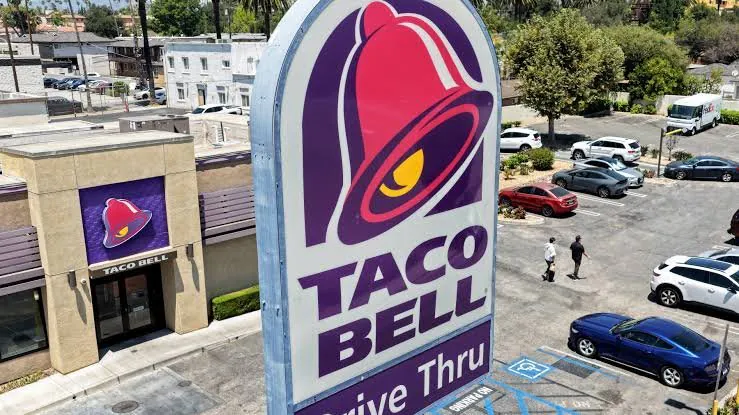
The Centers for Disease Control and Prevention (CDC) has confirmed that the outbreak, which has affected over 30 states, is linked to the contaminated lettuce.
The federal agency has issued a warning to consumers, advising them to avoid eating shredded iceberg lettuce from Taco Bell restaurants in Indiana, Kentucky, Michigan, Ohio, and West Virginia.
The Food and Drug Administration (FDA) is working with the supplier to determine if potentially contaminated lettuce remains on the market.
Cyclospora is a microscopic, spherical parasite that commonly causes watery diarrhoea, ‘with frequent and sometimes explosive bowel movements’, according to the CDC. The illness is not usually life-threatening and is typically treated with antibiotics.
However, the parasite can infect the bowels and spread through faeces, making it a serious concern for public health officials.
Outbreaks of cyclospora tend to occur most often in the late spring and summer, when the heat-loving parasite is most active. In the past, people have been infected by consuming fruits or vegetables that were exposed to faeces-contaminated irrigation water.
The illness, called cyclosporiasis, is less common than foodborne illnesses caused by other germs, including salmonella and E coli.
However, experts warn that cyclospora cases have been on the rise in recent years, with a notable spike in 2018 and 2019. They attribute the increasing trend in cases to climate change and better detection methods.
‘It’s likely that cyclospora cases historically were under-reported, in part because some common tests used to check for food poisoning have not been geared to detect cyclospora,’ said one expert.
Analysis: What This Means for Australia
The outbreak has significant implications for Australia, where food safety regulations are in place to prevent similar incidents. However, the fact that the tainted lettuce was sourced from Mexico highlights the risks associated with importing food from countries with different safety standards.
‘This outbreak is a wake-up call for Australian authorities to review our food safety protocols and ensure that we are doing everything possible to prevent similar incidents,’ said a food safety expert.
Security analysts warn that the outbreak also raises concerns about the security of the global food supply chain.
‘The fact that a single supplier in Mexico can cause a nationwide outbreak in the US highlights the vulnerabilities in our food system,’ said one analyst.
‘We need to be more vigilant in monitoring the origin and safety of our food to prevent similar incidents in the future.’
Law enforcement insiders also point out that the outbreak highlights the need for greater cooperation between authorities to prevent and respond to food safety incidents. ‘We need to work together to share intelligence and best practices to prevent these types of incidents from happening,’ said one insider.