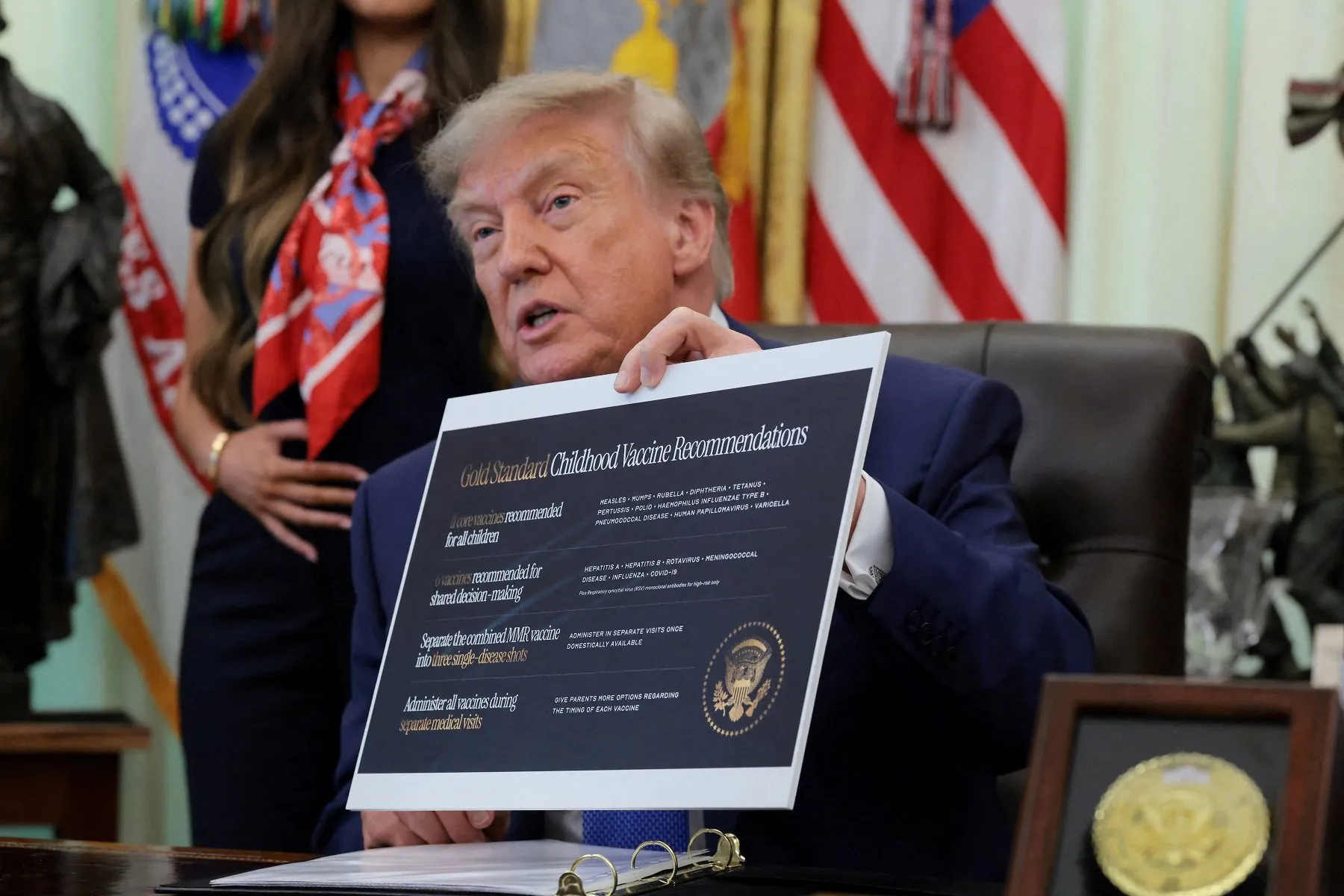
Trump’s Vaccine Bombshell: Separating MMR Shots Sparks Fears of Autism Link and Public Health Crisis
- President Trump signs executive order to separate MMR vaccine into three single-disease shots, despite scientific consensus on its safety
- Public health experts warn of increased risk of vaccine-preventable diseases and potential public health crisis
- Trump’s move sparks concerns over vaccine hesitancy and rising autism diagnoses, despite no scientific link
- Doctors and lawmakers slam the executive order, calling it “wrong” and “misinformed”
The US is on the brink of a public health crisis, with President Trump’s latest executive order sparking widespread concern among medical experts and lawmakers.
The order, signed on Monday, calls for the separation of the measles, mumps, and rubella (MMR) vaccine into three single-disease shots, despite decades of scientific research confirming its safety and efficacy.
Trump’s move has been met with fierce criticism, with many warning of the potential consequences of vaccine hesitancy and the spread of preventable diseases.
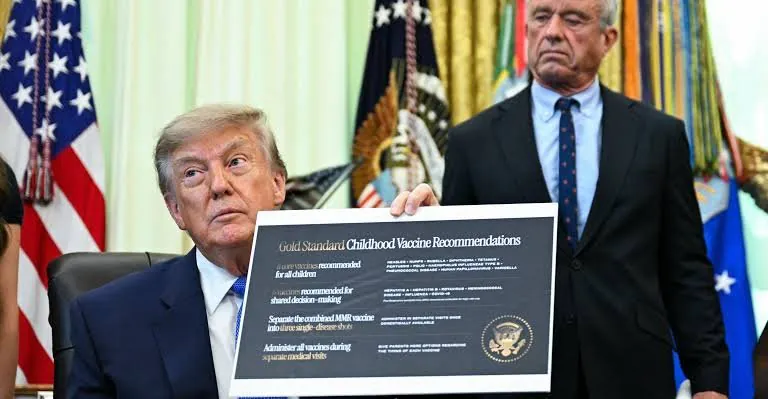
At the heart of the controversy is Trump’s long-held but discredited theory that childhood shots can cause autism.
Despite overwhelming evidence to the contrary, Trump has repeatedly suggested a link between vaccines and autism, sparking fears among parents and fueling the anti-vaccine movement.




The president’s latest move has been described as a “major victory for parents’ rights, religious and constitutional rights, and for the gold standard science” – a claim that has been widely disputed by medical experts.
Public health experts have raised concerns that spacing out shots, as Trump suggests, can lead to an increased risk of children becoming infected with vaccine-preventable diseases before returning for another visit.
Childhood vaccines undergo rigorous studies and safety tracking, and the scientific consensus is clear: there is no link between vaccines and autism.
The Centers for Disease Control and Prevention (CDC) and the American Academy of Pediatrics have both reaffirmed the safety and efficacy of the MMR vaccine, citing decades of research and data.
Analysis: What This Means for Australia
The implications of Trump’s executive order are far-reaching, with potential consequences for public health and vaccine policy in Australia. As the US grapples with a measles outbreak and rising vaccine hesitancy, Australia’s own vaccination rates are under scrutiny.
With the country’s vaccination schedule and policies under review, Trump’s move could have a ripple effect on Australia’s public health landscape.
Security analysts say that the spread of misinformation and vaccine hesitancy could have serious consequences for Australia’s national security, particularly in the context of pandemics and global health crises.
Law enforcement insiders warn that the executive order could embolden anti-vaccine groups and fuel the spread of misinformation, potentially leading to a decline in vaccination rates and an increased risk of preventable diseases.
Industry observers believe that Trump’s move could have economic and social consequences, particularly for vulnerable communities and those with compromised immune systems.
As Australia navigates its own vaccination policies and public health challenges, the US example serves as a cautionary tale about the dangers of misinformation and the importance of evidence-based policy.
Expert Commentary
“The science is clear: there is no link between vaccines and autism,” said Dr. Andrew Racine, president of the American Academy of Pediatrics.
“We have studied this question extensively, and the answer is unequivocally no.” Security analysts say that Trump’s executive order is a “recipe for disaster,” warning of the potential consequences of vaccine hesitancy and the spread of preventable diseases.
Law enforcement insiders believe that the move could embolden anti-vaccine groups and fuel the spread of misinformation.
As the US grapples with the implications of Trump’s executive order, Australia must take heed of the lessons learned. The spread of misinformation and vaccine hesitancy has serious consequences for public health, national security, and the economy.
As the country navigates its own vaccination policies and public health challenges, it is essential to prioritize evidence-based policy and protect the integrity of the vaccination schedule.