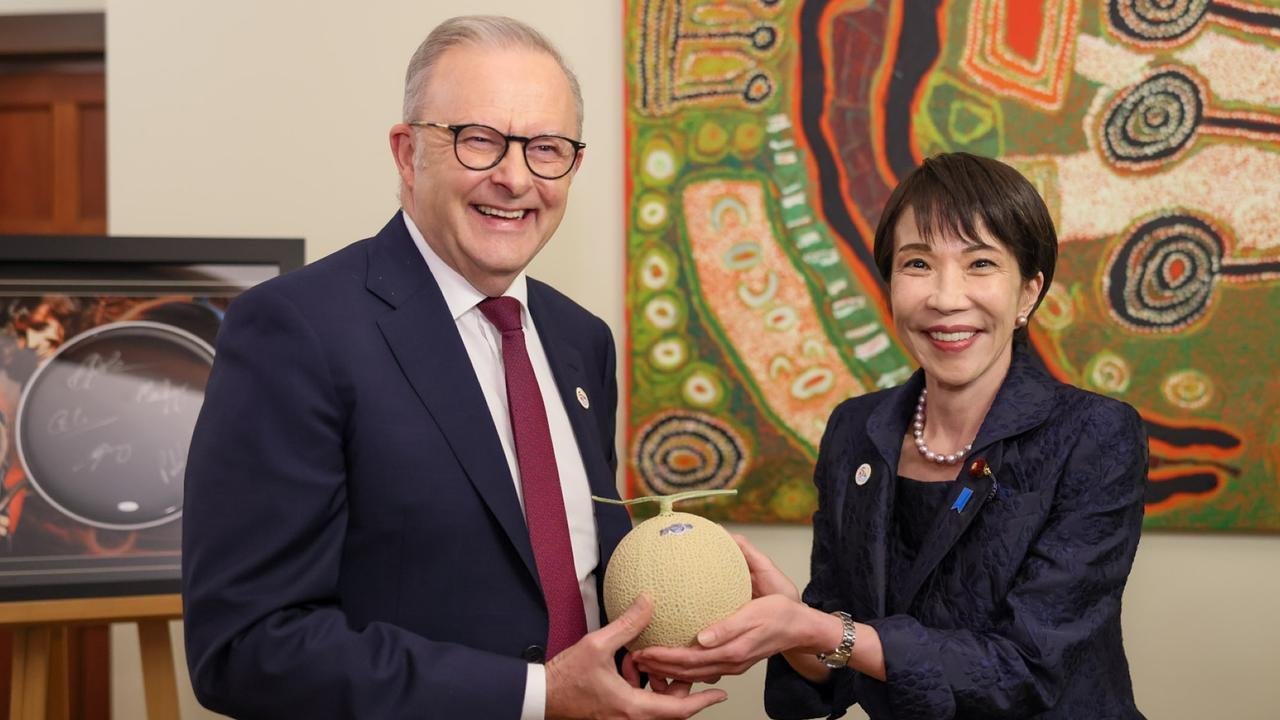
Japan’s ‘MelonGate’ Scandal: How Anthony Albanese’s Joke Threatens to Derail Australia’s Critical Defence Ties with Tokyo
- Anthony Albanese’s comments about Japan’s Prime Minister Takaichi Sanae’s gift of two melons have sparked a diplomatic row between Australia and Japan.
- The Australian Prime Minister’s joke has been labelled a “baffling diplomatic misstep” by insiders, who warn it could damage the growing defence ties between the two nations.
- Japan’s government has been forced to address the issue after a leaked diplomatic memo and a former Japanese ambassador’s criticism sparked a fresh wave of controversy in Australia.
- The scandal comes as Japan takes a strong stance against China and seeks to position itself as a defender of the rules-based order in the region.
The controversy surrounding Anthony Albanese’s comments about Japan’s Prime Minister Takaichi Sanae’s gift of two melons has taken a dramatic turn, threatening to derail the growing defence ties between Australia and Japan.
The Australian Prime Minister’s joke, made on a podcast, has been labelled a “baffling diplomatic misstep” by insiders, who warn it could have serious consequences for the relationship between the two nations.
The scandal began when Albanese referred to the melons as “the most crap gift” he had received overseas, and made a gesture that some interpreted as a reference to Japan’s first female prime minister.
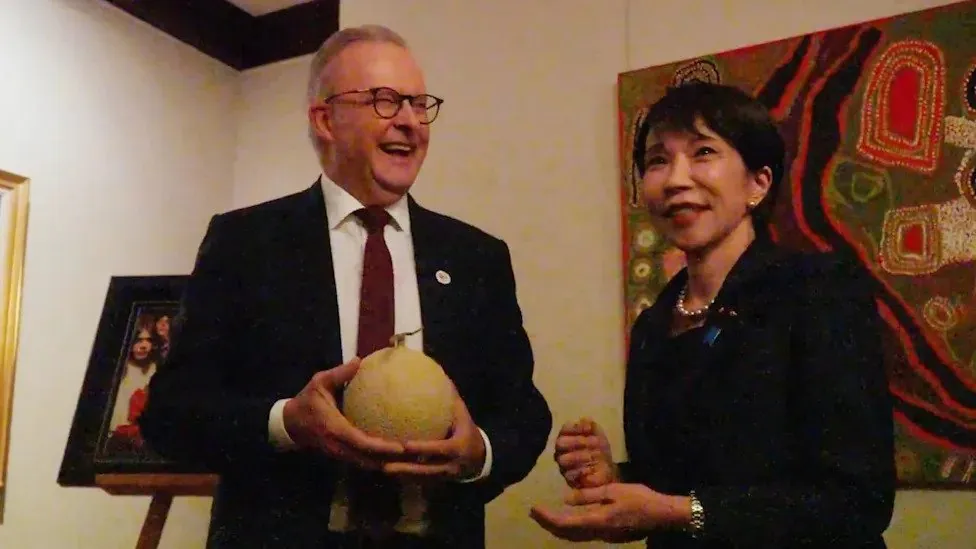
The comments sparked a backlash in Australia, with the Coalition referring the leak of a diplomatic memo to the Australian Federal Police.
The memo, reported in The Australian newspaper, suggested that Japanese diplomats believed there was no “ill intention” in Albanese’s comments and would take “no action” to allow the Australian media to move on.



However, the issue has now been thrust back into the spotlight by a former Japanese ambassador to Australia, Yamagami Shingo, who penned an opinion piece in The Australian suggesting that the comments could damage the relationship between the two countries.
Yamagami’s comments have been seen as a significant escalation of the scandal, and have sparked a fresh wave of controversy in Australia.
Gift giving is a serious business in Japan, with gifts carrying significant weight and being carefully selected to convey respect and appreciation. Insulting a Japanese gift is considered a grave diplomatic faux pas, and Albanese’s comments have been widely criticised as a thoughtless and insensitive mistake.
Analysis: What This Means for Australia
The scandal has significant implications for Australia’s defence ties with Japan, which have been growing in recent years.
Japan is a critical partner for Australia in the region, and the two nations have been working closely together on a range of defence and security issues.
However, the scandal threatens to derail this cooperation, and has the potential to damage the relationship between the two nations.
Security analysts say that the scandal highlights the need for greater cultural awareness and sensitivity in diplomatic relations.
“Gift giving is a complex and nuanced aspect of Japanese culture, and it’s essential that Australian politicians understand the significance of gifts in Japanese diplomacy,” said one analyst.
Law enforcement insiders warn that the scandal also has implications for Australia’s national security.
“The fact that the Coalition has referred the leak of the diplomatic memo to the Australian Federal Police suggests that there are concerns about the potential for the scandal to be exploited by foreign actors,” said one insider.
Industry observers believe that the scandal will have significant economic consequences for Australia.
“Japan is a critical market for Australian exports, and any damage to the relationship between the two nations could have serious implications for Australian businesses,” said one observer.
As the scandal continues to unfold, it remains to be seen how it will be resolved.
However, one thing is clear: the fallout from Albanese’s joke will be felt for some time to come, and will have significant implications for Australia’s defence ties with Japan.