‘Trans Athlete’ Furore Engulfs WNBA as Trump, Conservatives, and Ex-NBA Players Join the Fray, Threatening to Derail Women’s Basketball
- The WNBA is under siege from external forces exploiting its inclusivity and diversity, with conservatives and ex-NBA players using the league as a platform for their agendas.
- Indiana Fever’s Sophie Cunningham sparked the controversy with her comments on transgender athletes, which were met with backlash from the WNBA community and support from conservatives.
- The situation has escalated, with ex-NBA players Enes Kanter Freedom and Royce White declaring their intentions to enter the 2027 WNBA draft, sparking outrage and accusations of a publicity stunt.
- The WNBA’s 30th season is being overshadowed by the controversy, despite the emergence of exciting young players like Caitlin Clark, who has become a target for Republican politicians and conservative commentators.
The WNBA has long been a beacon of inclusivity and diversity in women’s sports, but the latest controversy surrounding transgender athletes has exposed the league to a torrent of criticism and exploitation from external forces.
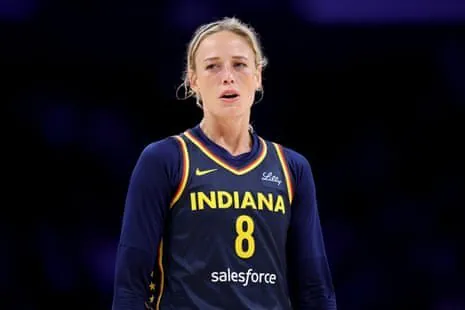
At the centre of the storm is Indiana Fever’s Sophie Cunningham, who sparked the furore with her comments on transgender athletes in women’s sports.
Cunningham’s views, which she claims are driven by a desire to protect women’s sport, have been met with a wave of support from conservatives and ex-NBA players, but have also been widely condemned by the WNBA community.
The situation has escalated in recent days, with ex-NBA players Enes Kanter Freedom and Royce White declaring their intentions to enter the 2027 WNBA draft.
The move has been widely seen as a publicity stunt, designed to provoke a reaction and draw attention to the issue of transgender athletes in women’s sports.

Kanter Freedom, who has been a vocal critic of the WNBA’s inclusivity policies, has even gone so far as to don a long-haired wig in interviews, claiming he is in his “feminine era”.
The stunt has been met with outrage and accusations of insincerity, with many questioning the motivations behind the move.
The controversy has also drawn in US President Donald Trump and his vice-president JD Vance, who have both weighed in on the issue. Trump has praised Cunningham as “inspiring”, while Vance has labelled her a “hero” for speaking out on the issue.
The involvement of high-profile politicians has only served to further inflame the situation, with many accusing them of using the issue as a way to stoke division and controversy.
But the controversy has also highlighted the deep-seated tensions within the WNBA itself. Cunningham’s comments have been met with a strong backlash from many within the league, who see her views as divisive and hurtful.
The WNBA’s Player’s Association has denounced “hate abuse and demonisation of the transgender community”, while coaches like Cheryl Reeve have spoken out in support of the league’s inclusivity policies.
Reeve, who wore a “Trans Kids Belong” T-shirt during a recent game, has been a vocal critic of Cunningham’s views, saying that they are “problematic” and “hurtful”.
Analysis: What This Means for Australia
The controversy surrounding the WNBA has significant implications for Australia, where women’s sport is also grappling with issues of inclusivity and diversity. The WNBA’s experience serves as a cautionary tale about the dangers of external forces exploiting these issues for their own agendas.
As the Australian women’s sports landscape continues to evolve, it is essential that we prioritize inclusivity and respect for all athletes, regardless of their background or identity.
By doing so, we can create a more supportive and inclusive environment for women’s sport to thrive.
Security analysts say that the WNBA’s experience highlights the need for sports leagues to be vigilant in protecting their athletes and communities from external threats.
“The WNBA’s situation is a wake-up call for all sports leagues to take a proactive approach to addressing issues of inclusivity and diversity,” said one analyst.
“By prioritizing respect and inclusivity, we can create a safer and more supportive environment for all athletes.”
Law enforcement insiders warn that the controversy surrounding the WNBA also has implications for public safety. “When external forces exploit issues like this, it can create a toxic environment that can have real-world consequences,” said one insider.
“It’s essential that we take a strong stance against hate speech and discrimination, and work to create a more inclusive and respectful environment for all.”
The controversy surrounding the WNBA is a timely reminder of the importance of prioritizing inclusivity and respect in women’s sport.
As the Australian women’s sports landscape continues to evolve, it is essential that we learn from the WNBA’s experience and work to create a more supportive and inclusive environment for all athletes.