Sydney’s Future in the Balance: Government Unveils 20-Year Plan to Tackle Housing Crisis and Drive Economic Growth
- Sydney’s east to see majority of housing growth over next 20 years, with western suburbs driving economic expansion
- Government forecasts 59% rise in job growth in Western Sydney, with 1.3 million new residents expected by 2046
- Critics slam plan for lacking detail on schools and infrastructure, warning it won’t address current housing crisis
- Eastern suburbs to see diverse housing mix, including townhouses and apartments, to cater to growing population
The New South Wales government has unveiled a 20-year blueprint to rebalance the growth of Greater Sydney, with the city’s east expected to see the majority of new housing and western suburbs driving economic expansion.
The plan, dubbed the Sydney Plan, aims to provide homes and workplaces for an extra 1.3 million people by 2046. But critics have slammed the plan for lacking detail on schools and infrastructure, warning it won’t address the current housing crisis.
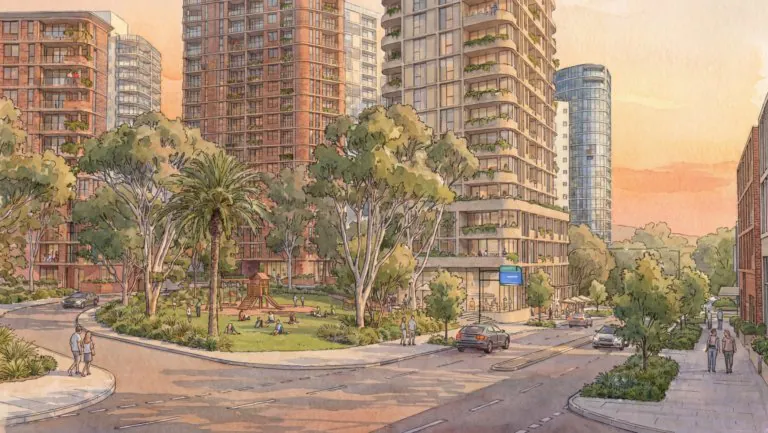
According to the plan, the eastern suburbs will be home to most of Greater Sydney’s new housing over the next 20 years, with a focus on developing upwards rather than outwards.
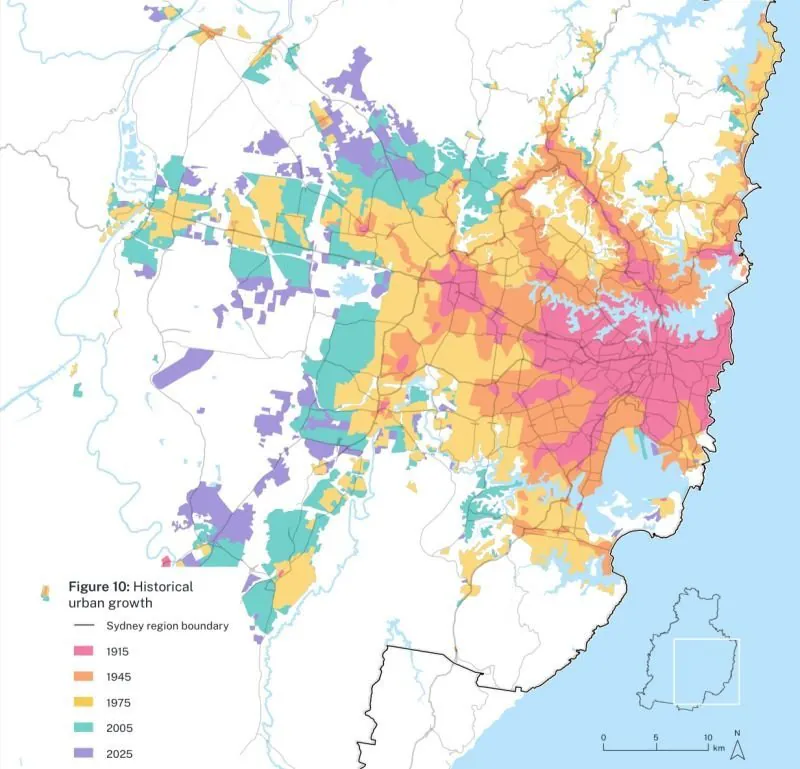
This will be achieved by building on existing infrastructure, rather than greenfield sites. Meanwhile, Western Sydney will drive economic growth, leveraging investment in the area’s second airport, the Moorebank Intermodal Precinct, and vast industrial lands.
The plan is part of the government’s efforts to address the current housing crisis, which has seen prices skyrocket and supply dwindle.




The government hopes that by requiring councils to have land available and zoned to meet a 30-year housing target, the supply of new builds can be quickly topped up.
This, in turn, will help to prevent a repeat of the current housing crisis.
However, Opposition Leader Kellie Sloane has criticized the plan for lacking detail on schools and infrastructure. “It doesn’t put a shovel in the ground, it doesn’t build another house for Sydney.
It doesn’t talk about infrastructure, it doesn’t talk about schools,” she said. “It’s very hard to put faith in a plan for 20 years away when they can’t deliver for now.”
Security analysts say that the plan’s focus on developing existing infrastructure could have significant implications for national security. “By building on existing infrastructure, the government can reduce the risk of new developments being targeted by malicious actors,” one analyst said.
“However, this also means that the government will need to ensure that existing infrastructure is secure and resilient to potential threats.”
Law enforcement insiders warn that the plan’s emphasis on economic growth in Western Sydney could lead to increased crime and social unrest. “As the area becomes more densely populated, there is a risk that crime rates will increase,” one insider said.
“The government will need to ensure that law enforcement resources are adequate to meet the growing demands of the area.”
Industry observers believe that the plan’s focus on developing a diverse housing mix in eastern Sydney could have significant economic benefits. “By providing a range of housing options, the government can attract a diverse range of residents and businesses to the area,” one observer said.
“This, in turn, can drive economic growth and create new opportunities for employment and investment.”
Analysis: What This Means for Australia
The Sydney Plan has significant implications for Australia’s economic and social future. By providing a framework for sustainable growth and development, the government can help to drive economic expansion and create new opportunities for employment and investment.
However, the plan also raises concerns about national security, law enforcement, and social cohesion.
As the government moves forward with the plan, it will need to carefully balance these competing interests and ensure that the needs of all Australians are met.
As the population of Sydney continues to grow, it is clear that the city will play an increasingly important role in Australia’s economic and social future.
The Sydney Plan provides a roadmap for this growth, but it is up to the government to ensure that it is implemented effectively and that the needs of all Australians are met.