Iran Fires Back at Trump’s Brazen Claim to Seize Control of Vital Oil Route as Tensions Escalate in the Strait of Hormuz
- Iran’s deputy foreign minister ridicules Trump’s assertion that the US can declare the Strait of Hormuz a US territory, calling it a ‘delusion’
- The Strait of Hormuz, a critical waterway that carried one-fifth of the world’s oil supply, has become a flashpoint in the six-month war between the US and Iran
- Iran launches a strike against an oil tanker in the strait, with no injuries reported, as the US deploys a blockade and Trump insists on seizing ownership
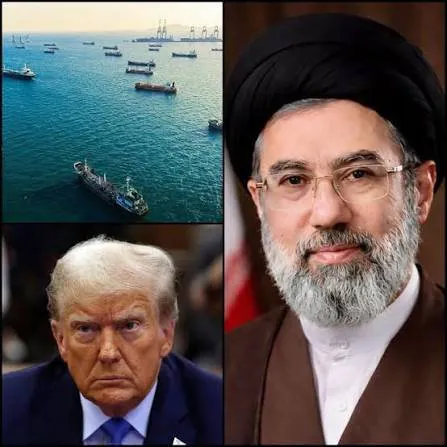
The Strait of Hormuz, a narrow waterway that connects the Persian Gulf to the Gulf of Oman and the Arabian Sea, has become the focal point of an escalating standoff between the US and Iran.
In a shocking claim, US President Donald Trump declared that he would declare the strait a US territory, sparking a fiery response from Iranian officials. Iran’s deputy foreign minister, Kazem Gharibabadi, took to social media to ridicule Trump’s assertion, saying the US has ‘no authority’ over the vital waterway.
Trump’s claim, made during a speech at a Long Island police academy, was met with skepticism by Iranian officials, who view the strait as a critical component of their national security.
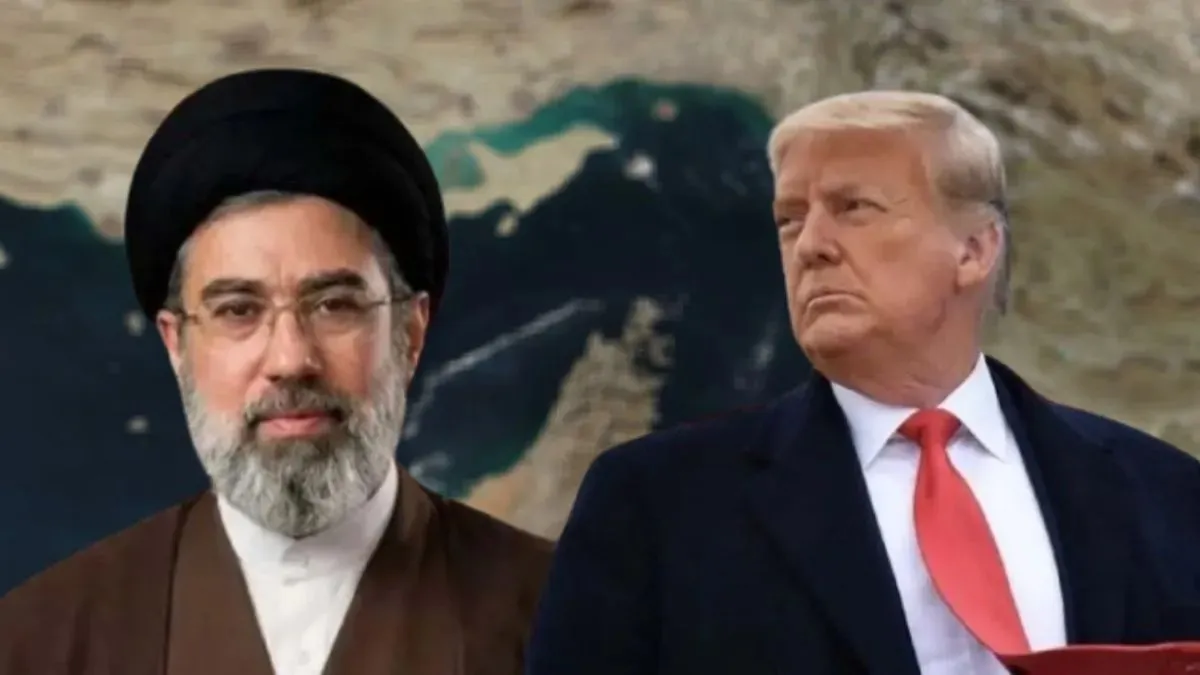
The strait, which is currently under the shared jurisdiction of Oman and Iran, has been the site of several incidents in recent months, including a strike against an oil tanker yesterday.
The UK Maritime Trade Operations Centre reported that a vessel belonging to the Abu Dhabi National Oil Company was hit by an ‘unknown projectile’, with no injuries reported.



The strait’s importance cannot be overstated, with one-fifth of the world’s oil supply passing through it before hostilities began in February.
The US has twice deployed a blockade of the waterway, with Trump insisting that vessels which continue to pass through do so only with America’s permission.
However, Iran has refused to back down, with Gharibabadi saying that the strait ‘will only be closed and opened under Iran’s command’. The Iranian government has also vowed to ‘enforce its blockade’ of the waterway as long as Trump ‘will not accept the reality of defeat’.
The conflict has had significant economic implications, with oil prices surging since the start of the war. The price of crude has risen 6 per cent this week, as hopes of a peace deal between the US and Iran faded.
Trump has shown no signs of backing down, telling Fox News that he will ‘hit Iran’s economy hard’ and that he ‘didn’t care’ whether or not the war ended before November’s midterm elections in the US.
Security analysts say that the situation in the Strait of Hormuz has significant implications for global oil supplies and the stability of the region.
‘The Strait of Hormuz is a critical chokepoint for global oil trade, and any disruption to traffic through the strait could have far-reaching consequences for the global economy,’ said one analyst.
Law enforcement insiders warn that the situation is becoming increasingly volatile, with the potential for further incidents and escalating tensions between the US and Iran.
Analysis: What This Means for Australia
The conflict in the Strait of Hormuz has significant implications for Australia’s national security and economy. As a major importer of oil, Australia is heavily reliant on the stability of global oil supplies.
Any disruption to traffic through the strait could have significant consequences for Australia’s energy security and economy. Furthermore, the conflict has the potential to draw in other regional powers, including Australia’s allies in the Middle East.
As the situation continues to escalate, Australia must carefully consider its response and ensure that it is prepared for any potential consequences.
Industry observers believe that the conflict in the Strait of Hormuz is likely to have a lasting impact on global oil markets.
‘The situation in the Strait of Hormuz is a wake-up call for Australia and other countries that rely heavily on imported oil,’ said one expert.
‘It highlights the need for greater investment in renewable energy and energy security measures to reduce our reliance on imported oil.’