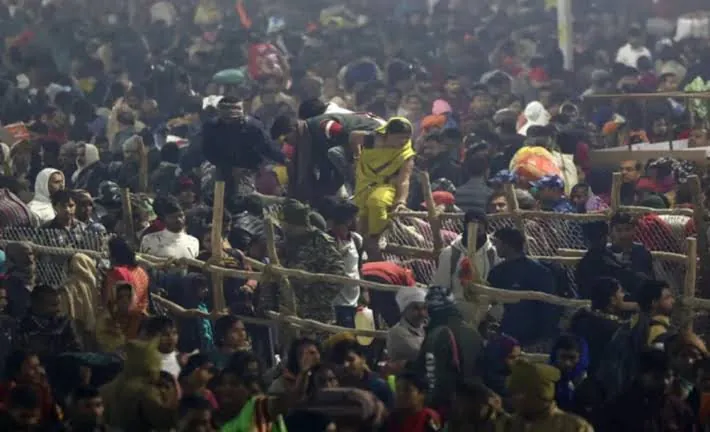
Deadly Stampede At Indian Religious Festival Leaves At Least 17 Dead And 25 Injured As Crowds Rush For Shelter From Sudden Rainfall
- A devastating stampede at a Hindu festival in eastern India has resulted in a horrific loss of life, with at least 17 people killed and 25 others injured in the chaos.
- The tragedy occurred when a sudden downpour sparked a frantic rush for shelter, causing a massive crowd surge that proved fatal for many attendees, including a seven-year-old girl.
- Indian authorities have launched an investigation into the disaster, which is the latest in a series of deadly crowd incidents at Indian mass events, highlighting concerns over management and safety lapses.
- The Indian government has announced compensation payments for the victims’ families, but the tragedy has raised questions about the preparedness of event organizers to handle large crowds and respond to emergencies.
The city of Kolkata in eastern India is reeling from a devastating stampede that occurred during a Hindu religious festival, leaving at least 17 people dead and 25 others injured.
The tragedy happened when a sudden rainfall sparked a frantic rush for shelter, causing a massive crowd surge that proved fatal for many attendees.
West Bengal State Minister Umesh Rai confirmed that the injured victims have been taken to different hospitals for treatment, while West Bengal’s Chief Minister Suvendhu Adhikari said that the fatalities included a seven-year-old girl.
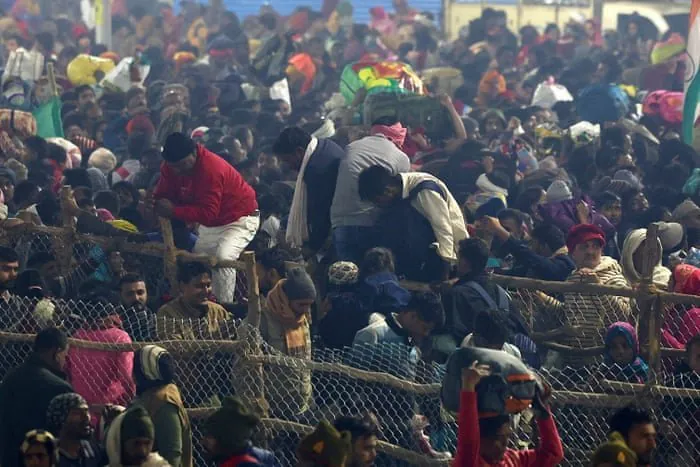
According to eyewitnesses, an announcement caused a “commotion” after it started raining, and the crowd waiting outside a pavilion began pushing, pulling, and rushing forward, leading to the stampede.
A senior police official said that the sudden influx of people into the pavilion was the primary cause of the tragedy.




Indian Prime Minister Narendra Modi’s office has announced a compensation payment of 200,000 rupees ($2,106.15) for the next of kin of those who died and 50,000 rupees each for the injured.
The stampede at the Hindu festival of Durga Puja is the latest in a series of deadly crowd incidents at Indian mass events.
Last year, a stampede at India’s Kumbh Mela religious fair killed 30 people and injured several others, while 11 fans were crushed to death in Bengaluru during celebrations for the local cricket team’s first Indian Premier League title.
In 2024, 121 people were killed in northern Uttar Pradesh state during a Hindu religious gathering.
These incidents have raised concerns over management and safety lapses at Indian mass events, with many questioning the preparedness of event organizers to handle large crowds and respond to emergencies.
Security analysts say that the lack of effective crowd control measures and emergency response plans is a major contributor to these tragedies. Law enforcement insiders warn that the situation is further complicated by the sheer scale of Indian mass events, which can attract millions of people.
Industry observers believe that the Indian government needs to take a more proactive approach to addressing these concerns, including investing in better infrastructure and training for event organizers and emergency responders.
Analysis: What This Means for Australia
While the stampede at the Hindu festival in India may seem like a distant tragedy, it has significant implications for Australia. As a country with a large and diverse population, Australia is not immune to the risks of crowd incidents at mass events.
In fact, Australia has experienced its own share of crowd-related tragedies, including the crowd crush at a music festival in Sydney. The Indian stampede serves as a stark reminder of the importance of effective crowd control measures and emergency response plans at Australian events.
Law enforcement agencies and event organizers must take a proactive approach to mitigating these risks, including investing in better infrastructure and training for emergency responders.
Security experts say that Australia can learn valuable lessons from the Indian stampede, including the importance of having a comprehensive emergency response plan in place. This includes having a clear communication strategy, adequate medical facilities, and a well-trained team of emergency responders.
By studying the causes of the Indian stampede and implementing measures to prevent similar tragedies, Australia can reduce the risk of crowd incidents at its own mass events.
As the country continues to host large-scale events, including sports matches and music festivals, it is essential that event organizers and authorities prioritize crowd safety and take a proactive approach to mitigating risks.
Furthermore, the Indian stampede highlights the need for greater international cooperation on crowd safety. As global events become increasingly popular, it is essential that countries share best practices and lessons learned to prevent similar tragedies.
The Australian Bureau of Statistics has reported that the number of people attending mass events in Australia is increasing, making it essential that event organizers and authorities prioritize crowd safety.
By working together and sharing knowledge, countries can reduce the risk of crowd incidents and ensure that mass events are safe and enjoyable for all attendees.