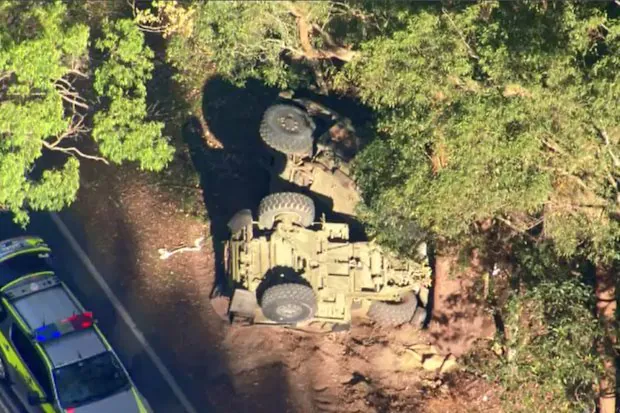
Army Truck Plunges Off Highway in Queensland, Raising Fears Over Military Vehicle Safety After Deadly Northern Territory Crash
- A single-vehicle crash involving an army truck has left two men hospitalised in the Ipswich region of Queensland, sparking concerns over military vehicle safety
- The incident comes just one week after a fatal army truck rollover in the Northern Territory, which claimed the life of 28-year-old soldier Brendan Hannam and injured five others
- Military authorities are yet to confirm whether the truck involved in the Queensland crash is an official Australian Defence Force vehicle, amid growing fears over the safety of military vehicles on public roads
- The crash has prompted federal opposition leader Angus Taylor to call for greater awareness of the dangers faced by ADF members, even outside of wartime, and has raised questions over the safety protocols in place for military vehicles
The Queensland crash occurred on the Centenary Motorway at Springfield Lakes, just before 10:30am on Sunday, when the army truck rolled off the highway in the southbound lanes, near the on-ramp from Springfield Lakes Boulevard.
Two men, aged in their 30s and 40s, suffered minor injuries and were taken to Mater Private Hospital in stable conditions, according to the Queensland Ambulance Service.
The incident has resulted in reduced lanes and delays for motorists, as emergency services work to clear the crash site.
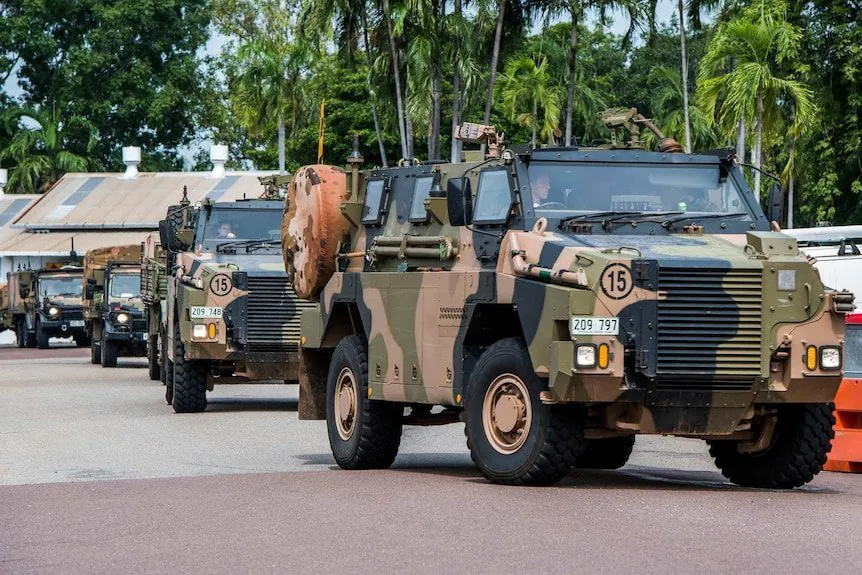
As the investigation into the crash continues, police are working to determine whether the military-style truck is an official Australian Defence Force vehicle. The ADF has been contacted for comment, but so far, no official statement has been released.
The lack of clarity over the truck’s ownership has raised more questions than answers, particularly in light of the recent fatal crash in the Northern Territory.



On October 5, a junior Non-Commissioned Officer in the Royal Australian Regiment, 28-year-old Brendan Hannam, died in a routine training exercise when an official Army troop carrier rolled at the Mount Bundey Training Area.
Five other Australian Army soldiers were injured in the incident, which has been described as a “tragic reminder” of the dangers faced by ADF members, even outside of wartime.
The Queensland crash is a stark reminder of the risks associated with military vehicles on public roads. With the ADF frequently transporting personnel and equipment across the country, the safety of these vehicles is of paramount importance.
The fact that the truck involved in the Queensland crash was travelling on a public highway, rather than a designated military route, has raised concerns over the potential risks to civilian motorists.
As the investigation into the crash continues, it is likely that questions will be asked about the safety protocols in place for military vehicles on public roads, and whether more needs to be done to mitigate these risks.
Security analysts say that the recent incidents highlight the need for greater awareness of the dangers faced by ADF members, both on and off the battlefield.
The fact that these incidents have occurred in a relatively short period of time has raised concerns over the safety and maintenance of military vehicles, as well as the training and protocols in place for personnel.
Law enforcement insiders warn that the use of military vehicles on public roads poses a unique set of challenges, particularly in terms of safety and security.
As the ADF continues to transport personnel and equipment across the country, it is essential that the necessary safety protocols are in place to mitigate these risks and protect both military personnel and civilian motorists.
Analysis: What This Means for Australia
The recent incidents involving military vehicles on public roads have significant implications for Australia’s national security and public safety.
The fact that these incidents have occurred in different parts of the country, from the Northern Territory to Queensland, highlights the need for a comprehensive and coordinated approach to military vehicle safety.
This includes not only the maintenance and upkeep of vehicles but also the training and protocols in place for personnel.
Industry observers believe that the ADF needs to take a proactive approach to addressing these concerns, including investing in new technology and safety equipment, as well as providing ongoing training and support for personnel.
By taking a proactive approach to military vehicle safety, the ADF can help to mitigate the risks associated with these vehicles and protect both military personnel and civilian motorists.
According to Australian Defence Force officials, the safety of military personnel and equipment is of the utmost importance. The ADF has a range of safety protocols in place, including regular maintenance and upkeep of vehicles, as well as training and support for personnel.
However, the recent incidents suggest that more needs to be done to address the risks associated with military vehicles on public roads.
Australian Bureau of Statistics data shows that the number of military vehicles on public roads is increasing, highlighting the need for a comprehensive and coordinated approach to safety.
By working together with state and federal authorities, the ADF can help to ensure that military vehicles are safe and secure, and that the risks associated with these vehicles are mitigated.
As the investigation into the Queensland crash continues, it is likely that more information will come to light about the circumstances surrounding the incident.
In the meantime, the ADF and state and federal authorities must work together to address the concerns over military vehicle safety and take proactive steps to mitigate the risks associated with these vehicles.
This includes investing in new technology and safety equipment, as well as providing ongoing training and support for personnel.
By taking a proactive approach to military vehicle safety, the ADF can help to protect both military personnel and civilian motorists, and ensure that the risks associated with these vehicles are minimised.
In conclusion, the recent incidents involving military vehicles on public roads have significant implications for Australia’s national security and public safety.
The ADF must take a proactive approach to addressing these concerns, including investing in new technology and safety equipment, as well as providing ongoing training and support for personnel.
By working together with state and federal authorities, the ADF can help to ensure that military vehicles are safe and secure, and that the risks associated with these vehicles are mitigated.
As the investigation into the Queensland crash continues, it is essential that the ADF and state and federal authorities take a comprehensive and coordinated approach to military vehicle safety, and work together to protect both military personnel and civilian motorists.