
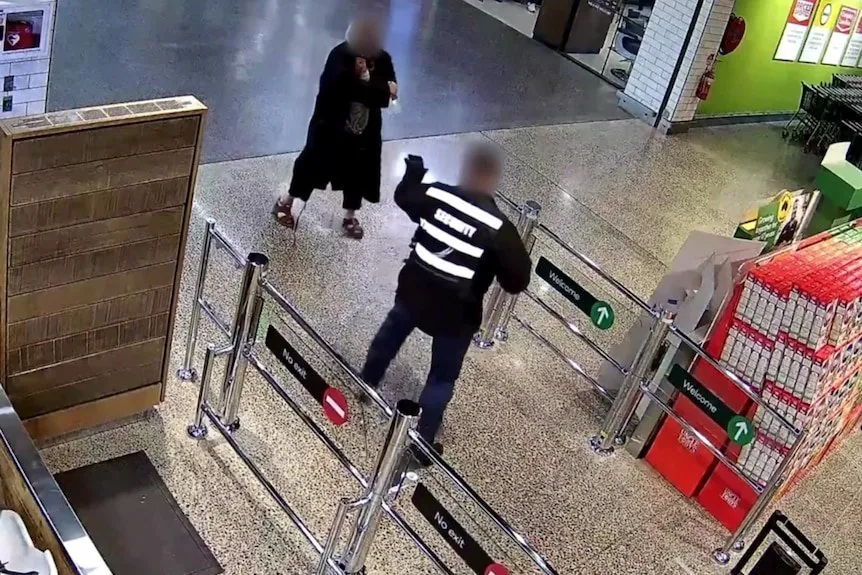
New South Wales Cracks Down On Violent Retail Crime With Tough Laws To Protect Frontline Workers From Abuse And Assault
- Violent customers could face bans from retail stores and shopping centres across New South Wales under new laws aimed at safeguarding frontline workers
- Almost 9000 retail workers were victims of assault last year, with 10 per cent of offenders responsible for 60 per cent of the problems
- Businesses will be able to apply for court orders banning offenders from entering workplaces, contacting staff or possessing weapons under the proposed Workplace Protection Orders
- Anyone who breaches a Workplace Protection Order could face up to two years in jail, a $5500 fine, or both, in a bid to crack down on retail crime
The retail industry in New South Wales is on the cusp of a significant overhaul, with the introduction of tough new laws designed to protect frontline workers from the scourge of violent customers.
The Minns government has unveiled legislation for Workplace Protection Orders, giving businesses the power to ban violent customers aged 14 and over from their stores.
This move comes in response to alarming statistics, which reveal that almost 9000 retail workers were victims of assault last year – a staggering equivalent of about 25 a day.

At the heart of the problem lies a small but notorious group of repeat offenders, who account for a disproportionate amount of the violence and abuse.
According to Shop, Distributive and Allied Employees Association NSW branch secretary Bernie Smith, a mere 10 per cent of offenders are responsible for a whopping 60 per cent of the problems.
This has led to a sense of fear and unease among retail workers, who are often left to deal with the consequences of violent customer behaviour.
The new laws aim to change this, by providing businesses with the tools they need to keep violent customers at bay.
To understand the context behind these new laws, it’s essential to delve into the history of retail crime in New South Wales. The state has long struggled with the issue of violent customers, with many retail workers facing abuse and assault on a daily basis.
The situation has become so dire that NSW Police Minister Yasmin Catley has revealed that officers are regularly deployed to shops to crack down on retail crime.
The numbers are indeed staggering, with police not only charging and putting hundreds of individuals before the court but also recovering stolen stock and acting as a deterrent for anyone who thinks they can get away with this type of offending.
The introduction of Workplace Protection Orders is a significant step forward in the fight against retail crime.
These orders can be sought when a person stalks, intimidates or commits a personal violence offence at a workplace, and there are reasonable grounds to fear the behaviour will continue.
Businesses will be able to apply for court orders banning offenders from entering workplaces, contacting staff or possessing weapons. This will provide a much-needed layer of protection for retail workers, who have for too long been expected to tolerate abusive behaviour from customers.
As Minister for Industrial Relations Sophie Cotsis noted, the changes send a clear message that violence towards workers will not be tolerated, and that the days of telling workers that “the customer is always right” are well and truly over.
Analysis: What This Means for Australia is a critical aspect of this story.
The introduction of Workplace Protection Orders in New South Wales has significant implications for the rest of the country.
As the retail industry continues to grapple with the issue of violent customers, other states and territories will be watching the rollout of these laws with great interest.
Security analysts say that the move could have a profound impact on national security, as it sets a precedent for the protection of frontline workers across the country.
Law enforcement insiders warn that the success of these laws will depend on the ability of businesses to effectively implement them, and for the courts to take a tough stance on offenders who breach the orders.
Industry observers believe that the introduction of Workplace Protection Orders is a step in the right direction, but more needs to be done to address the root causes of retail crime.
As retail industry continues to evolve, it’s essential to consider the broader social and economic factors that contribute to violent customer behaviour. By understanding these factors, policymakers can develop more effective strategies to combat retail crime and protect frontline workers.
For example, mental health and socioeconomic factors can play a significant role in shaping customer behaviour, and addressing these issues could help to reduce the incidence of violence in retail stores.
As the reforms are rolled out over the next 12 months, initially covering retail workplaces with the potential to expand to other industries, it’s essential to consider the potential consequences.
The introduction of Workplace Protection Orders could have a significant impact on the way businesses operate, particularly in terms of their relationships with customers.
While some customers may be banned from stores, others may be more likely to behave in a respectful and courteous manner, knowing that there are consequences for abusive behaviour.
According to Australian Retail Council, the introduction of these laws is a critical step forward in protecting retail workers from violence, threats and intimidation, and will help to break the cycle of offending by keeping dangerous repeat offenders away from workers and customers.
In conclusion, the introduction of Workplace Protection Orders in New South Wales is a significant development in the fight against retail crime.
As the country watches with interest, it’s essential to consider the broader implications of these laws and how they will impact the retail industry as a whole.
By providing a safe and secure working environment for frontline workers, businesses can help to reduce the incidence of violent customer behaviour and create a more positive shopping experience for everyone.
As community safety continues to be a major concern, the introduction of these laws is a timely reminder that the protection of workers is essential to creating a safe and prosperous society.
The road ahead will be challenging, but with the introduction of Workplace Protection Orders, there is hope that the retail industry can become a safer and more respectful place for workers and customers alike.
As the laws continue to evolve, it’s essential to monitor their impact and make adjustments as necessary.
By working together, businesses, policymakers, and law enforcement can create a safer and more secure retail environment, where workers can thrive and customers can shop with confidence.
With the help of law enforcement and NSW Police, the retail industry can become a model for other sectors, demonstrating that the protection of workers is essential to creating a safe and prosperous society.