Fuel Price Crisis: ‘Devastating’ Consequences for Australia’s Remote Communities as Diesel Hits Record High
- Australia’s remote communities face “devastating” consequences as diesel fuel prices hit a record high, with transport operators forced to pass on elevated fuel levies to customers.
- The ACCC is investigating anti-competitive conduct by major fuel suppliers in regional and rural Australia, as the federal government establishes a national fuel supply taskforce.
- Rural and remote Australians are already feeling the impacts of higher costs, with small businesses and primary producers hit hardest by the price hike.
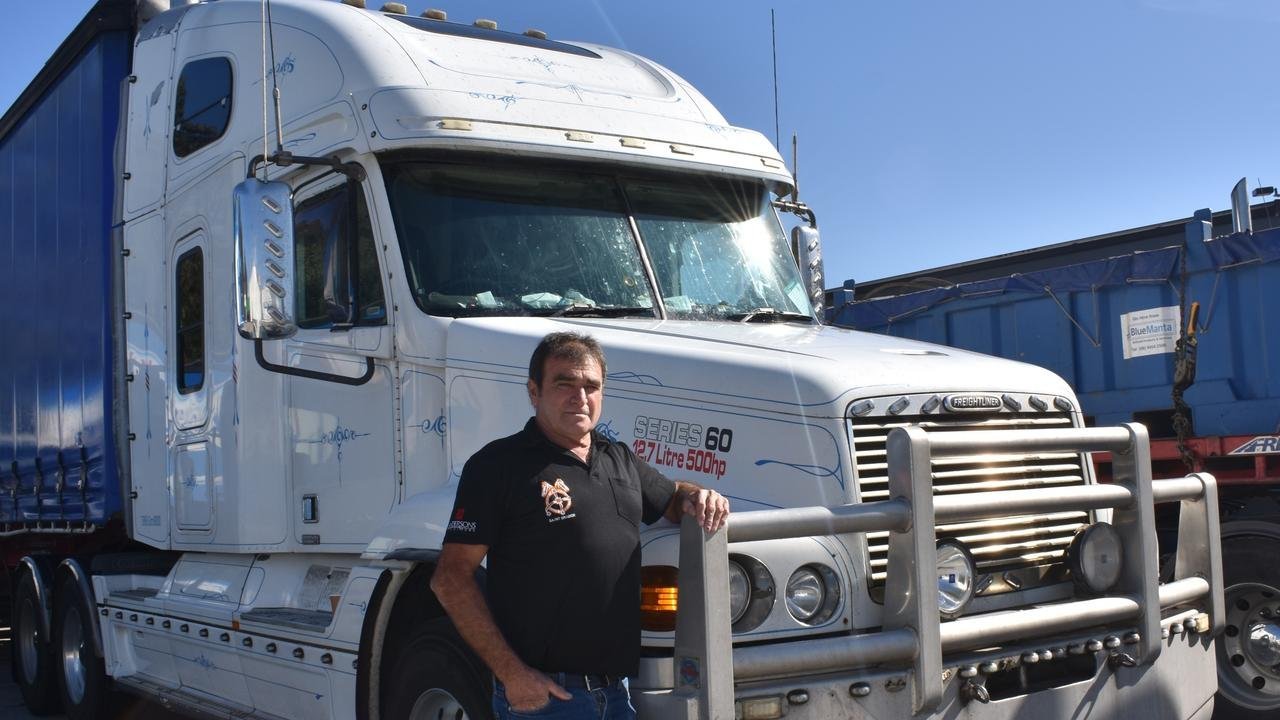
Kent “Dunga” Dungavell has been driving thousands of kilometres on dusty outback roads for years, delivering goods to remote communities and stations. But this week, he’s facing a new challenge – a record high fuel price that’s adding thousands to his costs.
As he fills up his truck in Townsville, he’s bracing for the impact of the price hike on his business and his customers. “This will be the first fuel I’ve put in since the hike,” he says.
“This is probably the highest I’ve ever seen it jump.”
Queensland broke its record high for diesel and unleaded prices this week, according to the RACQ. The most expensive stations are currently on K’gari (Fraser Island), charging $3.60 per litre for both types of fuel.
In Townsville, Mr Dungavell is paying nearly $2.80 a litre, while bowser prices at the city’s freight hub have hit $3 a litre.



The experienced driver says he’ll have to pass on the increased fuel levy to his customers, many of whom are small businesses and families. “We don’t have any big customers, our customers are all mum-and-dad operations – builders and cattle stations and families,” he explains.
“They understand they have to pay the premium price for it because we have to charge the premium price for it, and understandably, they’re going to have to pass that on to their customers as well.”
The Queensland Trucking Association says the cost increase is squeezing the industry’s already thin margins. “We’d like to see some financial relief applied, particularly to road freight and the agricultural sector,” says Gary Mahon, head of the association.
“These exorbitant price increases are beyond reasonable expectations.”
In remote north-west Queensland, Jill Wilson runs the Tirranna Springs Roadhouse and a carpentry business with her husband, Tim. She says remote communities are already feeling the impacts of higher costs, and action needs to be taken soon.
“We’re 600km away from Mount Isa, 1,200km away from Townsville or Cairns. The only access into our community is by aeroplanes or by truck,” she explains.
“Every nail, every screw, everything we use, every single day, has to be freighted in purposely for me via truck.”
Ms Wilson has increased fuel prices at the bowser, but there are limits.
“You have to walk that fine line of how far we can raise our prices to recover our costs before we start to make a loss, before no-one can afford you anymore,” she says.
“This is business stuff we’re talking about, but as a family, [we] live here too. It is very, very concerning – how long can you hold out with these kinds of price rises and what will happen in the future?”
Analysis: What This Means for Australia
The fuel price crisis has significant implications for Australia’s national security and economy. With remote communities already feeling the impacts of higher costs, the federal government needs to take urgent action to address the issue.
The ACCC’s investigation into anti-competitive conduct by major fuel suppliers is a step in the right direction, but more needs to be done to support rural and remote Australians.
Security analysts say the fuel price hike has the potential to exacerbate existing social and economic vulnerabilities in remote communities, making them more susceptible to crime and social unrest.
“The federal government needs to take a holistic approach to addressing the fuel price crisis, one that takes into account the unique challenges faced by rural and remote Australians,” says one expert.
Law enforcement insiders warn that the fuel price hike could also lead to an increase in fuel theft and illegal trafficking, as desperate individuals and businesses seek to circumvent the high costs.
“We’re already seeing an increase in fuel-related crime in rural areas, and it’s only going to get worse unless the government takes action,” says one source.
Industry observers believe the fuel price crisis is a wake-up call for Australia’s energy sector, highlighting the need for greater investment in renewable energy sources and more competitive fuel markets.
“This is an opportunity for the government to think outside the box and come up with innovative solutions to our energy challenges,” says one expert. “We can’t keep relying on fossil fuels and expecting different results.”