
Easter Message from Prime Minister Anthony Albanese Rings Hollow as Australians Face Financial Strains Amid Middle East Conflict
- Prime Minister Anthony Albanese’s Easter message focuses on the religious significance of the holiday, but ignores the financial challenges faced by many Australians.
- The Middle East conflict has led to rising petrol prices and fears of increasing grocery costs, putting pressure on Australian households.
- Albanese’s televised address to the nation earlier this week was met with mixed reviews, with some critics saying it lacked detail and a clear plan.
- As Australians celebrate Easter, many are struggling to make ends meet, with the conflict’s economic impact hitting close to home.
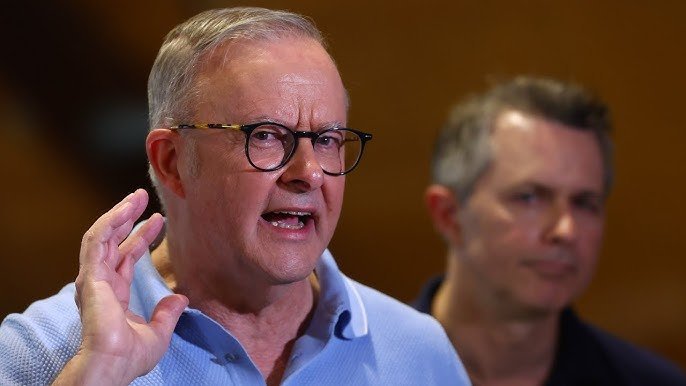
As Australians gathered with family and friends to celebrate Easter, Prime Minister Anthony Albanese released a heartfelt video message reflecting on the religious significance of the holiday.
However, his words rang hollow for many who are struggling to cope with the financial pressures brought on by the Middle East conflict.
The conflict has sent shockwaves through the global economy, with Australia feeling the pinch. Petrol prices, which had skyrocketed in recent weeks, only began to drop this week after the government’s decision to slash the fuel excise.
However, fears are growing that grocery prices will be the next to rise, putting further strain on already stretched household budgets.
Albanese’s Easter message made no mention of these challenges, instead focusing on the importance of the holiday as a time for reflection and joy. While his words were well-intentioned, they did little to alleviate the concerns of Australians who are struggling to make ends meet.



This is not the first time Albanese has been criticized for his handling of the crisis.
Earlier this week, he made the rare move of issuing a televised address to the nation, in which he urged Australians to remain calm and assured them that the government was working to mitigate the effects of the conflict.
However, the address was met with mixed reviews, with some critics saying it lacked detail and a clear plan for how the government intends to support those affected.
Security analysts say that the conflict in the Middle East has significant implications for Australia’s national security, particularly in terms of the country’s energy security.
With tensions in the region showing no signs of easing, it is likely that the economic impact of the conflict will be felt for some time to come.
Analysis: What This Means for Australia
The Middle East conflict has significant implications for Australia’s economy and national security. As the country’s energy security is threatened, it is likely that the government will need to take further action to support those affected.
This could include providing additional financial assistance to households struggling to cope with rising costs, as well as working to diversify the country’s energy sources to reduce its reliance on imports.
Law enforcement insiders warn that the conflict could also have a significant impact on Australia’s border security, as refugees and asylum seekers seek to flee the conflict zone.
This could put additional pressure on the country’s immigration system, and may require the government to take further action to ensure that the country’s borders are secure.
Industry observers believe that the conflict could also have a significant impact on Australia’s trade relationships, particularly with countries in the Middle East. As the conflict continues to escalate, it is likely that trade relationships will become increasingly strained, which could have significant implications for Australia’s economy.