Far North Queensland on High Alert as Cyclone Maila Looms: ‘Uncertainty Reigns’ Over System’s Path of Destruction
- Cyclone Maila has formed off the Solomon Islands, sparking fears of a potential category 3 system making landfall in Far North Queensland
- Residents are on edge as the Bureau of Meteorology warns of ‘high uncertainty’ over the cyclone’s track, with some scenarios predicting a repeat of severe tropical cyclone Narelle’s devastating path
- The system is expected to remain in the region for the next few days before potentially crossing the Queensland coast later in the week, with the strength of the system at the time of crossing still unknown
- This would be the third tropical cyclone to hit Queensland this year, leaving communities bracing for the worst
The people of Far North Queensland are holding their breath as Cyclone Maila churns in the Solomon Sea, its path of destruction uncertain but potentially catastrophic.
The Bureau of Meteorology has warned of ‘high uncertainty’ over the system’s track, with some scenarios predicting a repeat of severe tropical cyclone Narelle’s devastating path just last month.
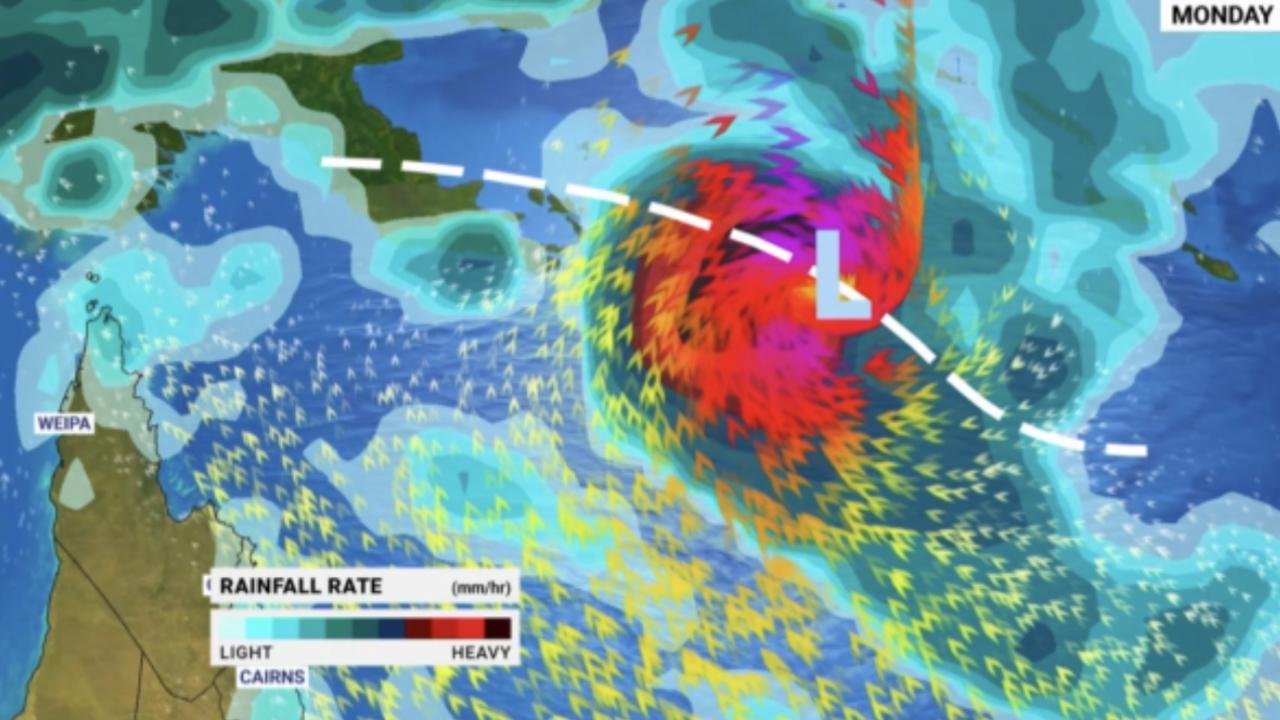
Severe Tropical Cyclone Maila is currently sitting between Papua New Guinea and the Solomon Islands, slowly intensifying into a category 3 system.
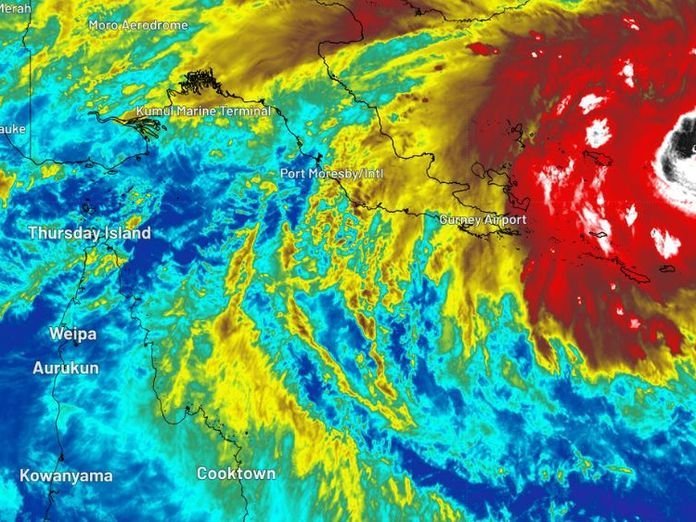
According to BOM senior meteorologist Liam Smart, the cyclone has been in the region for a few days and is expected to remain there for the next couple of days before moving west towards the Far North Queensland coast later in the week.
Maila is forecast to potentially cross the Queensland coast as early as late this week or early next week, with the strength of the system at the time of crossing still unknown.




Smart said there’s still a range of scenarios that could take place, including Maila crossing closer to Papua New Guinea, as well as cooling its own warm water supply – needed to keep its strength – due to being a slow-moving system.
The uncertainty surrounding Maila’s path is due to the slow-moving nature of the system, with Smart saying there are ‘quite a few dynamic things at play at the moment that are causing some uncertainty’.
Despite this, there is general increased confidence in the cyclone heading towards the Queensland coastline, with some scenarios predicting it could take the same track as severe tropical cyclone Narelle.
Narelle made landfall near Coen in the Far North as a category four system last month, after peaking at category five offshore. The system crossed Queensland and the Northern Territory before re-intensifying and impacting the Western Australia coastline.
If Maila makes landfall this weekend, it would be the third tropical cyclone to hit Queensland this year, leaving communities bracing for the worst.
Analysis: What This Means for Australia
The potential impact of Cyclone Maila on Far North Queensland cannot be overstated.
With the region still reeling from the effects of severe tropical cyclone Narelle, the prospect of another category 3 system making landfall is a daunting one.
The uncertainty surrounding Maila’s path only adds to the anxiety, with residents and authorities alike on high alert.
Law enforcement insiders warn that the potential for widespread destruction and disruption is high, with emergency services on standby to respond to any situation that may arise.
The economic impact of another cyclone hitting the region could also be significant, with the tourism and agriculture industries likely to be hardest hit.
Security analysts say that the slow-moving nature of Cyclone Maila makes it a particularly unpredictable system, with the potential for the cyclone to intensify or weaken at any moment.
This unpredictability makes it essential for residents and authorities to remain vigilant and prepared for any eventuality.
Industry observers believe that the repeated cyclones hitting Queensland this year are a stark reminder of the need for improved disaster preparedness and resilience in the region.
With the cyclone season still in full swing, it is essential that communities remain on high alert and take all necessary precautions to ensure their safety.