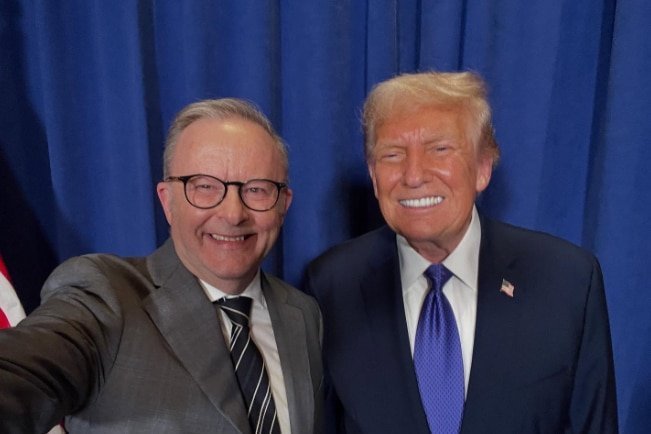
Trump’s Fury at Australia: PM Albanese Stands Firm as US President’s ‘Mess’ Unfolds in Iran
- Donald Trump unleashes on Australia, claiming the nation has failed to support the US in Iran, despite the Prime Minister’s insistence that no new requests for help have been made.
- The US President’s outburst comes as Australia confirms talks with a Coalition of 35 nations to secure the safe passage of oil supplies in the Strait of Hormuz.
- Analysts say Trump’s “lashing out at allies” is a sign of frustration that the war in Iran is taking longer than expected, with Australia’s former ambassador to the US describing the situation as “a mess”.
- Despite the tension, Defence Minister Richard Marles reveals that Australia is considering contributing assets to the international effort to secure the Strait of Hormuz, with the E-7 Wedgetail already providing support in the region.
Australia’s Prime Minister Anthony Albanese has refused to back down in the face of US President Donald Trump’s latest tirade, which saw the American leader claim that Australia had failed to support the US in Iran.
The comments, made at the White House on Friday, are the third time Trump has targeted Australia in recent weeks.
Trump’s outburst came as he suggested that Australia, along with other NATO countries, had not stepped up to support the US in its efforts to secure the Strait of Hormuz.
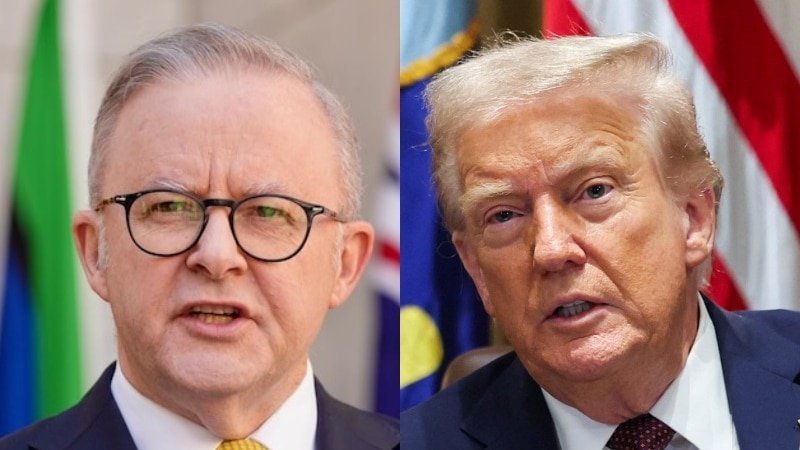
However, Albanese was quick to point out that Trump had previously claimed that the US did not need the help of other nations, including Australia.
“There’s been no new requests at all, and indeed, President Trump has himself said that he has got this and he has made that position clear,” Albanese said, referencing a social media post made by Trump in March.


In the post, Trump claimed that the US had achieved “Military Success” and no longer needed the assistance of NATO countries, including Australia.
Foreign Minister Penny Wong has also made it clear that Australia would not be providing “boots on the ground” in Iran, despite the US request for help in protecting Gulf States.
However, Defence Minister Richard Marles has confirmed that Australia is in talks with a Coalition of 35 nations to discuss military measures to secure the safe passage of vessels in the Strait of Hormuz.
“We will look to what Australia can do,” Marles said, revealing that the E-7 Wedgetail was already providing support in the region.
“Our E-7 Wedgetail is in the region right now and it’s providing, or doing important work in terms of contributing to the defence of the countries of the Gulf, in particular the UAE.”
Analysis: What This Means for Australia
Security analysts say that Trump’s “lashing out at allies” is a sign of frustration that the war in Iran is taking longer than expected.
“Anything he says about allies should be just seen as something said at a moment in time, support for the (US) alliance in countries like Australia is pretty strong,” said Arthur Sinodinos, Australia’s former ambassador to the US.
Professor Rory Medcalf, the Head of the National Security College at ANU, described the situation as “a mess”.
“Look, my working guess is that the US President wants basically a blank cheque to say, ‘we will put ships into a Coalition led by the US to clear the Strait of Hormuz’, and we’ll worry about the details later,” Medcalf said.
Despite the tension, Australia’s decision to consider contributing assets to the international effort to secure the Strait of Hormuz is seen as a positive move. “I’m actually quite sympathetic to the government because I don’t see what else they can do, in a way,” Medcalf said.
Law enforcement insiders warn that the situation in Iran has the potential to escalate, with significant implications for Australia’s national security.
“The fact that Australia is considering contributing assets to the international effort to secure the Strait of Hormuz is a sign that the government is taking the situation seriously,” said one insider.
Industry observers believe that the situation in Iran has the potential to impact Australia’s economy, particularly in terms of oil prices.
“The Strait of Hormuz is a critical waterway for the global oil trade, and any disruption to shipping in the region has the potential to drive up prices,” said one observer.