War Crimes Accused Ben Roberts-Smith Walks Free on $250,000 Bail Amid Fears of Witness Tampering and Fair Trial Impossible
- Former SAS soldier Ben Roberts-Smith, 47, granted bail despite being charged with murdering or ordering the murders of five unarmed detainees in Afghanistan
- Roberts-Smith, a Victoria Cross recipient, accused of committing atrocities, including machine-gunning civilians and ordering executions, while deployed in Afghanistan between 2009 and 2012
- Judge Greg Grogin approves bail bid, citing strict conditions that mitigate risk, but warns of swift arrest if Roberts-Smith approaches prosecution witnesses
- Defence barrister Slade Howell argues that extraordinary publicity surrounding the case may make a fair trial impossible, while Crown prosecutor Simon Buchen SC opposes bail, citing strong evidence and eyewitnesses
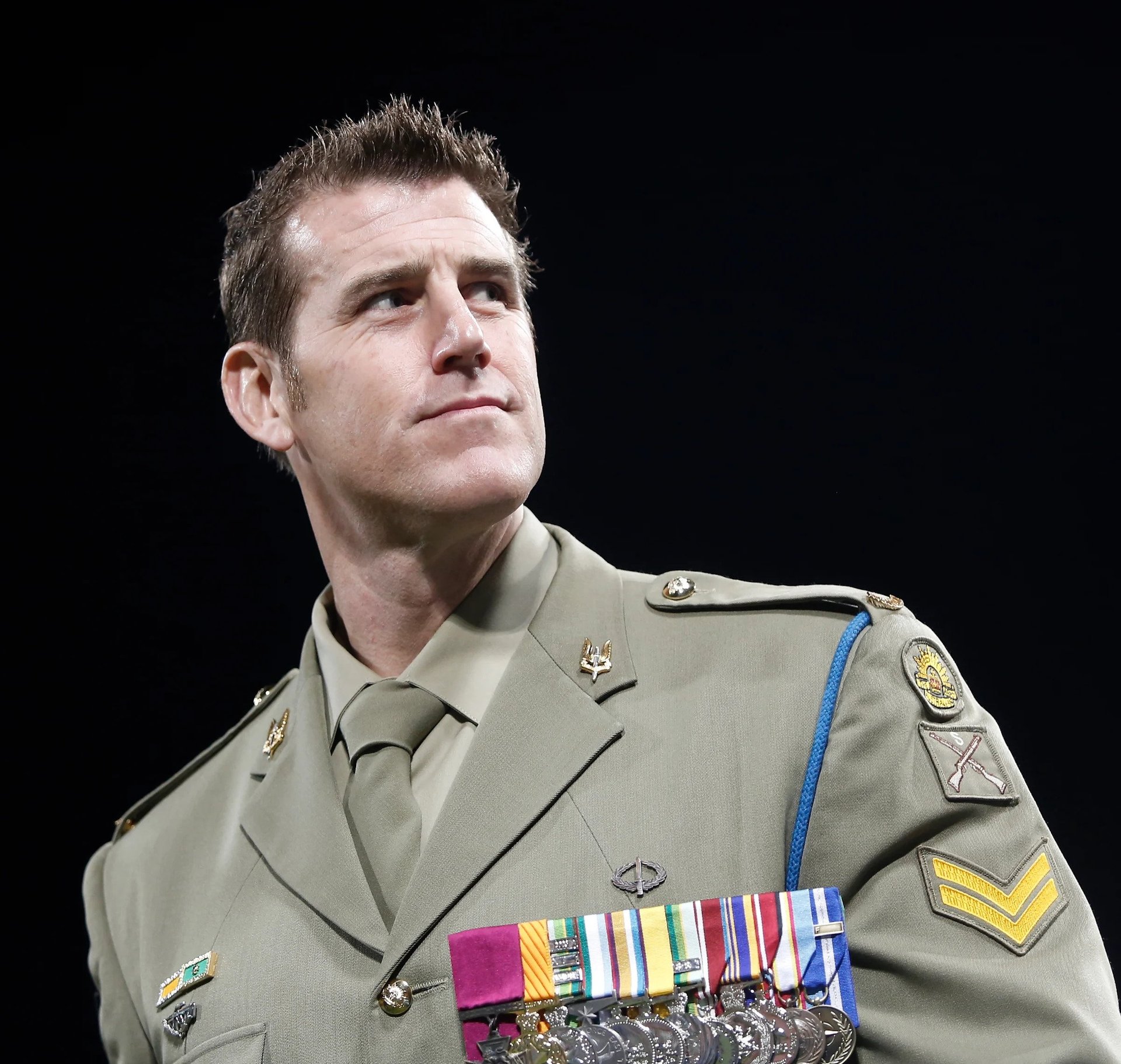
Ben Roberts-Smith, the former SAS soldier accused of war crimes, has walked out of prison for the first time in a week after being granted bail.
The 47-year-old Victoria Cross recipient was arrested on April 7 and charged with murdering or ordering the murders of five unarmed detainees while deployed in Afghanistan between 2009 and 2012.
Following nine nights in custody, Roberts-Smith left Silverwater prison on Friday evening after successfully applying for bail at Sydney’s Downing Centre Local Court. Wearing a blue polo shirt, jeans, and a cap, he was accompanied to his vehicle by officers before departing.

The bail hearing was held via an audiovisual link, with Roberts-Smith tuning in from prison. Judge Greg Grogin approved the bail bid, citing strict conditions that mitigate any risk.
The judge warned that if Roberts-Smith approached any prosecution witnesses, his arrest would be swift, and he would find himself back in prison.


The ex-SAS soldier would have been hampered in his ability to defend the case from prison, which did not have facilities for the secure transport, storage, and discussion of highly classified defence material.
A surety of $250,000 will be forfeited to the court if Roberts-Smith does not comply with his bail conditions.
Roberts-Smith will be allowed to travel from his Queensland residence to Sydney and Perth solely to consult with his legal team.
Defence barrister Slade Howell argued that his client would comply with stringent bail conditions despite previous Federal Court findings that he had threatened or interfered with witnesses.
Howell also argued that a superior court might have to consider whether the extraordinary publicity surrounding the case has made a fair trial impossible. Crown prosecutor Simon Buchen SC opposed bail, saying the charges against Roberts-Smith were gravely serious and that there were eyewitnesses to the alleged murders.
Buchen also mentioned evidence of the use of throw-downs, objects placed onto deceased non-combatants to make it seem like they had taken part in hostilities.
While he acknowledged that bail conditions would prevent Roberts-Smith from fleeing the country, the prosecutor said they could not prevent the risk of witness tampering.
An interim non-publication order has been made over the address where Roberts-Smith will reside on bail, plus the police station he will report to.
Judge Grogin said there was a real chance that people with strong opinions could use the opportunity to harm Roberts-Smith or those with him.
A full hearing on these orders will take place on Thursday. Roberts-Smith has been accused of directly murdering two Afghan individuals and aiding, abetting, or procuring the murder of three more.
He has consistently proclaimed his innocence.
The alleged atrocities include machine-gunning Mohammed Essa and ordering the execution of his son Ahmadullah to “blood the rookie” during a raid at a compound called Whiskey 108 in April 2009.
Ahmadullah had a prosthetic leg. The then-SAS soldier placed firearms on the bodies to falsely claim they were enemy combatants, court documents seen by AAP say.
In August 2012, at the village of Darwan, Roberts-Smith is accused of kicking a hand-cuffed Ali Jan off a 10-meter cliff before ordering that he be dragged over a creek bed and shot.
Two months later, at Syahchow, he allegedly lined up two prisoners in a corn field, shooting one of them with another soldier.
He ordered a subordinate to shoot the other before throwing a grenade on the bodies to cover up what he had done, court documents say. The case against Roberts-Smith is strong, with eyewitnesses and evidence of the alleged atrocities.
Analysis: What This Means for Australia
The granting of bail to Ben Roberts-Smith raises concerns about the risk of witness tampering and the potential for a fair trial. The case highlights the challenges of prosecuting war crimes and the need for strict bail conditions to mitigate any risk.
Security analysts say that the case has significant implications for Australia’s national security and the country’s reputation on the world stage.
The alleged atrocities committed by Roberts-Smith, if proven, would be a serious breach of international humanitarian law and would damage Australia’s reputation as a responsible and law-abiding nation.
Law enforcement insiders warn that the case highlights the need for greater scrutiny of Australia’s military operations and the need for more robust mechanisms to prevent and investigate war crimes.
The case also raises questions about the culture and training of Australia’s military personnel and the need for greater accountability and transparency.
Industry observers believe that the case will have significant implications for Australia’s military-industrial complex and the country’s defence industry.
The case highlights the need for greater accountability and transparency in the defence sector and the need for more robust mechanisms to prevent and investigate war crimes.