Earthquake Strikes Off Indonesian Coast: What This Means for Australia’s Tsunami Risk
- A powerful magnitude-6 earthquake has rocked the waters off Indonesia’s Timor island, sparking fears of a tsunami
- Experts say there is no tsunami risk, but seismologists continue to review the data
- The quake hit at 11:17am local time on Tuesday, with its epicentre at a depth of 31 kilometres
- As Australia’s northern neighbour, Indonesia’s seismic activity has implications for our own tsunami preparedness
The news of a magnitude-6 earthquake striking off the coast of Indonesia’s Timor island sent shockwaves around the region, with many wondering if a tsunami was on the horizon.
Fortunately, authorities have confirmed that there is no tsunami risk from the quake, which hit at 11:17am local time on Tuesday. But what does this event mean for Australia’s own tsunami risk, and how prepared are we for a potential disaster?
According to the European-Mediterranean Seismological Centre (EMSC), the quake’s epicentre was at a depth of 31 kilometres, and seismologists continue to review the data to confirm the exact magnitude, epicentre, and depth.
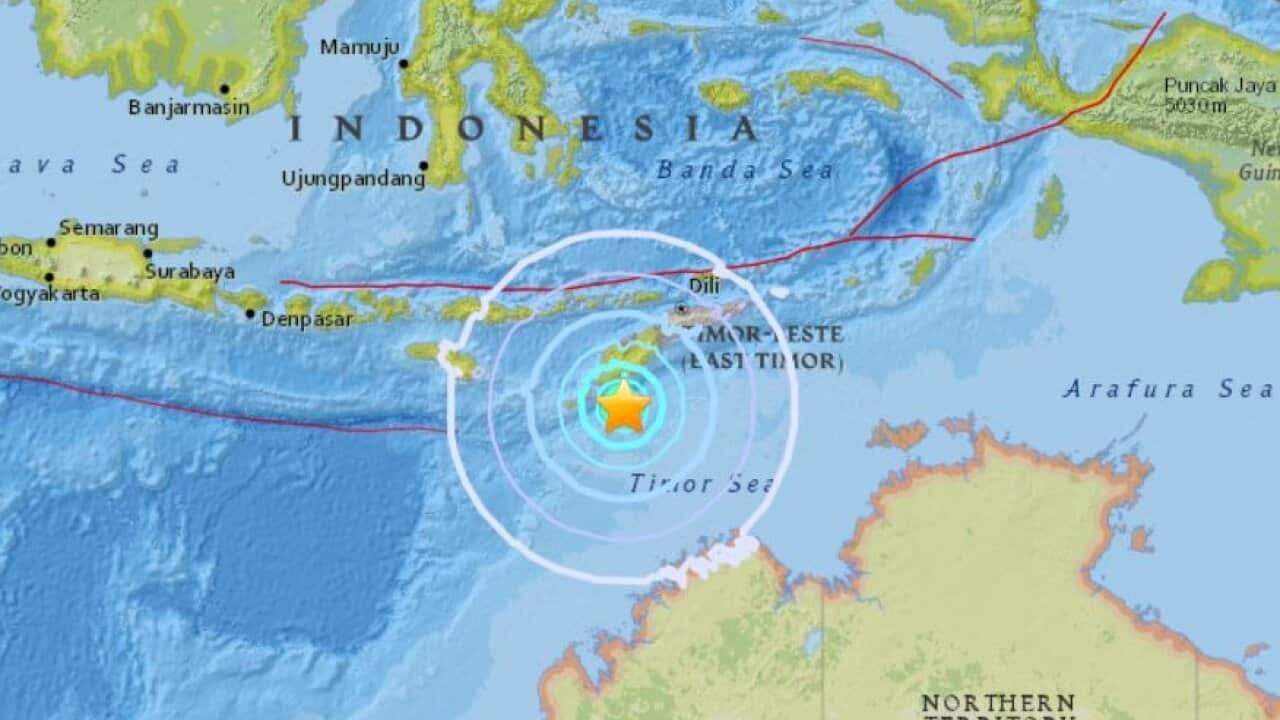
While the quake was probably felt by many people, as reported by tracking site VolcanoDiscovery, the good news is that there is no tsunami risk. But this event serves as a timely reminder of the importance of being prepared for natural disasters.
Indonesia is located on the Pacific Ring of Fire, an area prone to earthquakes and volcanic activity. As Australia’s northern neighbour, Indonesia’s seismic activity has implications for our own tsunami preparedness.




In fact, Indonesia’s tsunami early warning system is closely monitored by Australian authorities, who work closely with their Indonesian counterparts to share data and best practices.
But what about Australia’s own tsunami risk?
While the country is not as prone to tsunamis as Indonesia, there is still a risk, particularly in northern regions such as Darwin and the Kimberley.
Analysis: What This Means for Australia
The earthquake off Indonesia’s coast serves as a reminder of the importance of maintaining a robust tsunami detection and warning system in Australia. While the country has a well-established system in place, there is always room for improvement.
In recent years, there have been several close calls, including a tsunami warning issued for the eastern coast of Australia in 2018. Fortunately, the warning was later cancelled, but it highlighted the need for continued investment in tsunami detection and warning systems.
Security analysts say that Australia’s proximity to Indonesia means that we need to be prepared for the possibility of a tsunami at any time.
“Australia’s northern regions are particularly vulnerable to tsunamis, and it’s essential that we have a robust system in place to detect and warn of any potential threats,” said one expert.
“This includes investing in the latest technology, such as deep-sea sensors and satellite imaging, as well as conducting regular drills and exercises to ensure that emergency responders are prepared.” Law enforcement insiders warn that a tsunami would not only pose a significant threat to human life but also have a major impact on the economy, particularly in coastal regions.
Industry observers believe that the earthquake off Indonesia’s coast is a timely reminder of the importance of disaster preparedness. “This event highlights the need for individuals and communities to be prepared for natural disasters, including tsunamis,” said one expert.
“This includes having emergency plans in place, knowing evacuation routes, and staying informed through trusted sources such as the Australian Bureau of Statistics and the Bureau of Meteorology.” By being prepared and staying informed, Australians can reduce their risk and stay safe in the event of a tsunami.