Aircraft Carrier Armada: US Deploys Third Warship to Middle East as Tensions with Iran Reach Boiling Point
- A third US aircraft carrier, the USS George HW Bush, has arrived in the Middle East, significantly boosting America’s military presence in the region.
- The deployment brings the total number of US warships in the region to at least 23, with over 21,000 sailors and marines on board.
- The move is seen as a clear escalation of the US military’s presence in the region, with analysts warning of a “dramatic expansion” of potential US military action.
- The USS George HW Bush is equipped with advanced fighter jets and a state-of-the-art laser weapon system, designed to counter swarms of cheap drones.
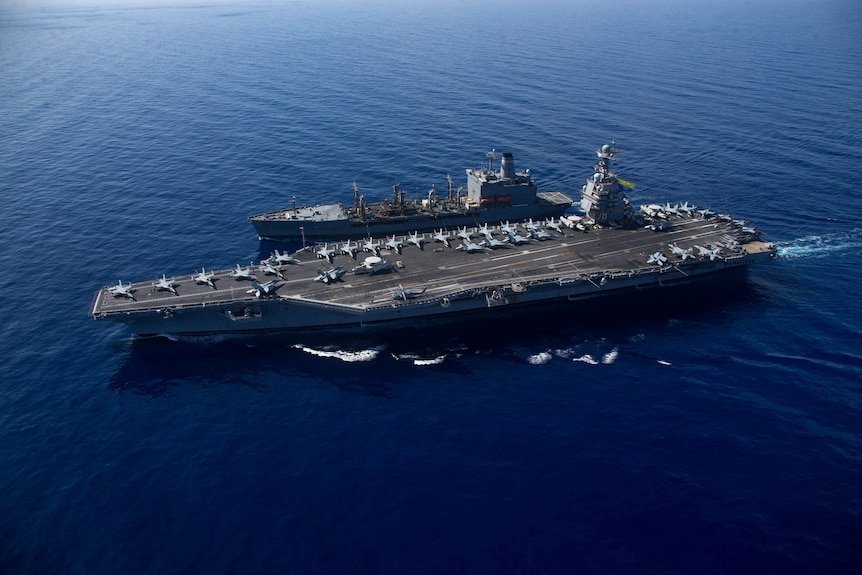
The USS George HW Bush, one of the most advanced aircraft carriers in the US Navy, has arrived in the Middle East, joining two other carriers, the USS Gerald R Ford and USS Abraham Lincoln, in the region.
The deployment brings the total number of US warships in the Middle East to at least 23, with over 21,000 sailors and marines on board.
The move is seen as a clear escalation of the US military’s presence in the region, with analysts warning of a “dramatic expansion” of potential US military action.
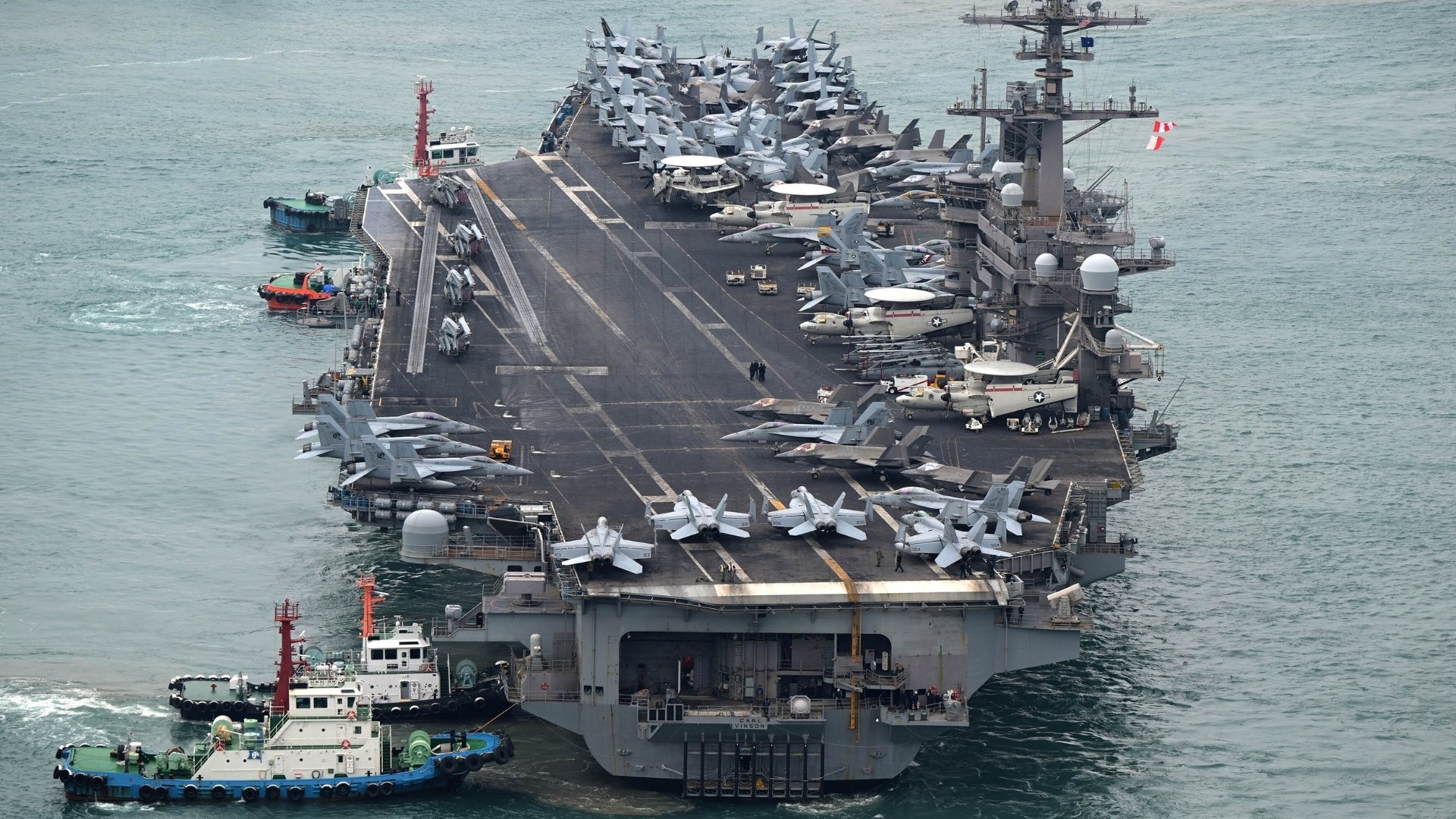
The USS George HW Bush is equipped with nine aircraft squadrons, including F/A-18 Super Hornet fighters and EA-18G Growler electronic warfare aircraft. The carrier is also accompanied by three Arleigh Burke-class destroyers, the USS Ross, USS Donald Cook, and USS Mason.
The Arleigh Burke-class destroyers are designed to provide mission capabilities such as anti-aircraft, anti-surface, and anti-submarine warfare.



The US Central Command, which oversees military operations in the Middle East, posted an image on social media of the USS George HW Bush with its deck packed with warplanes.
The image was posted with the caption “USS George HW Bush Strike Group arrives in the Middle East, ready to support regional security and stability.”
The deployment of the USS George HW Bush comes as tensions between the US and Iran continue to escalate.
The US has been enforcing a blockade of Iranian ports in the Strait of Hormuz, with Iran responding by imposing its own blockade on the critical waterway.
The Strait of Hormuz is a key shipping route, with about a fifth of the world’s oil and liquefied natural gas exports flowing through it.
The situation in the region has been further complicated by the recent seizure of several ships by US forces, including the Guinea-flagged oil tanker Majestic X.
The US has also intercepted multiple ships attempting to breach the blockade, with Iran accusing the US of “piracy” and “aggression”.
Analysis: What This Means for Australia
The deployment of the USS George HW Bush to the Middle East has significant implications for Australia’s national security.
The US is a key ally of Australia, and the country’s military presence in the region is likely to have a flow-on effect for Australian interests.
The blockade of Iranian ports and the subsequent escalation of tensions between the US and Iran could also have a significant impact on global energy prices, which could in turn affect the Australian economy.
Security analysts say that the deployment of the USS George HW Bush is a clear indication of the US’s commitment to maintaining its military presence in the region.
“The US is sending a strong message to Iran that it will not be intimidated by its aggressive actions,” said one analyst.
“The deployment of the USS George HW Bush is a significant escalation of the US military’s presence in the region, and it’s likely to have a major impact on the dynamics of the conflict.”
Law enforcement insiders warn that the situation in the Strait of Hormuz is becoming increasingly volatile, with the potential for a major conflict between the US and Iran.
“The blockade of Iranian ports and the subsequent escalation of tensions between the US and Iran is a recipe for disaster,” said one insider. “The situation in the region is becoming increasingly unstable, and it’s likely to have a significant impact on global security.”
Industry observers believe that the deployment of the USS George HW Bush is a clear indication of the US’s commitment to maintaining its military presence in the region.
“The US is committed to maintaining its military presence in the Middle East, and the deployment of the USS George HW Bush is a clear indication of that commitment,” said one observer.
“The US is likely to continue to play a major role in the region, and the deployment of the USS George HW Bush is a significant escalation of that role.”
The USS George HW Bush is also equipped with a state-of-the-art laser weapon system, designed to counter swarms of cheap drones. The LOCUST Laser Weapon System was tested aboard the carrier in late 2025, and it was able to neutralize several drones during exercises.
The system is designed to provide a cost-effective option for warship crews to counter line-of-sight threats, and it has been hailed as a “game-changer” by defence analysts.
However, some defence analysts have noted that the system still faces limits in operational settings. The beam effectiveness could decrease over distance, and weather conditions such as dust, smoke, or moisture could reduce performance before the beam reached its target.
Despite these limitations, the deployment of the USS George HW Bush and its advanced laser weapon system is a clear indication of the US’s commitment to maintaining its military presence in the region.
The US is likely to continue to play a major role in the Middle East, and the deployment of the USS George HW Bush is a significant escalation of that role.