Alice Springs Erupts in Chaos: Violent Riot Outside Hospital as Man Accused of Murdering Five-Year-Old Girl is Arrested
- Violence broke out outside Alice Springs Hospital after the arrest of Jefferson Lewis, accused of murdering five-year-old Kumanjayi Little Baby
- Police clashed with rioters demanding “payback” and were attacked with rocks, bottles, and other projectiles
- Commissioner Martin Dole warns supporters of Lewis and those involved in the riot that police are coming for them
- NT police have flown Lewis to Darwin due to “safety concerns” and banned takeaway alcohol in the town
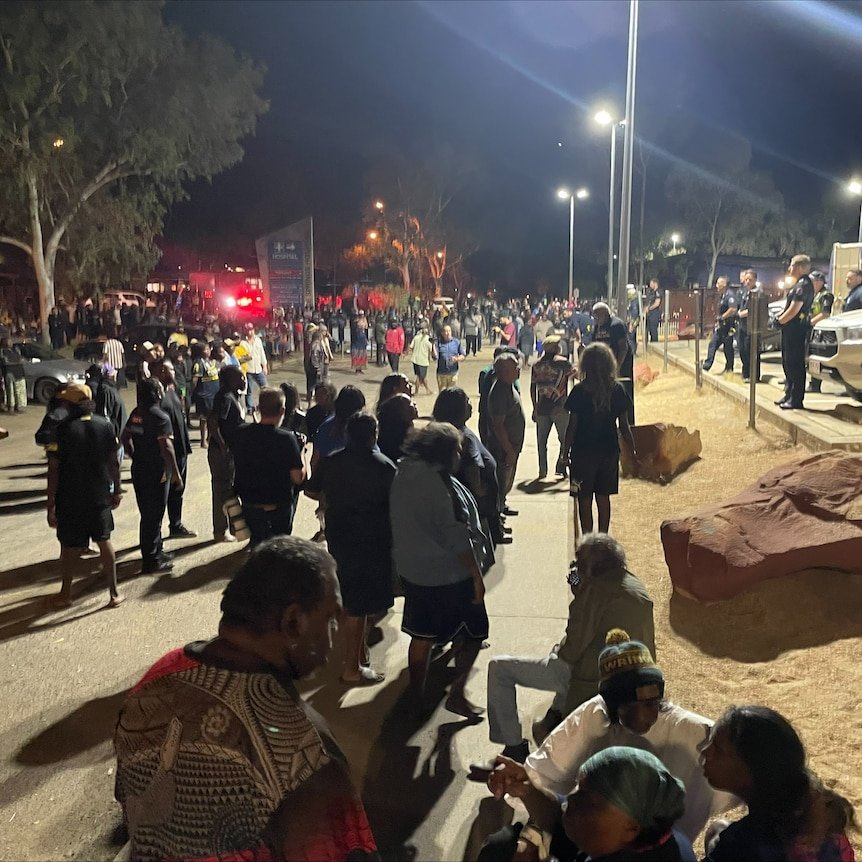
The usually quiet streets of Alice Springs descended into chaos on Thursday night as a crowd of angry protesters gathered outside the local hospital, demanding “payback” for the alleged murder of five-year-old Kumanjayi Little Baby.
The girl’s body was found just south of the town on Thursday morning, and police arrested 47-year-old Jefferson Lewis in relation to her death.
However, as police attempted to take Lewis into custody, the situation quickly spiralled out of control.
According to Commissioner Martin Dole, Lewis had been receiving support from community members, which allowed him to evade capture. “For him to be able to appear in Alice Springs last night just confirms to us that he was getting support from somebody,” he said.
“My message to those people is, look out because we’re coming for you as well.” This warning has sent a clear message to the community that police will not tolerate any further violence or support for Lewis.



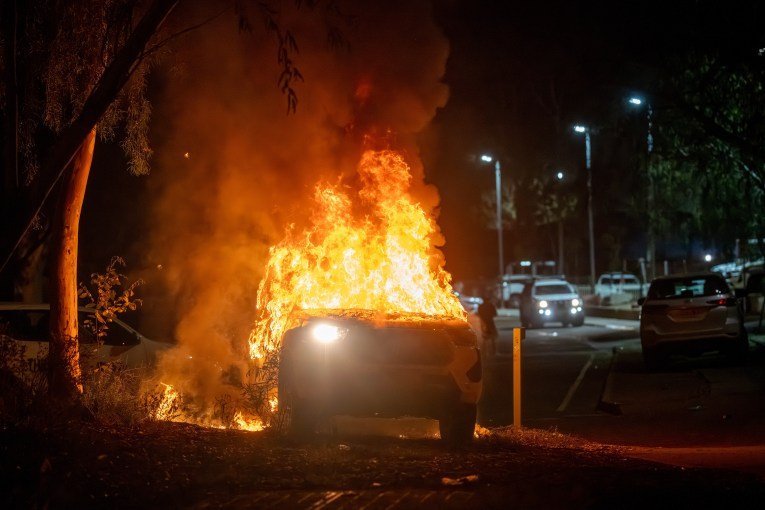
The riot outside the hospital was intense, with protesters throwing rocks, bottles, and other projectiles at police and their vehicles. In response, police used pepper spray, tear gas, and rubber bullets to disperse the crowd.
The situation was so volatile that police were forced to fly Lewis to Darwin due to “safety concerns” for the hospital, medical staff, police, and Lewis himself.
The ban on takeaway alcohol in the town has also been implemented to prevent further unrest.
Analysis: What This Means for Australia
The events unfolding in Alice Springs have significant implications for Australia’s approach to law and order, particularly in Indigenous communities.
The demand for “payback” and the violent reaction to Lewis’s arrest highlight the deep-seated frustration and mistrust of the justice system among some community members.
This incident also raises questions about the effectiveness of the current approach to rehabilitation and reintegration of prisoners, as Lewis had apparently received support from community members while on the run.
Security analysts say that the situation in Alice Springs is a prime example of the need for a more nuanced approach to community policing, one that takes into account the unique cultural and historical context of Indigenous communities.
“The use of force and punitive measures can often exacerbate the problem, rather than solving it,” said one expert. “What’s needed is a more collaborative approach that involves community leaders and addresses the underlying issues driving the violence.”
Law enforcement insiders warn that the situation in Alice Springs is not an isolated incident and that similar tensions are simmering in other Indigenous communities across the country.
“We need to learn from this experience and develop strategies that address the root causes of the violence, rather than just treating the symptoms,” said another expert.
As the investigation into Kumanjayi Little Baby’s murder continues, the people of Alice Springs are left to pick up the pieces and try to make sense of the tragedy that has befallen their community.
The incident serves as a stark reminder of the need for a more compassionate and effective approach to justice, one that prioritises community safety and well-being above all else.