
Caning Returns to Singapore Schools: Male Bullies to Face Brutal Punishment as Country Defies International Human Rights Concerns
- Male school bullies in Singapore could face up to three strokes of a cane as a “last resort” to stamp out bad behaviour under new education guidelines.
- The punishment will only be delivered to boys, with female students exempt in line with Singapore’s Criminal Procedure Code.
- Human rights groups, including the United Nations, have long criticised the Singaporean government for not outlawing corporal punishment, which they describe as “deeply degrading” and “harmful to a child’s dignity”.
- The move has sparked concerns about the implications for Australia, where corporal punishment is prohibited in all early childhood education, schools, and care environments.
In a shocking move, Singapore has approved the use of caning as a punishment for male school bullies, reigniting concerns about human rights and the country’s stance on corporal punishment.
The new education guidelines, announced by the Ministry for Education, state that caning will be used as a “last resort” to stamp out bad behaviour, with boys facing up to three strokes of a cane.
Under the rules, students could face caning for a range of offences, including bullying, with the punishment only delivered to boys. Female students will be exempt, in line with Singapore’s Criminal Procedure Code, which states “women shall not be punished with caning”.
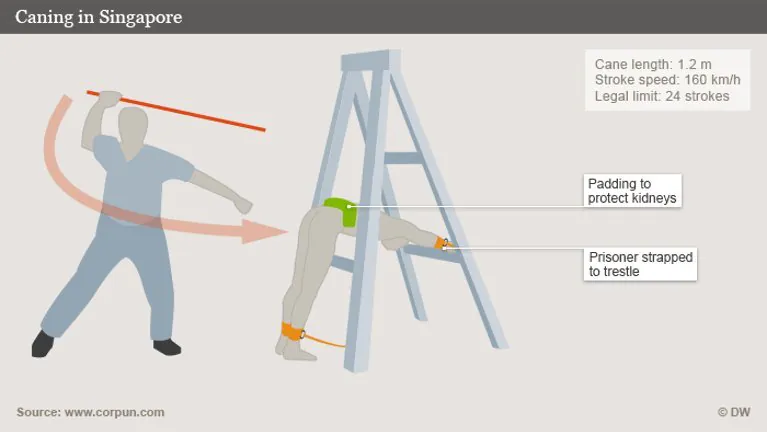
The punishment must be approved by the principal and administered only by authorised teachers, with schools required to consider factors such as the maturity of the student and whether caning will help the student learn from their mistake.
But the move has sparked widespread criticism from human rights groups, including the United Nations, which has long urged Singapore to outlaw corporal punishment.




The UN has described caning as “a deeply degrading punishment that harmed the child’s dignity” and has asked Singapore to repeal the practice on several occasions.
The Singaporean government, however, maintains that corporal punishment should only be used as a “last resort” and is subject to “stringent safeguards, after counselling and alternative disciplinary methods have repeatedly failed”.
So why has Singapore decided to reintroduce caning in schools? The answer lies in the country’s complex history with corporal punishment.
Caning was introduced in Singapore during British colonial rule, and while the UK abolished the practice, Singapore did not. Today, a range of offences in Singapore can carry a punishment known as judicial caning, which has been widely criticised by human rights groups.
But what does this mean for Australia?
Corporal punishment is prohibited in all early childhood education, schools, and care environments, and the move has sparked concerns about the implications for Australian schools and students.
With Singapore and Australia sharing a close economic and cultural relationship, the decision to reintroduce caning in Singaporean schools raises questions about the potential impact on Australian students and educators.
Analysis: What This Means for Australia
Security analysts say the decision to reintroduce caning in Singaporean schools could have significant implications for Australia’s approach to discipline and punishment in schools.
With Australia’s strong stance against corporal punishment, the move could create tension between the two countries and raise questions about the effectiveness of alternative disciplinary methods.
Law enforcement insiders warn that the use of caning could also have a flow-on effect, with some students potentially bringing violent or aggressive behaviour back to Australian schools.
Industry observers believe that the move could also have economic implications for Australia, with some parents potentially choosing to send their children to schools in countries with more progressive approaches to discipline.
As the debate around corporal punishment continues, one thing is clear: the decision to reintroduce caning in Singaporean schools has sparked a heated and complex conversation about the role of punishment in education.