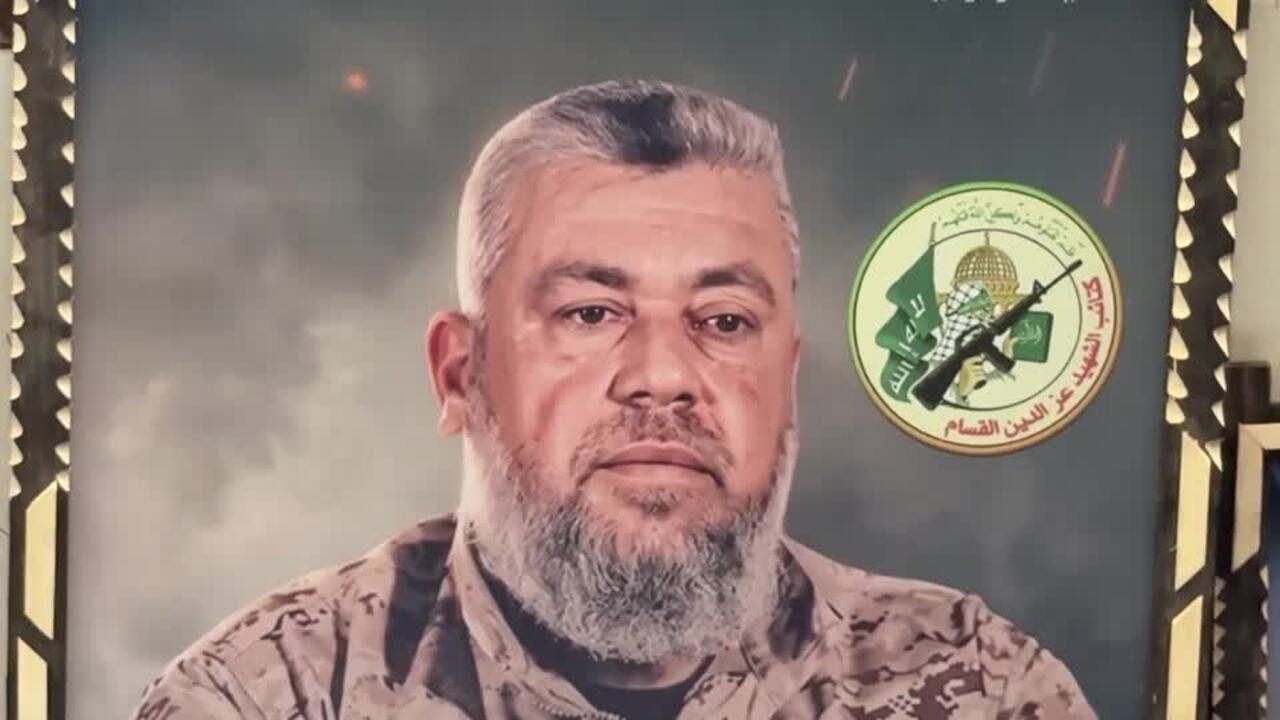
Israel’s ‘Ghost’ Commander Killed: Senior Hamas Official Izz al-Din al-Haddad Slain in Gaza Air Strike Amid Escalating Violence
- A senior Hamas official has confirmed the group’s armed wing chief, Izz al-Din al-Haddad, was killed in a targeted Israeli air strike on Gaza.
- Al-Haddad, nicknamed “the Ghost”, was one of the architects of Hamas’s October 7, 2023 terror attacks in southern Israel, according to Israeli Prime Minister Benjamin Netanyahu.
- The killing comes as Israel and Hamas remain deadlocked in indirect talks to advance US President Donald Trump’s post-war plan for Gaza, aimed at ending over two years of fighting.
- The air strike is part of a recent escalation of Israeli attacks in Gaza, with at least seven Palestinians killed, including three women and a child, and hundreds more wounded.
The Israeli military has confirmed the killing of Izz al-Din al-Haddad, the chief of Hamas’s military wing, in a targeted air strike on Gaza.
The attack, which occurred on Friday, has been described as a significant blow to the Palestinian Islamist group.
According to Israeli Prime Minister Benjamin Netanyahu and Defence Minister Israel Katz, al-Haddad was one of the masterminds behind Hamas’s October 7, 2023 terror attacks in southern Israel, which left thousands of civilians and soldiers injured or killed.

Al-Haddad, who had survived multiple assassination attempts by Israel, was a senior Hamas official with a long history of involvement in the group.
He became the military chief in Gaza after the killing of Mohammad Sinwar in May 2025 and was known as “the Ghost” due to his ability to evade capture.




The Israeli military described him as one of Hamas’s longest-serving commanders, with a career spanning several decades.
The air strike that killed al-Haddad was one of two attacks carried out by Israel on Gaza on Friday. The first strike targeted an apartment in the Gaza City area of Rimal, killing four people and wounding several others.
The second strike targeted a vehicle on a nearby street, killing three.
Gaza’s civil defence spokesperson, Mahmoud Basal, said hundreds of people had been living inside the building that was targeted, and that the missile was fired without any pre-warning or notification.
The killing of al-Haddad and the ongoing violence in Gaza have significant implications for the region. The Israeli-Palestinian conflict has been ongoing for decades, with periods of relative calm punctuated by outbreaks of violence.
The current escalation of attacks by Israel is likely to exacerbate tensions and make it more difficult to achieve a peaceful resolution.
Analysis: What This Means for Australia
The killing of al-Haddad and the ongoing violence in Gaza have significant implications for Australia’s national security. The conflict has the potential to destabilize the region, which could have flow-on effects for global security and trade.
Australia’s close relationship with the United States and its role in the Middle East as a key player in the fight against terrorism mean that it has a vested interest in the outcome of the conflict.
Security analysts say that the escalation of violence in Gaza could lead to an increase in terrorist activity in the region, which could have implications for Australia’s domestic security.
The country’s law enforcement agencies will need to be vigilant in monitoring the situation and preparing for any potential threats.
The conflict also has significant humanitarian implications, with hundreds of thousands of Palestinians displaced and in need of aid.
Australia has a long history of providing humanitarian assistance to the region, and it is likely that the country will continue to play a role in providing support to those affected by the conflict.
Expert commentary suggests that the killing of al-Haddad is a significant blow to Hamas, but it is unlikely to bring an end to the conflict.
The group has a long history of regenerating its leadership, and it is likely that a new commander will be appointed to replace al-Haddad. The ongoing violence in Gaza is likely to continue, with Israel and Hamas remaining deadlocked in indirect talks.
The situation in Gaza is complex and multifaceted, with deep historical roots. The conflict is driven by a range of factors, including territorial disputes, security concerns, and humanitarian issues.
A lasting resolution will require a comprehensive and nuanced approach that addresses the needs and concerns of all parties involved.