
Police Brutality Epidemic: ‘I Felt Like I Was Going to Be Squashed’ – The Disturbing Story of Brad Kellson’s Ordeal and the System That Failed Him
- Brad Kellson, a 43-year-old man from northern NSW, was brutally assaulted by police while in custody, leaving him with 12 broken ribs and a punctured lung.
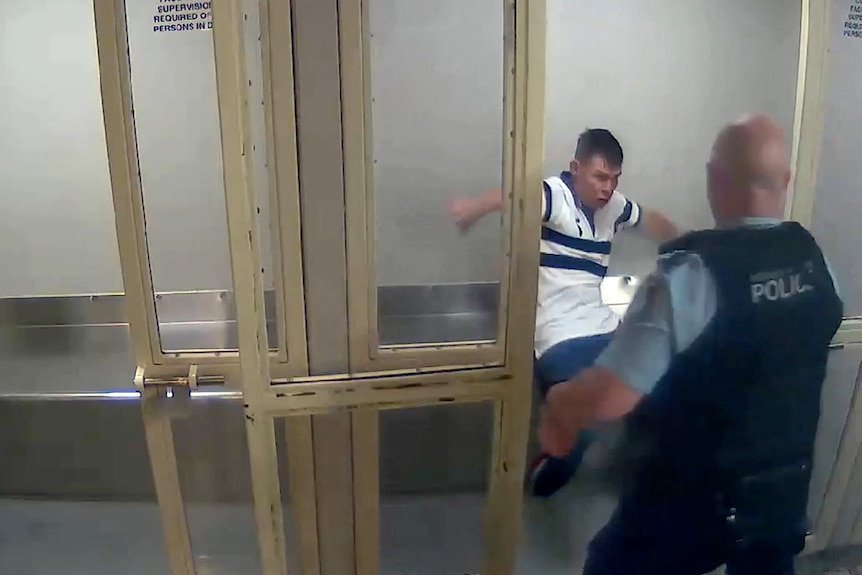
- The incident, captured on CCTV, shows Leading Senior Constable Mark Davis kneeling on Brad five times, fracturing multiple ribs, despite Brad being handcuffed and non-violent.
- The police system failed Brad at multiple levels, including the manipulation of witness statements, the failure to report adverse comments from judges, and the settlement of the case without admitting wrongdoing.
Brad Kellson’s story is a disturbing example of police brutality and a system that seems designed to protect those in power rather than the vulnerable. The incident, which took place in November 2021, has left Brad with physical and emotional scars that will last a lifetime.
Brad’s ordeal began when he and his girlfriend were turned away from a hotel near Blacktown train station after a night of drinking.
The events that followed are unclear, but it is known that police were called to a report of a man pushing a woman outside the pub.
Despite Brad and his partner being non-aggressive, he was arrested and taken to Blacktown Police Station.
At the station, Brad was slammed headfirst onto a metal bench by Leading Senior Constable Davis, handcuffed, and then kneed five times, fracturing multiple ribs. The incident was captured on CCTV, but the audio was not recorded.
The footage shows Brad being dragged to a cell, wheezing and in clear pain.
Brad spent four days in intensive care and was eventually released with severe injuries. He was later charged with assaulting police and resisting arrest, but the charges were eventually dropped.
The incident has left Brad with a deep depression and a loss of trust in the police.
Brad’s case is not an isolated incident.
According to NSW Police’s own figures, the number of complaints about officers by the public has increased by nearly 70 per cent in the past decade, from 3,130 in a year to 5,248.
Despite this, few officers have suffered significant consequences, with only 2 per cent of misconduct findings leading to charges.
Analysis: What This Means for Australia
The Brad Kellson case highlights the need for greater accountability within the police force.
The manipulation of witness statements, the failure to report adverse comments from judges, and the settlement of the case without admitting wrongdoing are all concerning indicators of a system that is failing to protect the public.
Security analysts say that the increase in complaints against police officers is a worrying trend that suggests a lack of transparency and accountability within the force.
The fact that so few officers are charged with misconduct despite the increasing number of complaints raises questions about the effectiveness of the police complaints system.
Law enforcement insiders warn that the failure to address police misconduct can have serious consequences for public trust in the police.
If the public feels that the police are not being held accountable for their actions, it can lead to a breakdown in community relationships and a lack of cooperation in crime prevention efforts.
The Brad Kellson case also highlights the need for greater support for victims of police brutality. Brad’s story is a disturbing example of the physical and emotional trauma that can result from police violence.
It is essential that victims of police brutality receive adequate support and compensation for their suffering.
Industry observers believe that the settlement of police misconduct cases without admitting wrongdoing is a major concern.
The fact that NSW Police paid out $40 million in settlements and legal costs last financial year, more than any other state or territory, suggests that the problem is widespread.
As the Brad Kellson case shows, the police system is failing to protect the vulnerable and is instead protecting those in power. It is essential that the government takes action to address police misconduct and ensure that those responsible are held accountable.
By failing to address police misconduct, the government is sending a message that police violence is acceptable. This can have serious consequences for public safety and community relationships.
It is essential that the government takes action to address police misconduct and ensure that those responsible are held accountable.