Tragedy Behind Bars: How Tammy Shipley’s Desperate Plea for Help Ended in a Fatal Neglect of Justice
- Tammy Shipley, a 47-year-old mother of six, dies in a maximum-security prison just 11 days after asking police to arrest her for her own protection.
- Despite being under 24-hour surveillance, Tammy’s mental health crisis is left unchecked, leading to a fatal case of water intoxication.
- An investigation reveals a litany of systemic failures, including inadequate mental health resources, poor communication, and a culture of neglect within the prison system.
- Tammy’s family demands answers, while experts warn that prisons have become the de facto mental health facilities, with devastating consequences.
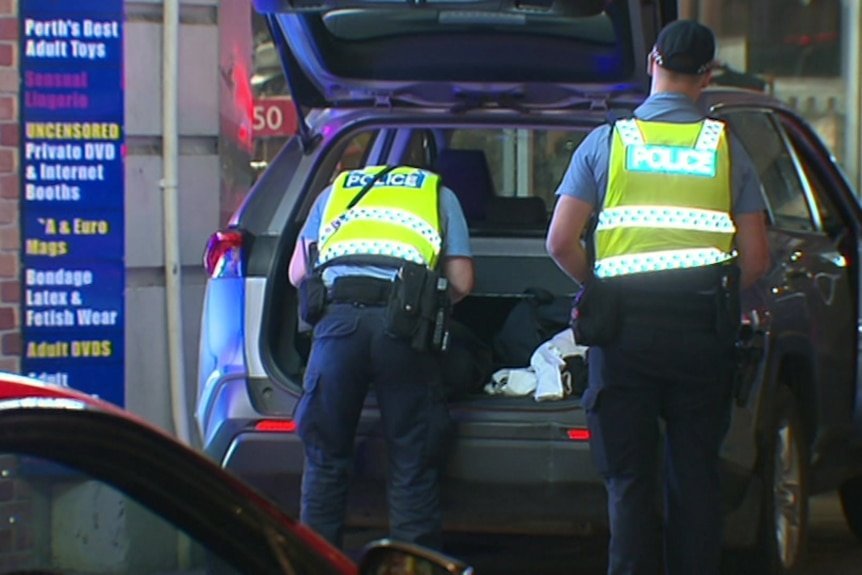
Tammy Shipley’s story is a heart-wrenching tale of a desperate mother who sought help from the very system that was supposed to protect her. On December 9, 2022, Tammy walked into Macquarie Fields Police Station and asked to be arrested, believing someone was after her.
But instead of receiving the help she needed, she was met with a series of catastrophic failures that would ultimately lead to her death.
As the investigation unfolds, it becomes clear that Tammy’s mental health crisis was evident from the start. She had a history of schizophrenia and bipolar disorder, and her family had been trying to get her help for years.
But despite her pleas for protection, Tammy was repeatedly let down by the system.
She was charged with shoplifting and trespassing, and instead of being sent to a mental health clinic, she was given a conditional release order and banned from the mall.
When Tammy appeared in court, she was unrepresented and unwell, but her pleas for help fell on deaf ears. She told the magistrate that she had made a mistake and wanted to get back to her family and her medication.


But it was too late.
Tammy was sent to the maximum-security Silverwater prison, where she would spend the final days of her life in a cell with no access to proper mental health care.
The CCTV footage from Tammy’s cell is a harrowing reminder of the neglect and abandonment she suffered. Despite being under 24-hour surveillance, Tammy’s condition deteriorated rapidly, and she began to experience seizures and vomiting.
But the guards monitoring the CCTV apparently didn’t know what they were seeing, and it wasn’t until Tammy was face down on the floor that they finally took action.
By then, it was too late. Tammy had drunk over 20 liters of water, causing her brain to swell and leading to a fatal case of water intoxication.
The coroner’s report would later reveal that Tammy had been in an acute phase of psychosis from the moment of her arrest, and that police had failed to pass on accurate mental health information.
As the investigation continues, it becomes clear that Tammy’s death is not an isolated incident. Prisons have become the de facto mental health facilities, with over 1,000 people with schizophrenia in NSW prisons at any given time.
Experts warn that the system is broken, and that the consequences are devastating.
“Prisons are our new asylums,” says forensic psychiatrist Dr. Olav Nielssen.
“There’s no two ways about it. We’ve got 2,600 acute beds outside prison, but the prisons are by far the biggest mental health service.”
Jade Coupland, a nurse who works in the men’s part of Silverwater, agrees. “I would say it would be a rare occasion I wouldn’t have a patient with a mental condition.
You are the person that this patient is sitting in front of, and they’re raising these concerns and you have to say, ‘I’m sorry, you’re on the wait list.
Like, I know you’ve told us, I know you’re struggling.’ I can’t do anything. Every day you’re turning around to people and being like, ‘I’m sorry; I can’t help.’ It’s just awful.”
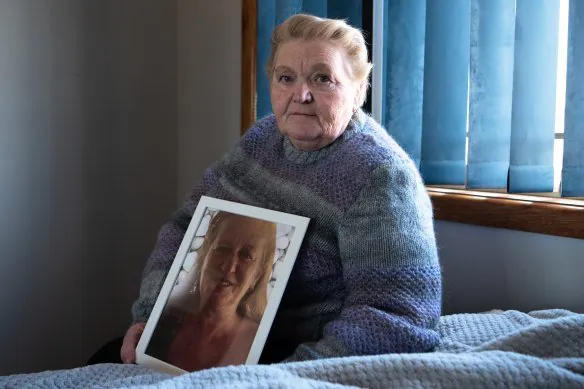
Tammy’s family is still searching for answers, and demanding justice for their loved one. “You ask yourself, ‘Have you done enough?
Did you do enough?'” says Vicki Shipley, Tammy’s mother. “But you obviously didn’t, because you couldn’t save them.
And you ask yourself that every day.”
Analysis: What This Means for Australia
Tammy Shipley’s death is a stark reminder of the failures of our justice system. The fact that prisons have become the de facto mental health facilities is a national scandal.
It’s a failure of our mental health resources, our law enforcement, and our corrections system.
As a nation, we need to ask ourselves: how did we get to this point? How did we allow our prisons to become the biggest mental health service in the country?
And what are we going to do to fix it?
The answers are complex, but the solutions are clear.
We need to invest in our mental health resources, we need to reform our justice system, and we need to hold those responsible for Tammy’s death accountable.
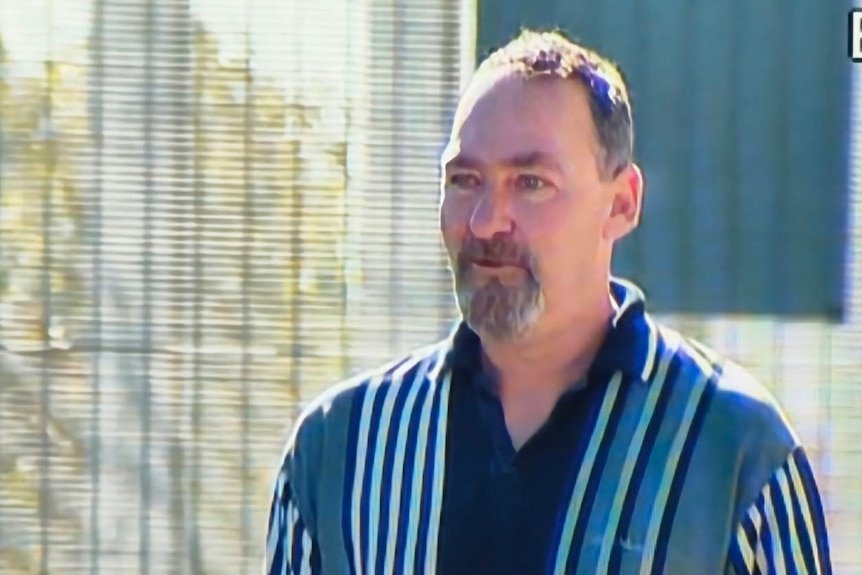
As Liam, Tammy’s son, so poignantly puts it: “At the end of the day, you get to go home. And I have to go home and now not have a mum because you didn’t do your job.”
It’s time for us to do better.
It’s time for us to take responsibility for our failures and to work towards a justice system that truly serves the most vulnerable members of our society.
Only then can we hope to prevent another tragedy like Tammy Shipley’s from happening again.