‘Monoculture’ Mayhem: How Pauline Hanson’s Divisive Rhetoric Exposes Australia’s Uncomfortable Truths
- Pauline Hanson sparks national debate with call for a ‘monocultural’ Australia, sparking confusion and outrage among politicians and citizens
- Experts warn of the dangers of Hanson’s rhetoric, citing its potential to fuel racism and xenophobia
- Analysis reveals a deeper issue: Australia’s struggle to define its cultural identity and reconcile its past and present
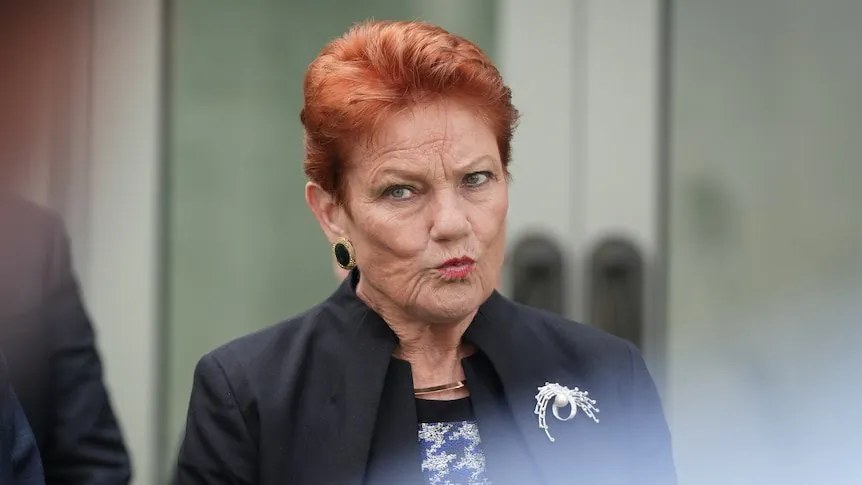
Australia has been embroiled in a heated debate over the concept of a ‘monoculture’ after One Nation leader Pauline Hanson called for a return to a single, dominant culture.
The controversy has exposed deep divisions within the country and raised questions about its ability to reconcile its past and present.
The debate began when Hanson addressed the National Press Club, stating that Australia should strive for a monoculture, citing Japan as an example. However, her comments were met with widespread criticism and confusion, with many politicians and citizens struggling to understand what she meant.
As the debate raged on, Hanson’s opponents were quick to point out the flaws in her argument.
Nationals leader Matt Canavan stated that Japan’s strict enforcement of a single culture was not something Australia should aspire to, while Liberal leader Angus Taylor struggled to define monoculturalism and eventually resorted to asking journalists for help.


Meanwhile, former Prime Minister Tony Abbott waded into the debate, arguing that Australia’s Celtic culture and Judeo-Christian ethos were essential to its identity. However, his comments were seen as tone-deaf and divisive, with many pointing out that Australia’s cultural heritage is far more complex and diverse.
Analysis: What This Means for Australia
So, what does this debate reveal about Australia’s cultural identity and its ability to reconcile its past and present? The answer lies in the country’s complex history of migration and cultural exchange.
Australia has long been a nation of immigrants, with people from diverse backgrounds coming to the country in search of a better life.
However, this history has also been marked by periods of racism and xenophobia, with certain groups facing exclusion and marginalization. Hanson’s comments tap into these underlying tensions, exploiting fears about cultural identity and national security.
Experts warn that Hanson’s rhetoric has the potential to fuel further division and intolerance, particularly among vulnerable communities. “Pauline Hanson’s comments are a classic example of dog-whistling,” says Dr.
Anne Aly, a counter-terrorism expert. “She’s using coded language to appeal to a particular segment of the population, but the impact is far more insidious.”
So, what can be done to address these underlying tensions and promote a more inclusive and diverse Australia? The answer lies in education and dialogue.
By promoting greater understanding and empathy, Australians can work towards a more cohesive and harmonious society.
As the debate over monoculturalism continues, it’s clear that Australia has a long way to go in reconciling its past and present. However, by engaging in open and honest dialogue, the country can work towards a brighter, more inclusive future.
Security analysts say that Hanson’s comments are a reminder of the need for greater cultural awareness and understanding. “Australia’s cultural identity is complex and multifaceted,” says Dr.
David Wright-Neville, a security expert. “We need to promote greater understanding and empathy, particularly among vulnerable communities.”
Law enforcement insiders warn that Hanson’s rhetoric has the potential to fuel further division and intolerance. “We’ve seen a rise in hate crimes and incidents of racism in recent years,” says a senior law enforcement official.
“Pauline Hanson’s comments are a reminder of the need for greater vigilance and community engagement.”
Industry observers believe that the debate over monoculturalism highlights the need for greater investment in education and cultural programs. “We need to promote greater understanding and empathy, particularly among young people,” says Dr.
Christina Ho, a cultural expert. “This can be achieved through education and cultural programs that promote diversity and inclusion.”