NAIDOC Week: A 50-Year Journey from Protest to Celebration, But Recognition and Rights Still Elude Indigenous Australians
- Aunty Millie Ingram’s childhood was marked by “rife racism” and state government control, but her mother’s activism sparked a lifelong fight for Indigenous rights.
- From a one-day protest in 1938 to a week-long celebration, NAIDOC Week has evolved, but its core message remains: recognition and rights for Indigenous Australians.
- Despite progress, Indigenous Australians continue to face significant challenges, including discrimination, inadequate healthcare, and limited economic opportunities.
- This year’s NAIDOC Week theme, “50 Years of Deadly,” honours the past and celebrates the future, but also acknowledges the ongoing struggles of Indigenous Australians.
For Aunty Millie Ingram, 86, the memories of her childhood are etched in her mind like the lines on her face.
Born in 1940, she grew up on the Erambie mission near Cowra, in the central west region of New South Wales, under the watchful eye of the state government.
Her mother, Louisa Agnes Ingram OAM, was a proud Wiradjuri woman who fought against the “oppression” of Indigenous Australians. Aunty Millie recalls her mother’s activism, which was part of a groundswell movement that had been building for years.
In 1938, two years before Aunty Millie was born, her mother was photographed holding her older sibling at the Day of Mourning protest, one of Australia’s largest civil rights movements.
The protest was a response to the 150th anniversary of the First Fleet landing, which marked the beginning of colonisation. A famous black and white photo taken that day captured an important moment in time.




Today, that one-day protest has evolved into a week-long celebration known as NAIDOC Week.
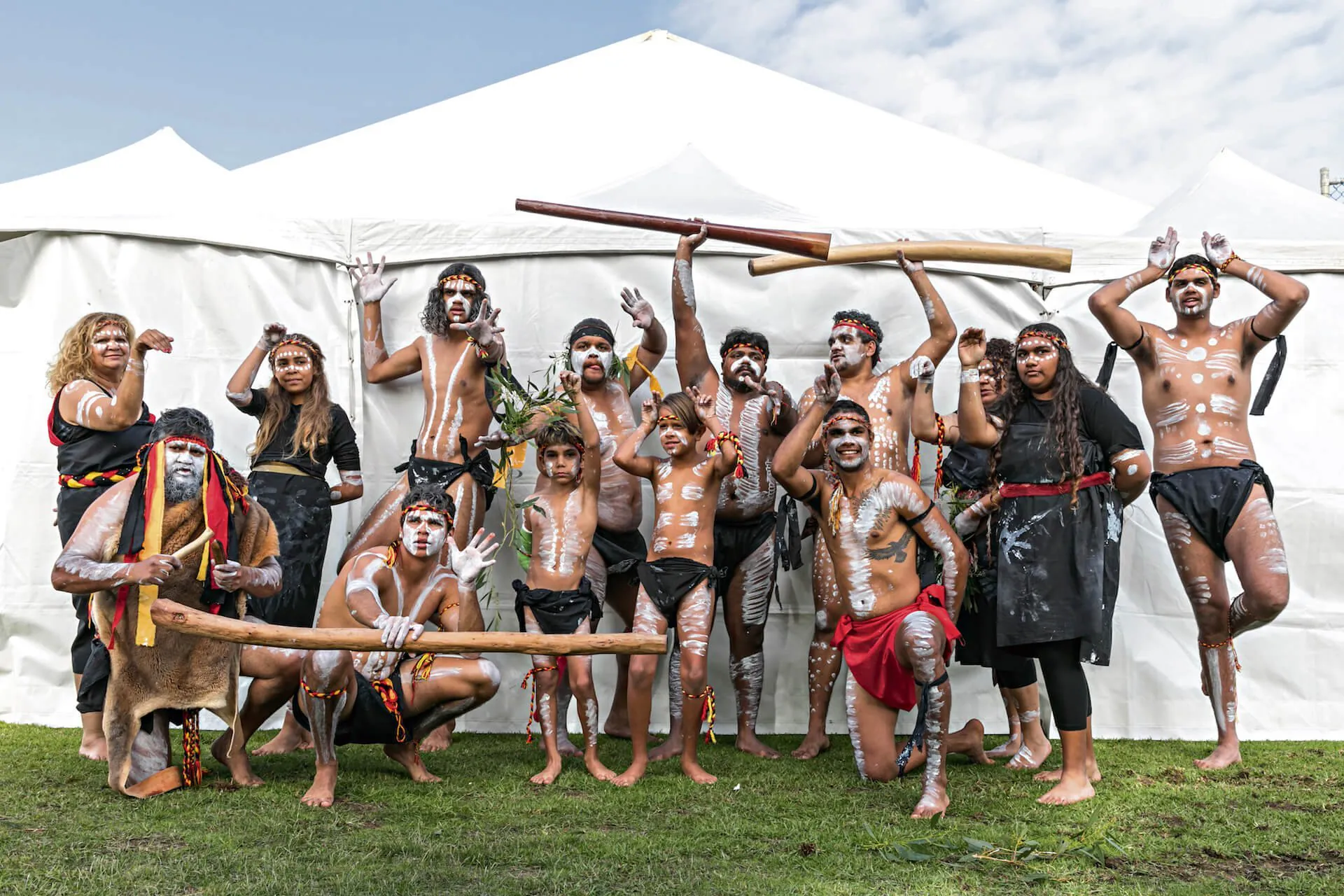
NAIDOC Week is now marked in different ways, from the glitz and glamour of the national awards ceremony to art exhibitions and local festivals. Traditionally, it was celebrated by First Nations people, but it has become an invitation for non-Indigenous Australians to get involved.
Aunty Millie Ingram reflected on the early days of the movement, saying, “Back in those days, we were all concerned about survival. We were just so oppressed at that time, but there was a lot of fighting [for rights] going on before all of this started.”
NAIDOC Week has become an important platform for recognition, rights, and pride in the face of discrimination.
Inala Cooper, a member of the National NAIDOC Committee, said, “The momentum of activism as well as celebration has meant that one day just wasn’t big enough, we needed a whole week.” The event expanded to represent the growth of the movement, and in 1991, the “I” was added to NAIDOC to represent Torres Strait Islander peoples.
Analysis: What This Means for Australia
NAIDOC Week is more than just a celebration; it’s a reminder of the ongoing struggles of Indigenous Australians. Despite progress, Indigenous Australians continue to face significant challenges, including discrimination, inadequate healthcare, and limited economic opportunities.
According to the Australian Bureau of Statistics Australian Bureau of Statistics, Indigenous Australians are more likely to experience unemployment, poverty, and poor health outcomes compared to non-Indigenous Australians.
Security analysts say that the lack of recognition and rights for Indigenous Australians is a national security issue. “The ongoing struggles of Indigenous Australians are a ticking time bomb,” said one analyst.
“If we don’t address these issues, we risk creating a sense of hopelessness and disengagement among Indigenous Australians, which can lead to social unrest and conflict.”
Law enforcement insiders warn that the lack of trust between Indigenous Australians and the police is a major concern. “We need to build trust and improve relationships with Indigenous Australians,” said one insider.
“This requires a fundamental shift in the way we approach policing, from a focus on enforcement to a focus on community engagement and support.”
Industry observers believe that NAIDOC Week is an opportunity for non-Indigenous Australians to learn about Indigenous culture and history. “NAIDOC Week is a chance for us to learn about the rich and diverse culture of Indigenous Australians,” said one observer.
“It’s an opportunity for us to reflect on our past and to think about how we can work together to create a better future for all Australians.”
As NAIDOC Week celebrates its 50th anniversary, it’s clear that there is still much work to be done.
Aunty Millie Ingram’s story is a testament to the ongoing struggles of Indigenous Australians, but it’s also a reminder of the power of activism and community.
As Aunty Millie said, “Our legacy should be to give hope and opportunities to our younger people, and I am so proud of our younger generations of Aboriginal people that we have coming up today.”
The theme for NAIDOC Week this year is “50 Years of Deadly,” which honours the past and celebrates the future. It’s a reminder that NAIDOC Week is not just a celebration, but a call to action.
As Kevin Kropinyeri, a comedian and NAIDOC Week ambassador, said, “NAIDOC Week is an opportunity to challenge ideas and to change perceptions of our people and change stereotypes.”
Inala Cooper agrees, saying, “[NAIDOC is] part of the truth-telling of our country; it is part of reconciling with our past and our future.” As Australia continues to grapple with its complex history and ongoing challenges, NAIDOC Week is a reminder of the importance of recognition, rights, and reconciliation.