
Australia Braces for ‘Mother of All House Price Corrections’ as Expert Warns of Double-Digit Falls and Multi-Year Inflation Battle
- Australia’s housing market is on the brink of a catastrophic collapse, with top economist Christopher Joye predicting double-digit falls in Sydney and Melbourne.
- The “grim” scenario could see the nation experience its biggest house price correction ever recorded, with prices plummeting by as much as 15 per cent.
- The Reserve Bank of Australia is expected to raise interest rates to 4.75 or 5 per cent to combat inflation, further exacerbating the housing downturn.
- Australia’s population growth is set to stall, with immigration numbers curbed and natural fertility rates low, spelling disaster for the housing market.
Australia’s housing market is staring into the abyss, with a top economist warning of a “mother of all house price corrections” that could see prices plummet by double digits in the nation’s two biggest cities.
Christopher Joye, the architect of Cotality’s house price indices, has laid out a dire scenario for property values, predicting a correction that could be the biggest on record.
According to Joye, Sydney house prices are currently falling at a 12 per cent annual rate, while Melbourne prices are also experiencing a double-digit decline.
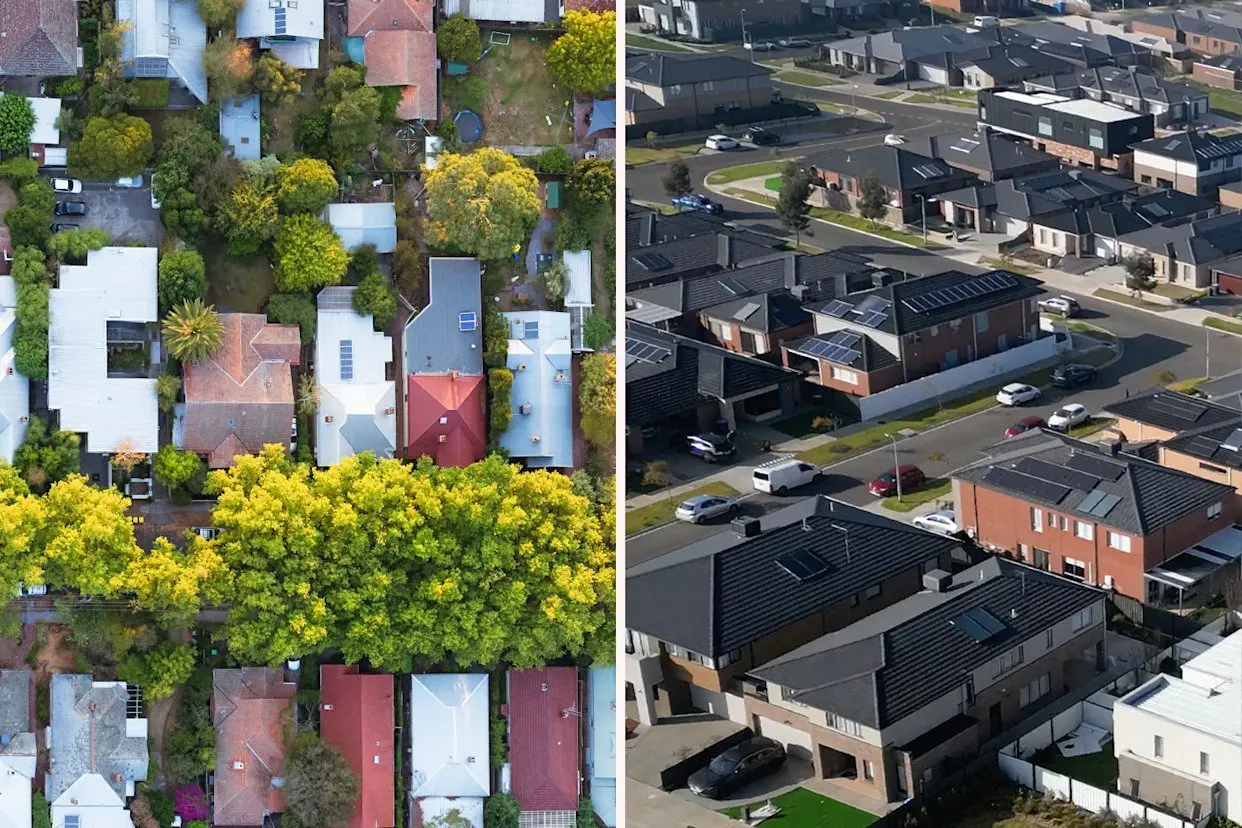
The falls are a result of various economic pressures, including higher interest rates, falling consumer confidence, and the new investor tax settings introduced in the May budget.
The Sydney market has already experienced a 3.3 per cent drop in the last quarter, with its annual gains evaporating to -0.1 per cent year-on-year.
Melbourne has fared slightly better, with a 2.7 per cent drop in the quarter and 1.7 per cent year-on-year.
But what’s driving this downturn? Joye points to two major factors: a likely reset on immigration numbers and further interest rate hikes.
With Australia’s population growth set to stall, the demand for housing is expected to dry up, leading to a prolonged period of price falls.
The Reserve Bank of Australia is expected to raise the cash rate to 4.75 or 5 per cent in the coming months to combat inflation, further exacerbating the housing downturn.
Analysis: What This Means for Australia
The implications of this housing downturn are far-reaching and devastating.
A correction of this magnitude could have a significant impact on the nation’s economy, with flow-on effects for employment, consumer confidence, and the broader property market.
The Australian Prudential Regulation Authority (APRA) has already warned of the risks of a housing market downturn, and the Reserve Bank of Australia has been grappling with how to manage the nation’s inflation rate.
With interest rates set to rise and population growth stalled, the outlook for the housing market is indeed grim.
Security analysts say the housing downturn could also have significant implications for national security, as a decline in property values could lead to a decline in economic stability.
Law enforcement insiders warn that the downturn could also lead to an increase in property-related crime, as desperate homeowners and investors become more desperate. Industry observers believe that the downturn could also lead to a surge in mortgage stress, as homeowners struggle to meet their repayments.
One Nation’s proposal to slash immigration to 130,000 per year could see home values drop 15 per cent, according to one expert. The party’s leader, Pauline Hanson, has been vocal about the need to reduce immigration levels to ease pressure on the nation’s housing market.
But with natural fertility rates low and population growth stalled, the outlook for the housing market is bleak.
As Joye said, “You have a combination of much higher interest rates … coupled with extreme tax, legal, regulatory and political uncertainty … and then you have a world in which the demand side driver that had been the gift that keeps on giving in the form of world-beating population growth suddenly disappears.”
As the nation teeters on the brink of a housing market collapse, one thing is clear: the road ahead will be long and difficult. With interest rates set to rise, population growth stalled, and the housing market in freefall, Australia is facing a perfect storm of economic uncertainty.
The question on everyone’s lips is: how low will the housing market go, and what will be the consequences for the nation’s economy?