
Reviving the Heartbeat of Australia: Top End Language Custodians Unite to Save Dying Indigenous Languages
- Over 30 Aboriginal language custodians release the Top End Strong Languages Statement, calling for urgent action to preserve Indigenous languages
- Experts warn that Australia has one of the worst records in the world for language loss, with thousands of languages at risk of disappearing forever
- A new pilot program aims to teach young adults endangered languages, including Dhaŋu, which has just a few speakers left
- The United Nations’ International Decade of Indigenous Languages Global Action Plan urges governments to meet community efforts to revive languages
The fate of Australia’s Indigenous languages hangs in the balance, with thousands of languages at risk of being lost forever.
But in a bold move, over 30 Aboriginal language custodians from the Northern Territory have joined forces to release the Top End Strong Languages Statement, a call to action to preserve the heartbeat of Australia’s rich cultural heritage.
The statement is the result of years of work by the Top End Language Group, led by Rarrtjiwuy Herdman, a speaker of the endangered Dhaŋu language.
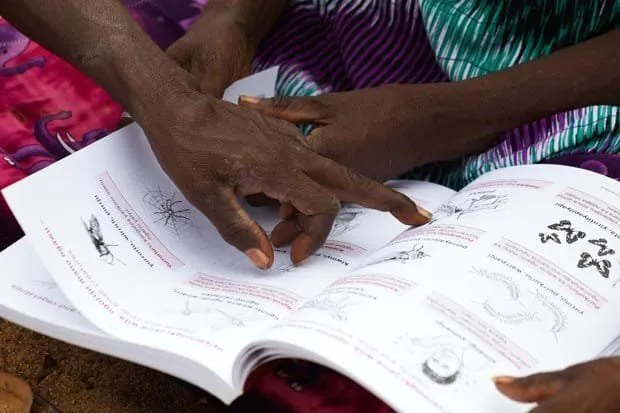
The four-page report sets out a road map for language revival and survival efforts, highlighting the need for increased funding for language services, bilingual education, and the repatriation of archived materials.
For Herdman, the statement is personal. She has seen firsthand the decline of her native language, Dhaŋu, which has just a few speakers left.
“For me, it’s about acknowledging that of the places we interact with in our communities, often in an organisational setting, is through English,” she said.
“I want to be able to support and build the capacity of young adults and the next generation of people who will work in community to deliver services to Yolŋu in my community in our language.”
The statement has been welcomed by the Northern Territory Education Department, which has committed to supporting the teaching and learning of Aboriginal languages.
Paul van Holsteyn, the department’s acting deputy chief executive for early years and school services, said, “The department supports schools to develop and incorporate local curriculum and align it with the Australian Curriculum.
Aboriginal languages are taught in more than 50 schools in all NT contexts.”
Analysis: What This Means for Australia
The Top End Strong Languages Statement is a wake-up call for Australia, highlighting the urgent need to address the alarming rate of language loss. With the United Nations’ International Decade of Indigenous Languages Global Action Plan in full swing, the Australian government must meet community efforts to revive languages.
As Samuel Daniels, the IDIL Australia executive officer, said, “You do see these efforts from community; it would be really nice if you started to see action on the government side as well.”
The loss of Indigenous languages has severe consequences for Australia’s cultural heritage, national identity, and community well-being.
As Ian Gumbula, a delegate from Galiwin’ku, said, “Language is life, and it gives communities freedom.” The preservation of Indigenous languages is not just a matter of cultural significance but also a matter of social justice and human rights.
Security analysts say that the loss of Indigenous languages also has implications for national security, as it erodes the cultural fabric of Australia’s diverse communities. Law enforcement insiders warn that the decline of Indigenous languages can lead to increased social unrest and community disengagement.
Industry observers believe that the Top End Strong Languages Statement is a crucial step towards preserving Australia’s linguistic diversity. As the statement emphasizes, language is not just a means of communication but a vital part of community identity and culture.
By supporting the efforts of the Top End Language Group, Australia can take a significant step towards preserving its rich cultural heritage and promoting social cohesion.
As the Australian government considers its response to the Top End Strong Languages Statement, it must recognize the urgent need to address language loss.
By investing in language services, bilingual education, and community-led language programs, Australia can ensure that its Indigenous languages continue to thrive for generations to come.
Indigenous languages language loss United Nations International Decade of Indigenous Languages Global Action Plan