Australian Government’s ‘Species Lottery’ Leaves Endangered Mahogany Gliders Hanging by a Thread as Funding Dries Up
- Endangered mahogany gliders are on the brink of disaster as funding for their recovery plan runs out, leaving their population numbers a mystery.
- The species, which “disappeared from science” for over 100 years, was rediscovered in 1993 and declared endangered, but its habitat was decimated by Cyclone Yasi in 2011.
- Despite a brief influx of funding after the cyclone, the recovery team is now “in limbo” with no regular monitoring process in place to track the population.
- Experts warn that the lack of funding for individual species like the mahogany glider is a symptom of a broader problem, with over 2,100 plants and animals threatened with extinction in Australia.
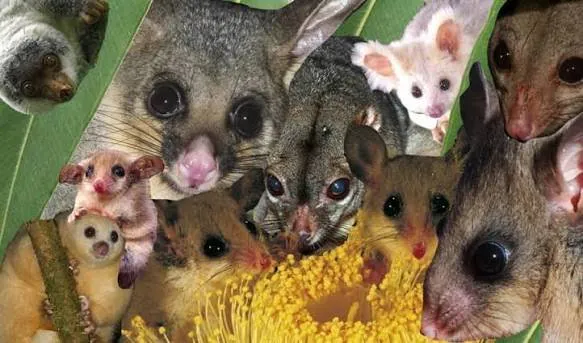
The mahogany glider, one of Australia’s largest tree-dwelling gliders, is fighting for survival on a small stretch of coastline north of Townsville. But despite being declared endangered over 25 years ago, the species is still struggling to get the attention – and funding – it desperately needs.
Former chair of the national mahogany glider recovery team Daryl Dickson says the lack of funding has left the team “in limbo”, with no regular monitoring process in place to track the population.
The mahogany glider’s story is one of frustration and neglect. Discovered in 1883, the species was never classified in the Queensland Museum and “disappeared from science” for over 100 years.
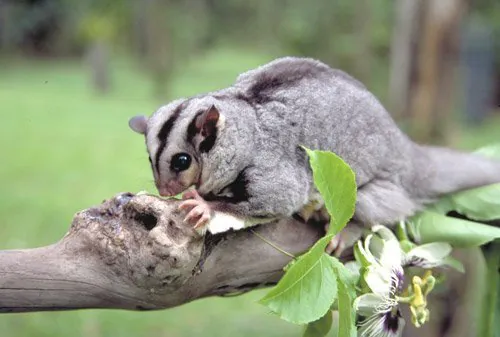
It wasn’t until 1993 that it was rediscovered and declared a unique species, with the name Petaurus gracilis, meaning graceful rope dancer. But by then, more than 60 per cent of its habitat had already been cleared, and the species was declared endangered.
The situation took a turn for the worse in 2011, when Cyclone Yasi decimated the remaining habitat. But in the aftermath of the disaster, the recovery team managed to secure funding and make progress towards a scientific recovery plan.

However, the funding soon ran out, and the plan was shelved. The recent Keeping Country Connected for Mahogany Gliders project, funded by the Queensland government, ended this month, leaving the team with no clear direction.
Ms Dickson says the team is “always guessing” when it comes to population numbers and locations, information that is crucial for analysing long-term changes. A researcher recently flew a thermal drone over mahogany glider habitat, revealing an easy and accurate way to monitor the population.
But despite the promising results, there is no funding to continue the project.
“If we had a regular monitoring process, at least we’d see the warning signs early enough to perhaps be able to make enough noise to make the government pay attention,” Ms Dickson says.
Analysis: What This Means for Australia
The mahogany glider’s plight is a symptom of a broader problem in Australia, where over 2,100 plants and animals are threatened with extinction.
Australian Threatened Species commissioner Fiona Fraser says that making decisions about funding is “super important”, but the reality is that many species are fighting for a share of limited resources.
“Our threatened species definitely need more love. They need more resources.
They need more science,” Dr Fraser says.
Security analysts say that the lack of funding for individual species like the mahogany glider is a concern, as it can have flow-on effects for the broader ecosystem.
“When we neglect individual species, we risk losing the delicate balance of our ecosystems,” says one expert. “It’s a ticking time bomb for our environment and our economy.”
Law enforcement insiders warn that the lack of funding for conservation efforts can also have serious consequences for public safety. “When we don’t protect our wildlife, we put our communities at risk,” says one insider.
“It’s a false economy to think that we can’t afford to invest in conservation.”
Industry observers believe that the solution lies in a more targeted approach to funding, one that prioritises individual species like the mahogany glider. “We need to stop playing the species lottery and start investing in the species that need it most,” says one observer.
“It’s time for the government to take a more strategic approach to conservation funding.”
As the mahogany glider hangs in the balance, experts are calling on the government to take action. “We just need to keep going until such time that, perhaps, the spotlight shines on the mahogany glider again,” Ms Dickson says.
But with over 2,100 plants and animals threatened with extinction in Australia, it’s clear that the problem goes far beyond just one species. It’s time for a new approach to conservation funding in Australia – one that puts the needs of our most vulnerable species first.
Australian Bureau of Statistics
Australian Government Department of the Environment and Energy