
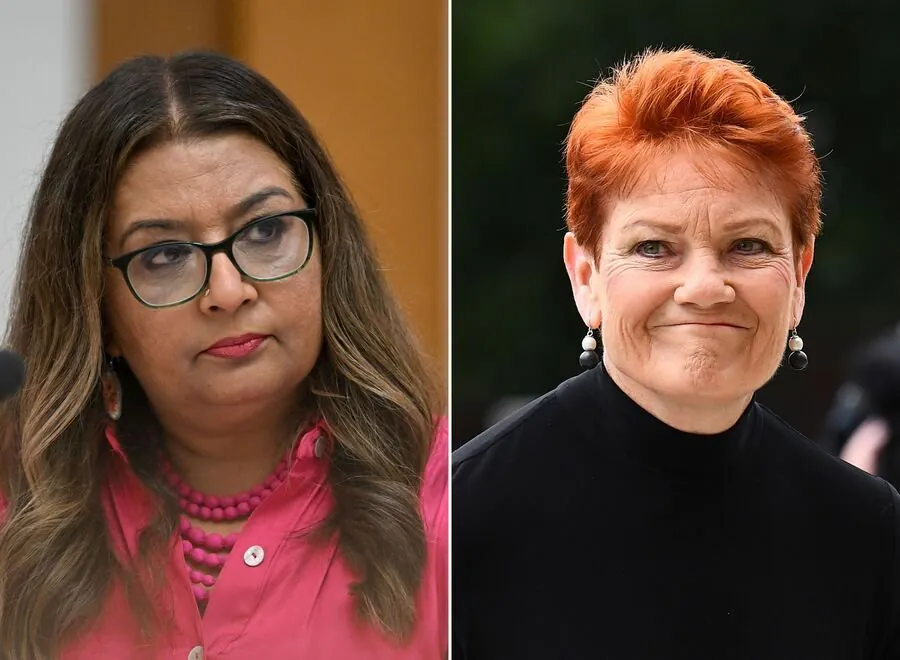
‘Piss Off Back to Pakistan’: Pauline Hanson’s Racist Remark Sparks Outrage as Court Upholds ‘Seriously Offensive’ Ruling
- One Nation founder Pauline Hanson’s appeal against a Federal Court ruling that she made a racist remark online has been dismissed
- The 72-year-old senator was found to have racially vilified deputy Greens leader Mehreen Faruqi with a tweet telling her to “piss off back to Pakistan”
- The ruling has sparked outrage, with Faruqi calling it a “victory against racism” and Hanson vowing to appeal to the High Court
- The controversy has reignited debate over free speech and hate speech in Australia, with Hanson claiming the country’s laws are “silencing” public discussion
In a shocking blow to One Nation founder Pauline Hanson, the Full Court of the Federal Court has upheld a ruling that she made a racist remark online, sparking outrage and reigniting debate over free speech and hate speech in Australia.
The 72-year-old senator was found to have racially vilified deputy Greens leader Mehreen Faruqi with a tweet telling her to “piss off back to Pakistan”, which was deemed “seriously offensive” and a “strong form of racism” by Justice Angus Stewart in 2024.
The controversy began when Senator Faruqi posted a message on X, formerly Twitter, on the day of Queen Elizabeth II’s death, offering her condolences to those who knew the monarch but also stating that she could not mourn the passing of the leader of a “racist empire built on stolen lives, land and wealth of colonised peoples”.
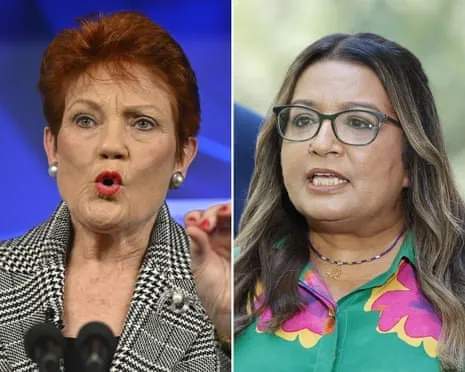
Senator Hanson responded with a heated retort, telling Faruqi to “pack your bags and piss off back to Pakistan”, which was widely condemned as a racist slur.
Senator Hanson launched an appeal against the finding, with her barrister arguing that the remarks might not have been pleasant but they did not intimidate people of colour.
However, the Full Court of the Federal Court has now dismissed the appeal, with Faruqi welcoming the ruling as a “victory against racism”. “Today’s win is for every single person who has been made to feel that their belonging in this country is conditional,” she said outside court.
“This case was always about holding to account racism and those who perpetrate it. Hate speech is not free speech.”
Senator Hanson has responded to the ruling with a video post on X, expressing her disappointment and vowing to appeal to the High Court.
“Public discussion in Australia has become almost totally silenced by laws and rules which prevent ordinary people expressing their personal views in case some small part of our society takes some sort of offence or feels hurt or ‘distressed’,” she wrote.
“This has never been, nor ever should be, the Australian way. We all need to have the courage – and the freedom – to say what we think on issues that are important to us.”
However, experts say that Senator Hanson’s comments are a stark reminder of the dangers of hate speech and the importance of holding public figures to account.
“Hate speech can have serious consequences, including fuelling violence and discrimination against minority groups,” said Dr. Anne Aly, a expert on extremism and hate speech.
“It’s essential that we have laws in place to protect vulnerable communities and promote a culture of respect and inclusivity.”
The controversy has also reignited debate over free speech and hate speech in Australia, with some arguing that the country’s laws are too restrictive and others claiming that they do not go far enough.
“The line between free speech and hate speech is often blurred, and it’s up to the courts to determine what is acceptable and what is not,” said Dr.
Michael Salter, a expert on law and social justice. “However, it’s clear that Senator Hanson’s comments were well beyond the bounds of acceptable discourse and were intended to intimidate and marginalise a minority group.”
Analysis: What This Means for Australia
The ruling has significant implications for Australia’s approach to hate speech and free speech. It highlights the importance of holding public figures to account for their words and actions, particularly when they perpetuate racism and discrimination.
The case also underscores the need for a nuanced approach to free speech, one that balances the right to express opinions with the need to protect vulnerable communities from harm.
Furthermore, the controversy has sparked a national conversation about the limits of free speech and the importance of promoting a culture of respect and inclusivity. It’s a conversation that is long overdue, particularly in the wake of rising extremism and hate crimes in Australia.
As the country grapples with these complex issues, it’s clear that the ruling will have far-reaching implications for Australian society and politics.
Ultimately, the case serves as a reminder that words have consequences, and that public figures have a responsibility to use their platforms to promote tolerance and understanding, rather than hate and division.
As Senator Faruqi so eloquently put it, “hate speech is not free speech”. It’s a message that resonates deeply in Australia, a country built on the principles of multiculturalism and inclusivity.
As the debate continues, one thing is clear: the ruling will have a lasting impact on Australian politics and society, and will serve as a powerful reminder of the importance of promoting respect, tolerance, and inclusivity in all aspects of public life.