
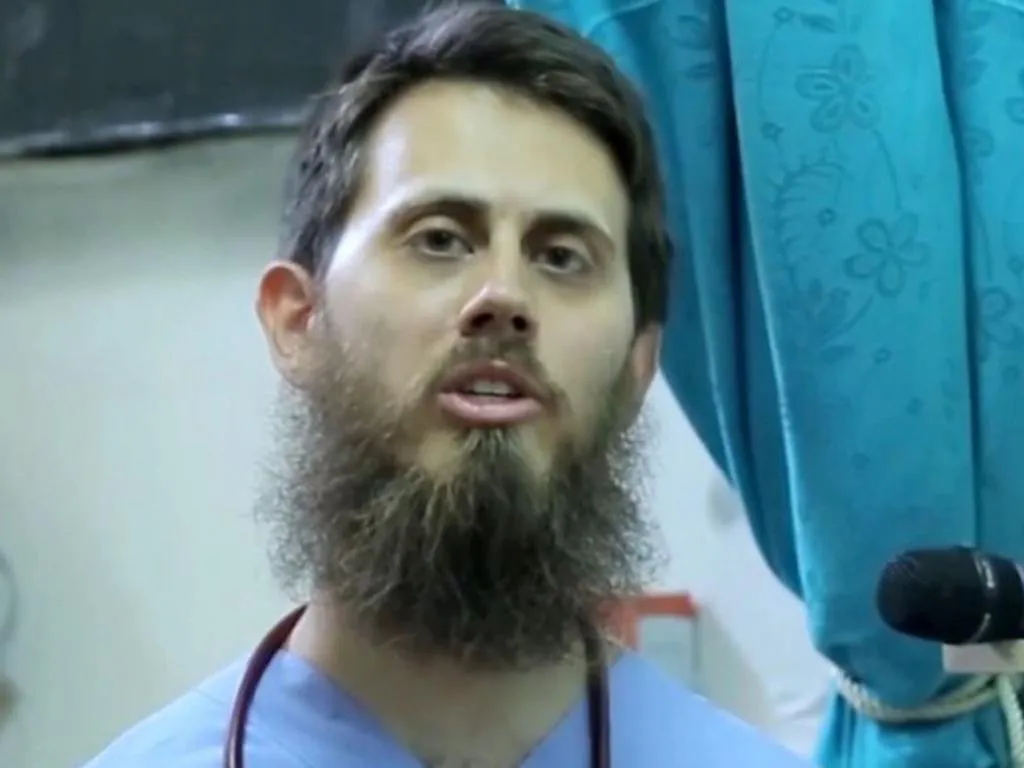
‘I’m a Doctor, Not a Soldier’: The Chilling Tale of ‘Dr Jihad’ Tareq Kamleh, the Aussie Paediatrician Accused of Joining Islamic State
- Tareq Kamleh, a Perth-born paediatrician, has claimed he never formally joined Islamic State despite appearing in propaganda videos and working in IS-controlled territory
- Kamleh, dubbed ‘Dr Jihad’, is one of over a dozen Australians accused of involvement with the extremist group and is currently in an Iraqi jail
- The Australian government has refused to help Kamleh and other IS-linked Australians return home, citing their alleged involvement with a “dangerous terrorist organisation”
- Kamleh’s story raises questions about the fate of foreigners who joined the failed caliphate and the implications for national security and community safety in Australia
In a shocking revelation, Australian paediatrician Tareq Kamleh, known as ‘Dr Jihad’, has claimed he never intended to join Islamic State and never pledged allegiance to the extremist organisation.
The Perth-born doctor, who travelled to Syria in 2015, is currently in an Iraqi jail, facing charges of terrorism offences, including joining and recruiting for IS.
Kamleh’s comments, made in a recently resurfaced interview, are designed to distance himself from the criminal allegations that hang over him and others in jail in Iraq.
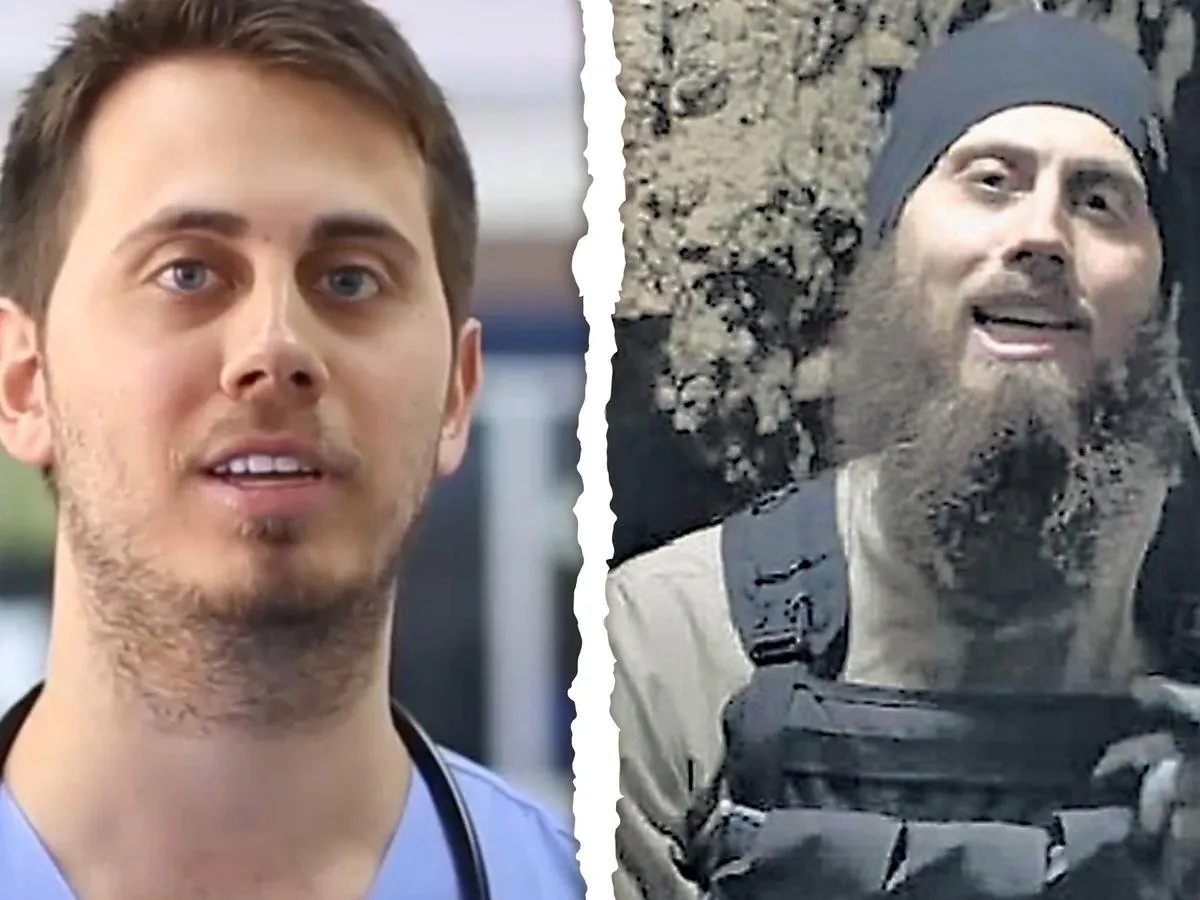
However, even travelling to Syria at the time he did is considered an offence under Australian law.
The Australian Federal Police have charged him with terrorism offences, and the federal government has refused to help him and other IS-linked Australians return home.
Kamleh’s story is a complex one, full of contradictions and conflicting accounts.
He claims he travelled to Syria to work as a doctor, but ended up in IS-controlled territory, where he was forced to record propaganda videos and provide medical services to the extremist group.
He insists he was not a soldier, but a doctor, and that he was simply trying to do his job in a war zone.
However, the journalists who interviewed Kamleh were skeptical of his claims, pointing out that he used the Arabic word “dawla”, which translates to “state”, a term used by people who believed in IS having the authority of its own state.
They also questioned the path he took to get to Syria, which would have led him directly into IS territory.
Kamleh’s appearance in IS propaganda videos, including one where he is seen armed with a rifle in what appears to be a tunnel, extolling the virtues of IS, has been widely reported in Australia.
He claims he was forced to record the video, and that he was simply following orders.
The status of Islamic State-linked Australians stuck in Syria has become a major issue for the federal government. The government has insisted it is not going to help the men return, citing their alleged involvement with a “dangerous terrorist organisation”.
But Kamleh’s story raises questions about the fate of these individuals and the implications for national security and community safety in Australia.
Analysis: What This Means for Australia
Kamleh’s case highlights the complexities and challenges of dealing with Australians who have joined extremist groups overseas. The federal government’s decision not to help these individuals return home has sparked debate about national security, community safety, and human rights.
Security analysts say that allowing individuals like Kamleh to return to Australia could pose a significant risk to national security, given their alleged involvement with IS.
However, human rights advocates argue that these individuals have a right to return home and face the full force of the law.
The issue is further complicated by the fact that many of these individuals, including Kamleh, claim they were forced to join IS or were coerced into participating in extremist activities.
This raises questions about the extent to which they can be held accountable for their actions, and whether they can be rehabilitated and reintegrated into Australian society.
Ultimately, the fate of Australians like Kamleh will depend on a range of factors, including the outcome of their trials in Iraq and the federal government’s policies on national security and counter-terrorism.
One thing is clear, however: the issue of IS-linked Australians will continue to be a contentious and complex one for Australia in the years to come.
Law enforcement insiders warn that the return of IS-linked Australians could also have significant implications for community safety. They argue that these individuals may have been radicalised and could pose a risk to the community if they are allowed to return.
Industry observers believe that the federal government’s decision not to help these individuals return home is a pragmatic one, given the risks involved.
However, they also argue that the government needs to be clear about its policies and procedures for dealing with IS-linked Australians, and that it needs to provide more support for communities affected by extremism.