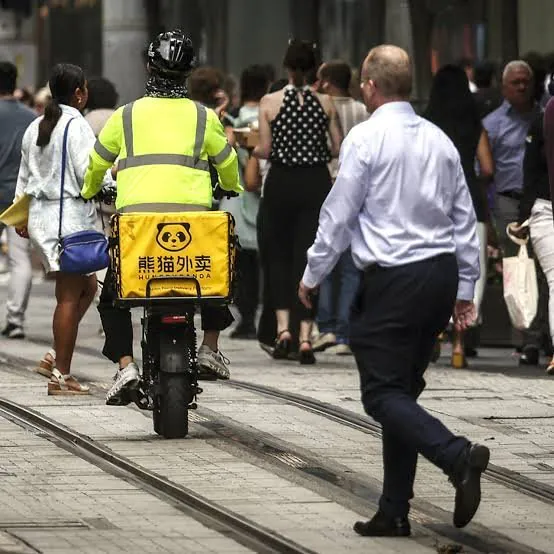
Revolution in the Gig Economy: Australia Sets Global Precedent with Groundbreaking Minimum Pay Rates for Delivery Riders
- 250,000 UberEats, DoorDash, and Menulog riders to receive minimum pay rates of over $31 an hour from Monday
- Australia’s Fair Work Commission introduces world-first reforms to end the gig economy’s ‘race to the bottom’
- New rules guarantee minimum earnings floor for app-based delivery riders and drivers, with varying rates for different modes of transport
- Reforms hailed as a major victory for workers, who have long campaigned for stronger workplace protections and fair pay
The gig economy in Australia is on the cusp of a revolution, with the introduction of minimum pay rates for delivery riders that sets a global precedent.
From Monday, around 250,000 UberEats, DoorDash, and Menulog riders will be guaranteed minimum pay rates of over $31 an hour, in a move that has been hailed as a major victory for workers.
The Fair Work Commission’s minimum standards order is the first of its kind globally, establishing a minimum earnings floor for app-based delivery riders and drivers.

The new rules apply to ‘engaged time’ while a worker is actively completing a delivery through an app, rather than periods spent waiting for jobs.
Workers using bicycles, e-bikes, and electric scooters will receive a minimum of $31.30 per hour, rising to $31.50 for motorcyclists and $32 for drivers using cars or vans.




The reforms represent the biggest shake-up of Australia’s gig economy since delivery apps surged in popularity during the Covid pandemic.
For years, riders have argued that they were being forced to work for less than the minimum wage while bearing the costs of fuel, maintenance, and insurance themselves.
The Transport Workers’ Union (TWU) has been at the forefront of the campaign for stronger workplace protections, with national secretary Michael Kaine describing the changes as a decade in the making.
‘When the gig economy came into Australia in about 2012 and it engaged workers as independent contractors, it pushed them outside of the protections that have been built up for years,’ he told the ABC.
The reforms go beyond pay and include provisions covering insurance, vehicle repairs and registration costs, record-keeping requirements, workplace delegates’ rights, consultation obligations, and dispute resolution processes.
Workers retain the flexibility to choose when they log on and accept jobs, and can take unpaid time away from delivery apps whenever they choose.
Fair Work Ombudsman Anna Booth urged workers and businesses covered by the order to read up on the new minimum standards, including through the FWO’s online information.
Analysis: What This Means for Australia
The introduction of minimum pay rates for delivery riders has significant implications for Australia’s gig economy.
With the rise of delivery apps, there has been growing concern over the exploitation of workers, who have been forced to work long hours for low pay.
The reforms address this issue, providing a safety net for workers and ensuring that they are paid a fair wage for their work. This is a major step forward for workers’ rights in Australia, and sets a precedent for other countries to follow.
Security analysts say that the reforms will also have a positive impact on public safety, as workers will be less likely to take risks to make ends meet.
‘When workers are paid a fair wage, they are more likely to follow safety protocols and take necessary precautions to ensure their own safety and the safety of others,’ said one analyst.
Law enforcement insiders warn that the reforms will also have implications for the way that delivery apps operate. ‘The days of exploiting workers for the sake of profit are over,’ said one insider.
‘Companies will need to adapt to the new regulations and ensure that they are treating their workers fairly.’
Industry observers believe that the reforms will also have a positive impact on the economy, as workers will have more disposable income to spend.
‘When workers are paid a fair wage, they are more likely to spend their money locally, which can have a positive impact on the economy,’ said one observer.
The reforms are a major victory for the TWU, which has been campaigning for stronger workplace protections for years. ‘It’s not just about the money, it’s also about the conditions,’ said Drew, a food delivery delegate.
‘Gig workers have long pushed for minimum standards to guard against unfair account deactivations, constant surveillance, and psychosocial risks on the job.’
As the gig economy continues to evolve, it is clear that the introduction of minimum pay rates for delivery riders is a major step forward for workers’ rights in Australia.
The reforms set a precedent for other countries to follow, and provide a safety net for workers in the gig economy.