
Trump’s Shocking Betrayal: US Scales Back Military Exercises with South Korea to Appease North Korea’s Kim Jong Un
- President Donald Trump’s sudden decision to reduce joint military exercises with South Korea has sparked outrage and concern among lawmakers and defense officials.
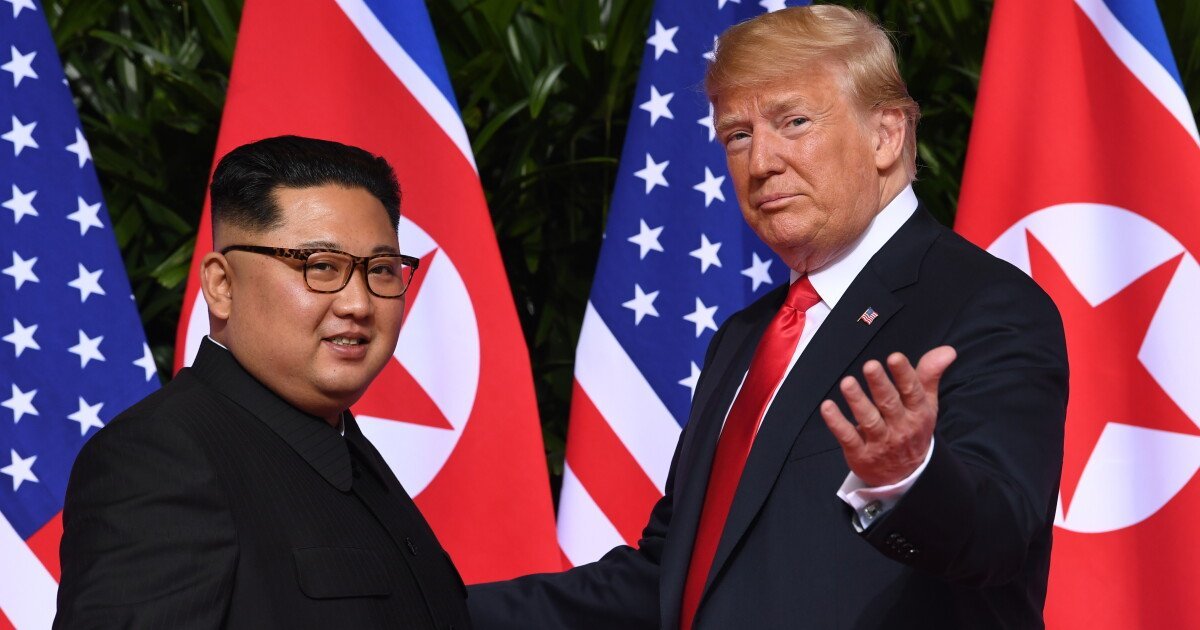
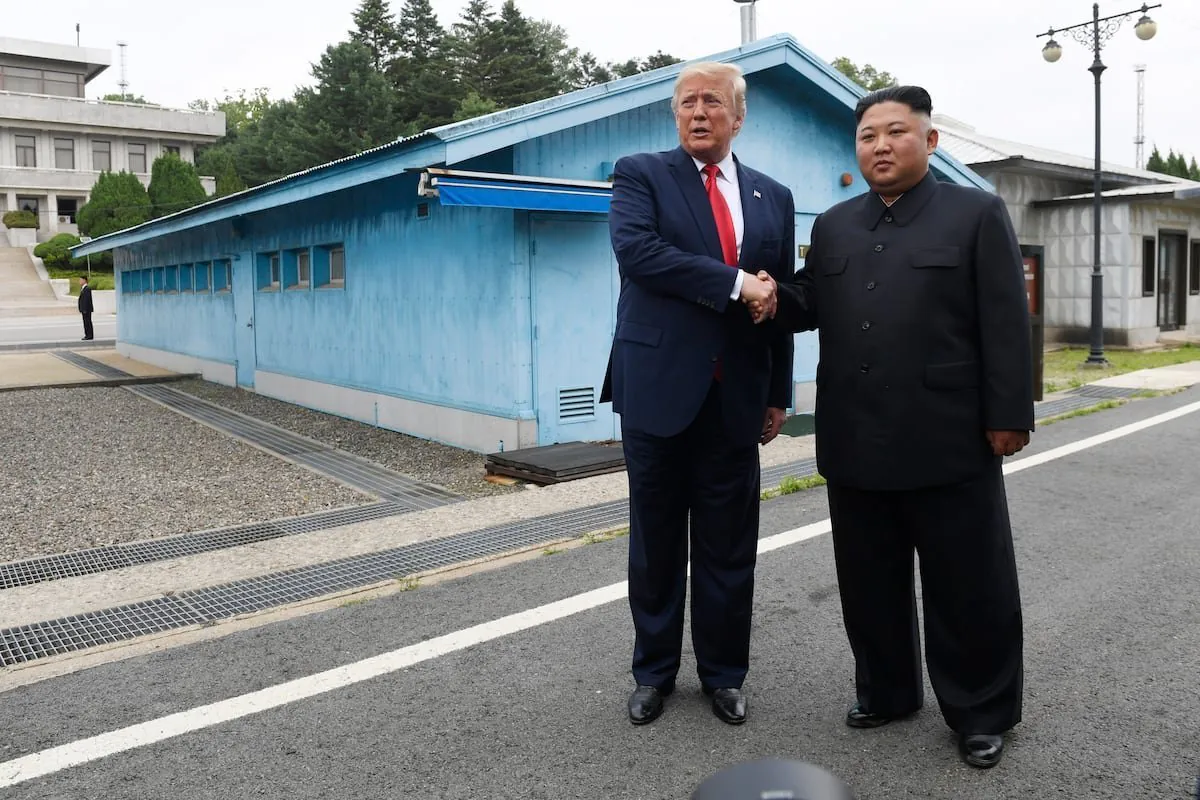
- The move is seen as a concession to North Korea’s Kim Jong Un, with whom Trump claims to have a “very good relationship.”
- Experts warn that the decision could embolden North Korea and undermine the US-South Korea alliance, which has been in place for over 70 years.
- The reduction in military exercises comes as North Korea has launched short-range ballistic missiles and threatened “stern steps” against the US and South Korea.
The news broke on Sunday evening, just hours before the joint military exercises were set to begin, when Trump posted a statement on his Truth Social page announcing the decision.
The commander-in-chief cited his “very good relationship” with Kim Jong Un as the reason for scaling back the exercises, which have been a cornerstone of the US-South Korea alliance for decades.
According to Trump, the exercises were “costly” and sent a “totally inappropriate and hostile” signal to North Korea.
He also claimed that South Korea had declined to help the US in its efforts to denuclearize Iran, saying they had responded with a simple “no thanks!”
The decision has been met with sharp criticism from lawmakers and defense officials, who argue that it undermines the US-South Korea alliance and emboldens North Korea.
Democratic Senator Mark Kelly, a former Navy pilot, called the move “shortsighted and a mistake,” while Senator Andy Kim, the first Korean-American senator, expressed concern that the decision suggests a disregard for the US-South Korea relationship.
Pentagon officials were also reportedly taken aback by the announcement, which came without warning.
The US and South Korean militaries have held joint exercises for over 70 years, and the decision to scale back these exercises is seen as a significant shift in US policy.
The joint exercises were set to begin on Monday, with 18,000 South Korean soldiers participating in 11 days of training.
The exercises were designed to simulate combat against North Korean troops and reflect the changing character of war, including the increased use of drones, electronic warfare, and cyber operations.
Colonel Ryan Donald, director of public affairs for Combined Forces Command, United Nations Command, and US Forces Korea, told reporters that the exercises were crucial for maintaining the readiness of US and South Korean forces against the North Korean threat.
“DPRK soldiers have deployed and fought in Ukraine and they’ve taken those lessons they’ve learned there and brought them back to North Korea,” he said. “That changes the DPRK capability and our training accounts for that threat.”
Analysis: What This Means for Australia
The decision to scale back joint military exercises with South Korea has significant implications for Australia’s national security. As a key ally of the US, Australia relies on the US-South Korea alliance to maintain stability in the region.
The reduction in military exercises could embolden North Korea and create a power vacuum in the region, which could have far-reaching consequences for Australia’s security and prosperity.
Security analysts say that the decision could also have implications for Australia’s own military relationships in the region.
“If the US is willing to scale back its military exercises with South Korea, it could set a precedent for other countries in the region,” said one analyst.
“This could have significant implications for Australia’s military relationships with countries like Japan and Indonesia.”
Law enforcement insiders warn that the decision could also have consequences for Australia’s counter-terrorism efforts. “North Korea’s nuclear and missile programs are a significant threat to regional security,” said one insider.
“If the US is not taking a strong stance against North Korea, it could embolden other terrorist groups in the region.”
Industry observers believe that the decision could also have economic implications for Australia. “The US-South Korea alliance is crucial for maintaining stability in the region, which is important for trade and investment,” said one observer.
“If the alliance is undermined, it could have significant economic consequences for Australia.”
As the situation continues to unfold, one thing is clear: Trump’s decision to scale back joint military exercises with South Korea has significant implications for Australia’s national security, law enforcement, and economic interests.