
‘Cocaine Off Naked Women’ and Secret Offshore Cash: Masked Witness Lifts the Lid on Alleged Union Corruption and Debauchery as Questions Swirl Over Brisbane’s $7 Billion Olympic Build
- A construction insider testifying under a pseudonym from a hidden location described a 2010 Gold Coast hotel party where he says drugs, nudity and gambling were rife.
- He claims a subcontractor bankrolled the event as a thank-you for work and paid CFMEU officials for advance information about upcoming jobs.
- The witness outlined an alleged plot to move cash through fake overseas equipment purchases, with phantom shipping containers and foreign credit cards.
- He says he met representatives of major builders now delivering Brisbane 2032 Olympic venues. None of the companies has been accused of wrongdoing.
His voice was electronically distorted. His location was kept secret.
His real name was withheld for his own safety.
What the man known only as “Ian Doyle” told Queensland’s inquiry into the CFMEU on Wednesday may be the most lurid account yet of the culture that critics say has festered inside the state’s construction industry for years.
His claims are explosive and have not been tested. Even so, they arrive as Queensland pours billions of taxpayer dollars into building the venues for the 2032 Olympic and Paralympic Games.
The veteran builder gave evidence to a closed hearing, which was streamed online on a delay so his identity stayed hidden. He described a company the inquiry has named only as “Subcontractor A”.
According to Doyle, that firm paid officials of the Construction, Forestry and Maritime Employees Union in return for early information about projects in the pipeline. That kind of intelligence could hand a contractor a decisive advantage in a fiercely competitive market.
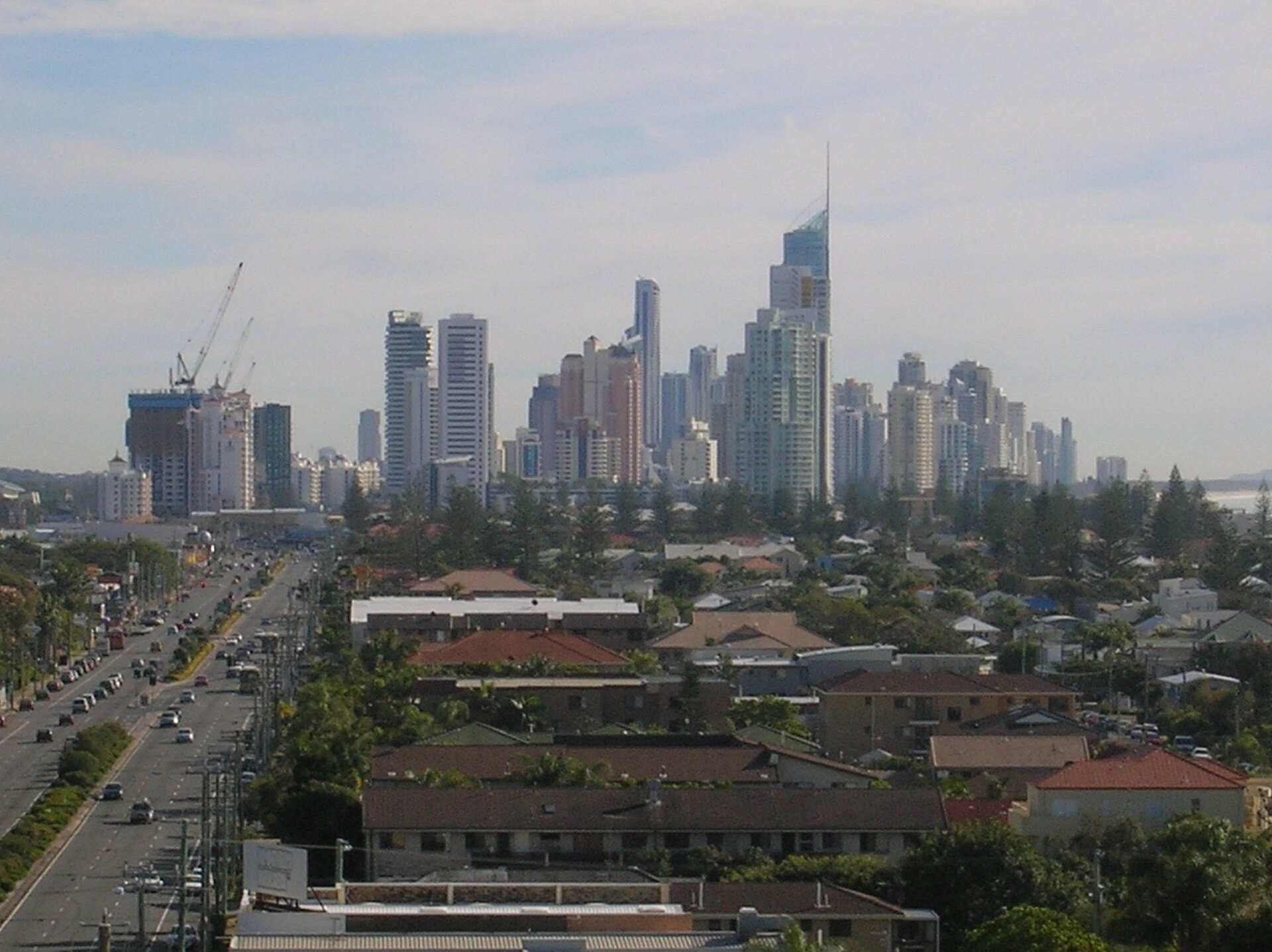
The centrepiece of his testimony was a party in 2010, when he says Subcontractor A booked an entire floor of a Surfers Paradise hotel.
He told the inquiry what he saw there. Women were topless or entirely naked.
Alcohol flowed freely. Guests, he said, were snorting cocaine from the bodies of naked women.
Sexual activity took place in front of others.
People also bet on a degrading game in which a naked woman was made to push a ping-pong ball along the hotel corridor using her genitals.
Doyle said there was marijuana, blue pills piled on a dish and other tablets in blister strips. Above all, he said, there was cocaine, and it was everywhere.
He described the crowd as an unsettling mix. Some guests resembled bikies.
Some looked like respectable businessmen. Others, in his words, seemed like ordinary people.
Doyle said the event was a reward.
In his account, Subcontractor A had recently landed a major Queensland event, and the party was its way of thanking those who had helped it win that work and might steer more its way.
He said he was introduced to people representing some of the country’s biggest construction names, including Multiplex, Lendlease, Hutchinson Builders and BMD. He also said staff from Gold Coast City Council attended.
He said he met union figures too. These included senior Queensland CFMEU officials, organisers from the Builders Labourers Federation, a senior organiser from the union’s Victorian branch and numerous shop stewards.
Doyle’s most serious financial allegation concerned what he described as a cross-border scheme involving subcontractors in Queensland and Victoria.
He said the plan was to buy equipment from overseas suppliers and pay large sums for shipping containers that would arrive empty, or never arrive at all.
The money would sit in foreign accounts.
Union officials would then be given credit cards linked to those accounts, so they could withdraw the cash in Australia without it appearing on local books.
The funds, he said, were shared among union officials and anyone else the organisers chose to reward.
The testimony did not come out of nowhere.
The CFMEU’s construction division was placed into federal administration in 2024 after media investigations alleged links between union figures, bikie gangs and organised crime, particularly in Victoria.
That intervention pushed union corruption back to the top of the national agenda. It followed years of warnings from earlier royal commissions and regulators about intimidation, kickbacks and lawlessness on building sites.
Queensland launched its own inquiry to test whether the rot ran north.
Doyle’s mention of a senior Victorian organiser at a Gold Coast party, and his claim that the alleged payment scheme spanned both states, will sharpen fears that any misconduct was not confined to one branch.
Analysis: What This Means for Australia
The biggest issue is money, and specifically public money.
Lendlease is building the athletes’ village at Bowen Hills. Hutchinson Builders is delivering the Brisbane Showgrounds arena.
BMD has carried out early works at the Victoria Park stadium site. These are signature projects for Brisbane 2032, funded by Queensland and federal taxpayers.
It must be stressed that Doyle did not accuse these companies of wrongdoing. He said only that he met people representing them at the party.
But any suggestion that contracts in the sector have been shaped by favours, inside information or illicit payments will raise questions about whether the public is getting value for money.
The economic stakes go beyond the Games. Corruption inflates costs, and those costs flow into housing affordability, hospital and school construction, and transport projects already stretched by construction costs and labour shortages.
The alleged offshore scheme also raises questions for law enforcement and national financial integrity.
Fake import transactions and foreign-linked credit cards are textbook money-laundering methods, the kind the AUSTRAC financial intelligence agency and the Australian Federal Police are tasked with detecting.
For communities, the reported presence of bikie-like figures at an industry gathering will deepen concern about organised crime gaining a foothold in an industry that builds the homes and infrastructure Australians rely on.
Governance experts say that if inside information was being traded for cash, honest contractors were effectively shut out. That damages competition and puts smaller firms out of business.
Law enforcement insiders warn that schemes built on phantom imports are notoriously difficult to unwind, especially when the money passed through foreign jurisdictions more than a decade ago.
Proving the claims in court, they say, would require painstaking work to trace the money.
Industry observers believe the testimony will add pressure for tougher probity checks on Olympic contracts, including closer scrutiny of subcontractor relationships, which they describe as the least transparent part of major builds.
Security analysts say the elaborate measures taken to protect Doyle, including voice masking, a secret location and a delayed broadcast, show how seriously authorities view the risk of retaliation against people who speak out.
Labour relations specialists caution that the events Doyle described happened in 2010. The union has since been placed under external control, and testimony to an inquiry is not a finding of guilt.
The inquiry continues.
For a state preparing to welcome the world in 2032, the evidence it hears in the coming months may matter as much as the venues it is building.