One Nation’s Shocking Rise to Power: What This Means for Australia’s Future
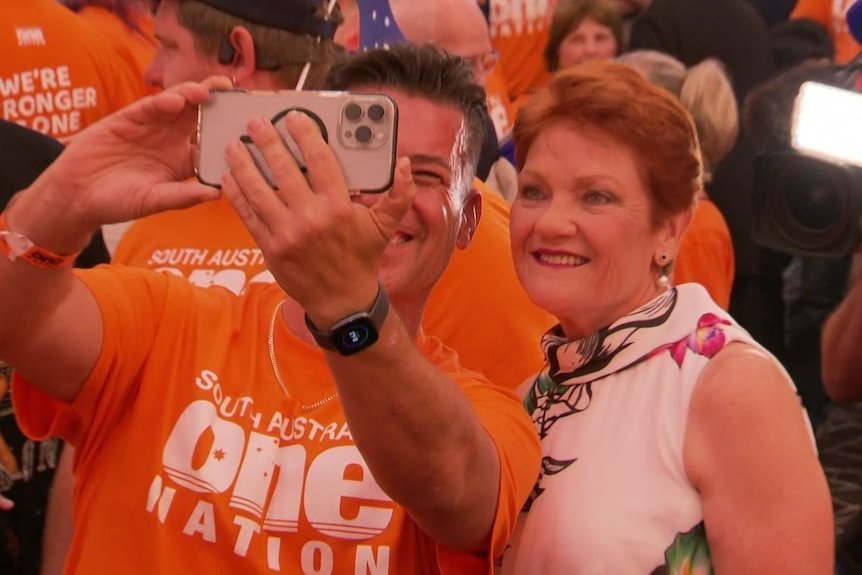
- Pauline Hanson’s One Nation party has secured seats in both houses of South Australia’s parliament, with counting revealing a significant swing towards the party.
- Voters cite frustration with the two-party system and concerns over migration as key reasons for their support.
- The party’s success has been met with warnings from the Greens and Labor, who accuse One Nation of promoting simplistic solutions and racist policies.
The Australian political landscape has been shaken to its core as Pauline Hanson’s One Nation party has made a stunning breakthrough in the South Australian election.
With counting still underway, it’s clear that the party has secured seats in both houses of parliament, marking a significant shift in the nation’s political landscape.
So, what’s behind One Nation’s sudden rise to power? For many voters, it’s a simple matter of frustration with the two-party system.

Garry Houlahan, a former Labor voter, made the switch to One Nation, citing a desire for change. “As you get older, you become a bit more conservative – you have a family and kids and things like that.
It changes your outlook.”
Migration has also emerged as a key concern for One Nation supporters. Julie Hayles, a long-time Pauline Hanson fan, believes that the country’s immigration policies are flawed.
“Bringing in hundreds of thousands of people a year is not working,” she said. “If you’re for Australian values and equality for all Australians, that’s certainly not racist.”
But it’s not just voters who are driving One Nation’s success. The party’s leader, Cory Bernardi, has been instrumental in shaping its policy platform.
When asked about federal One Nation MP Barnaby Joyce’s comments comparing migration to “buying cattle,” Bernardi defended the stance, saying, “Shouldn’t we be saying we want the best and brightest to come here rather than just the teeming hordes of people who come here for welfare?”
Analysis: What This Means for Australia
The rise of One Nation has significant implications for Australia’s national security, law enforcement, and community safety.
The party’s hardline stance on immigration and border control is likely to spark heated debates in parliament, with critics accusing them of promoting racist and divisive policies.
Security analysts warn that One Nation’s policies could lead to increased tensions between different community groups, potentially sparking social unrest. “The party’s rhetoric is inflammatory and dangerous,” said one expert.
“It’s a slippery slope when you start demonising entire groups of people.”
Law enforcement insiders are also concerned about the potential consequences of One Nation’s policies. “We need to be careful not to create an ‘us versus them’ mentality,” said one senior officer.
“That kind of rhetoric can lead to increased radicalization and violence.”
Industry observers believe that One Nation’s success could have far-reaching economic consequences, particularly in terms of trade and investment. “The party’s protectionist policies could lead to increased tariffs and trade barriers, which would be disastrous for our economy,” said one expert.
As the dust settles on the South Australian election, one thing is clear: Pauline Hanson’s One Nation party is here to stay. But what does this mean for Australia’s future?
Only time will tell, but one thing is certain – the country is in for a wild ride.