
Australia’s ‘Worst Ever’ Free Trade Deal with EU Sparks Outrage Among Farmers and Industry Leaders
- Farmers slam deal as “worst ever” and warn of “decades” of disadvantage
- Red meat exporters to be hit hard, with limited access to EU market
- Wine industry celebrates tariff-free exports, but others feel left behind
The Australian government’s freshly minted free trade agreement with the European Union has sparked outrage among farmers and industry leaders, who claim it will disadvantage exporters to the EU for “decades to come”.
The deal, which has been eight years in the making, has been labelled the “worst ever” by peak farming bodies, who say it fails to deliver meaningful access to the EU market.
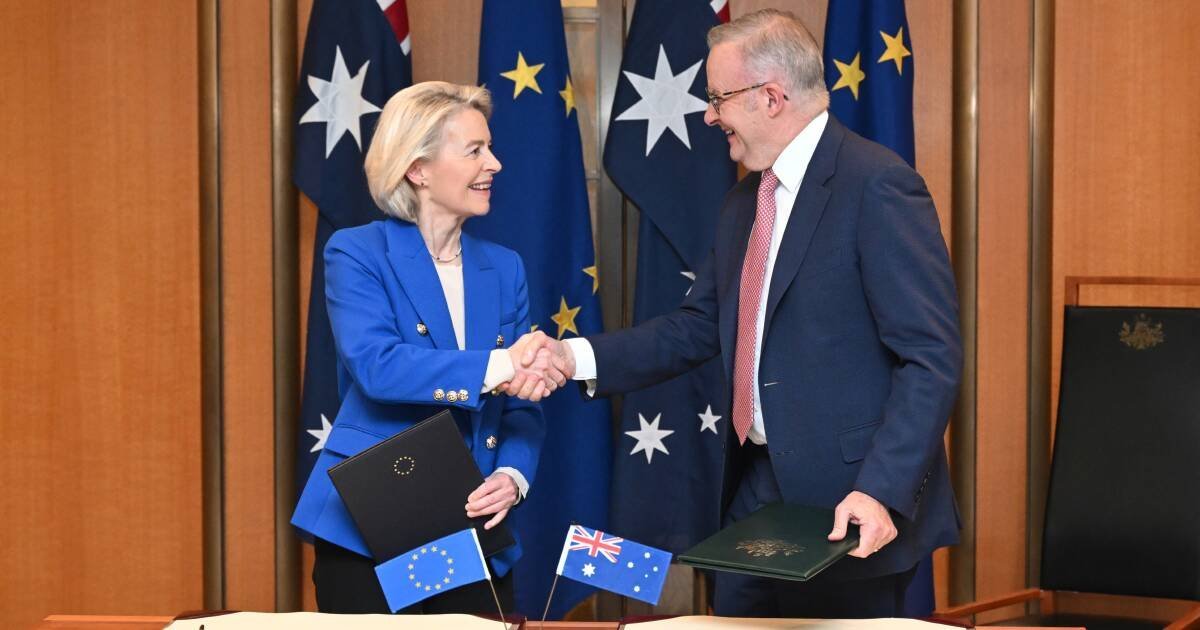
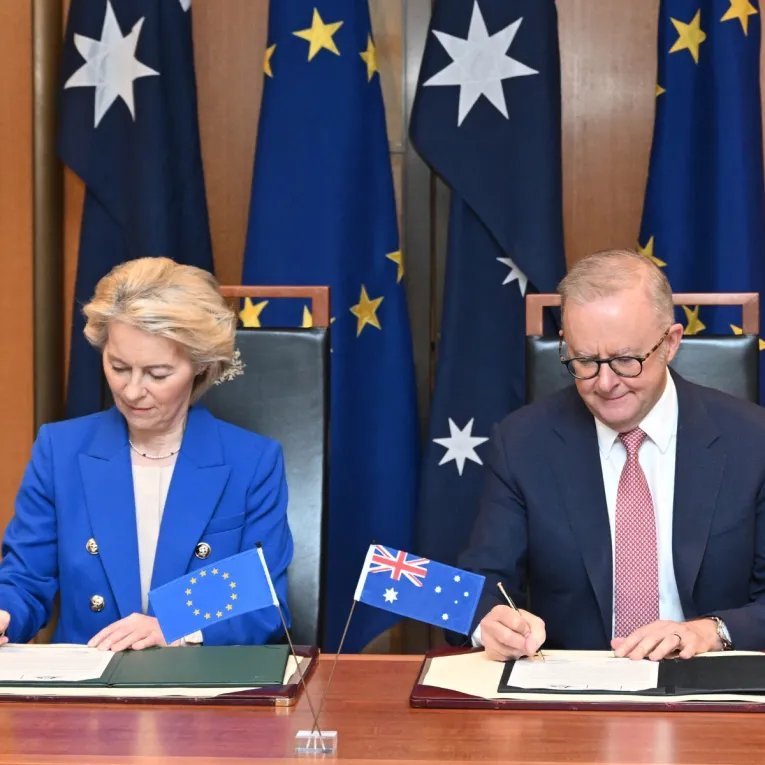
The agreement, announced by EU President Ursula von der Leyen and Australian Prime Minister Anthony Albanese, has been welcomed by some industry groups, but others are furious about the limited access to the EU market.
Red meat exporters, in particular, will be hit hard, with the deal allowing for only an additional 30,600 tonnes of beef and 25,000 tonnes of lamb to be exported to the EU.
This is well short of the 50,000 tonnes of beef and 67,000 tonnes of lamb the industry had been asking for.
The National Farmers’ Federation (NFF) has expressed its disappointment, saying the deal will leave farmers without meaningful access to the EU market.
“What the Australian government has accepted today appears to offer no material change for key agricultural commodities as what the government rightly rejected in October 2023,” NFF president Hamish McIntyre said.
“We are concerned the EU has offered sub-par access for Australian producers while potentially needing to deploy billion-dollar subsidies to get their producers to accept the deal.”
Analysis: What This Means for Australia
This deal has significant implications for Australia’s national security and economy.
The limited access to the EU market will disadvantage Australian exporters, making it harder for them to compete with other countries that have secured better deals.
This could lead to a decline in exports, which would have a negative impact on the economy. Furthermore, the deal’s failure to address the issue of agricultural subsidies could lead to an influx of cheap imports, threatening the viability of Australian farmers.
Security analysts say the deal’s shortcomings could also have implications for Australia’s food security. With the country relying heavily on imports, a disruption to the supply chain could have serious consequences.
“The failure to secure better access to the EU market could lead to a reliance on imports, which would compromise our food security,” said one analyst.
Law enforcement insiders warn that the deal’s weaknesses could also be exploited by criminal organizations, who could use the lack of regulation to their advantage. “The deal’s failure to address the issue of subsidies could create an environment where criminal organizations could thrive,” said one insider.
Industry observers believe the deal’s shortcomings could also have a negative impact on Australia’s reputation as a trade partner.
“The failure to secure a better deal could damage our reputation as a reliable trade partner, making it harder for us to negotiate better deals in the future,” said one observer.
As the dust settles on this deal, it’s clear that there are many unanswered questions. How will this deal affect Australian exporters?
Will it lead to a decline in exports? What are the implications for our national security and economy?
Only time will tell.
Meanwhile, the wine industry is celebrating its tariff-free exports, which are expected to deliver $14.5 million in savings each year.
The deal also secured the right for Australian producers to continue to use the term “Prosecco” in the Australian market to describe a sparkling wine, although exporters will no longer be able to use the term outside the country after a 10-year phase-out period.
Car dealers are also disappointed, as the deal failed to deliver on substantial changes to the luxury car tax. The Australian Automotive Dealer Association (AADA) had been hoping for broader reform, but the changes will only help about 1 per cent of the market.
The peak body for Australian canegrowers has also slammed the announcement, labelling it a “complete failure” that would provide “no meaningful access” to the EU.
Under the agreement, the industry will be able to export an additional 35,000 tonnes of raw cane sugar for refining, falling short of clear industry expectations.
Australian Dairy Farmers president Ben Bennett said the deal could result in a flood of cheap imports. “We have a tariff to hold back the tsunami of cheese from Europe.
Now that’s going to disappear,” he said.
As the fallout from this deal continues to unfold, one thing is clear: Australia’s farmers and industry leaders are not happy. The question is, what does this mean for Australia’s future trade deals?
Only time will tell.