Japan Pledges to Keep Fuel Flowing to Australia as Strait of Hormuz Blockade Sparks Global Concerns
- Australia’s fuel security is set to be bolstered by Japan’s assurance to maintain normal supply levels despite the Strait of Hormuz blockade.
- The pledge comes as Japanese Prime Minister Sanae Takaichi plans a visit to Australia to discuss the crisis and rare-earth minerals.
- Australia’s fuel reserves are currently at 39 days’ worth of petrol, 29 days’ worth of diesel, and 30 days’ worth of jet fuel, sparking concerns about the country’s reliance on international supply chains.
- Experts warn that the blockade could lead to a global fuel shortage, with Asian markets already signaling a need to look for alternative crude oil sources.
The Australian government has been working to shore up fuel security and supply networks in the region, with Assistant Trade and Foreign Affairs Minister Matt Thistlethwaite confirming that he had met with his Japanese counterpart to request continued supply.
“I met last week with the Japanese minister and requested that supply continue,” Mr Thistlethwaite said. “They’ve given us an assurance that normal supply will continue.”
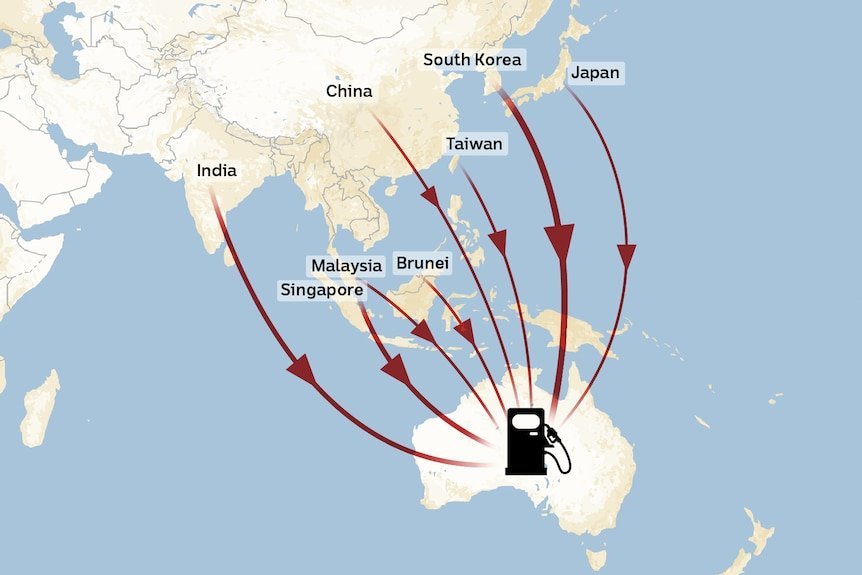
The assurance from Japan is a significant boost to Australia’s fuel security, with the country currently sourcing just 0.7 per cent of its petrol and 6.8 per cent of its diesel from Japan.
The bulk of Australia’s fuel comes from Singapore and South Korea.
The Strait of Hormuz blockade has sparked global concerns about fuel security, with about a fifth of the world’s oil supply normally shipped through the strait.


Asian markets are already signaling a need to look for alternative crude oil sources, including Russia, if the strait remains closed.
Analysis: What This Means for Australia
The Strait of Hormuz blockade has significant implications for Australia’s national security and fuel security. The country’s reliance on international supply chains has been exposed, and experts warn that the blockade could lead to a global fuel shortage.
“Australia’s ability to rely on international supply chains to get our liquid fuels has gone down significantly,” said Senator Dave Sharma, shadow assistant minister for international development.
Security analysts say that the blockade highlights the need for Australia to diversify its fuel sources and reduce its reliance on international supply chains. “Australia needs to take a more proactive approach to securing its fuel supplies,” said one analyst.
Law enforcement insiders warn that the blockade could also lead to an increase in fuel smuggling and other illicit activities. “The blockade creates an opportunity for criminal organizations to exploit the situation and engage in fuel smuggling and other illicit activities,” said one insider.
Industry observers believe that the blockade will have significant economic and social consequences for Australia, particularly if the country is unable to secure alternative fuel sources.
“The blockade could lead to significant economic and social disruption, particularly if Australia is unable to secure alternative fuel sources,” said one observer.
As the situation continues to unfold, the Australian government will need to take a proactive approach to securing its fuel supplies and reducing its reliance on international supply chains.
The visit by Japanese Prime Minister Sanae Takaichi will be closely watched, and the assurance from Japan to maintain normal supply levels will be seen as a significant boost to Australia’s fuel security.
However, experts warn that the blockade is a wake-up call for Australia and highlights the need for the country to take a more proactive approach to securing its fuel supplies.
“Australia needs to take a more proactive approach to securing its fuel supplies and reducing its reliance on international supply chains,” said one analyst.