Terrifying Earthquake Rocks Remote Australian Community: ‘Equivalent to 1989 Newcastle Disaster’
- A magnitude-5.5 earthquake struck near the South Australia-Northern Territory border, sending shockwaves through a remote community and sparking fears of aftershocks.
- Senior seismologist Jonathan Bathgate warned that the area could experience “smaller” aftershocks, with several already recorded, including a magnitude-2.8 shock.
- The quake’s magnitude was equivalent to the devastating 1989 Newcastle earthquake, which killed and injured dozens, and created a $4 billion damage bill.
- The region has a seismic history, with a magnitude-5.4 shock recorded in 2012 and a magnitude-6.1 earthquake in 2016, which left a 20-kilometre-long fault scarp in the landscape.
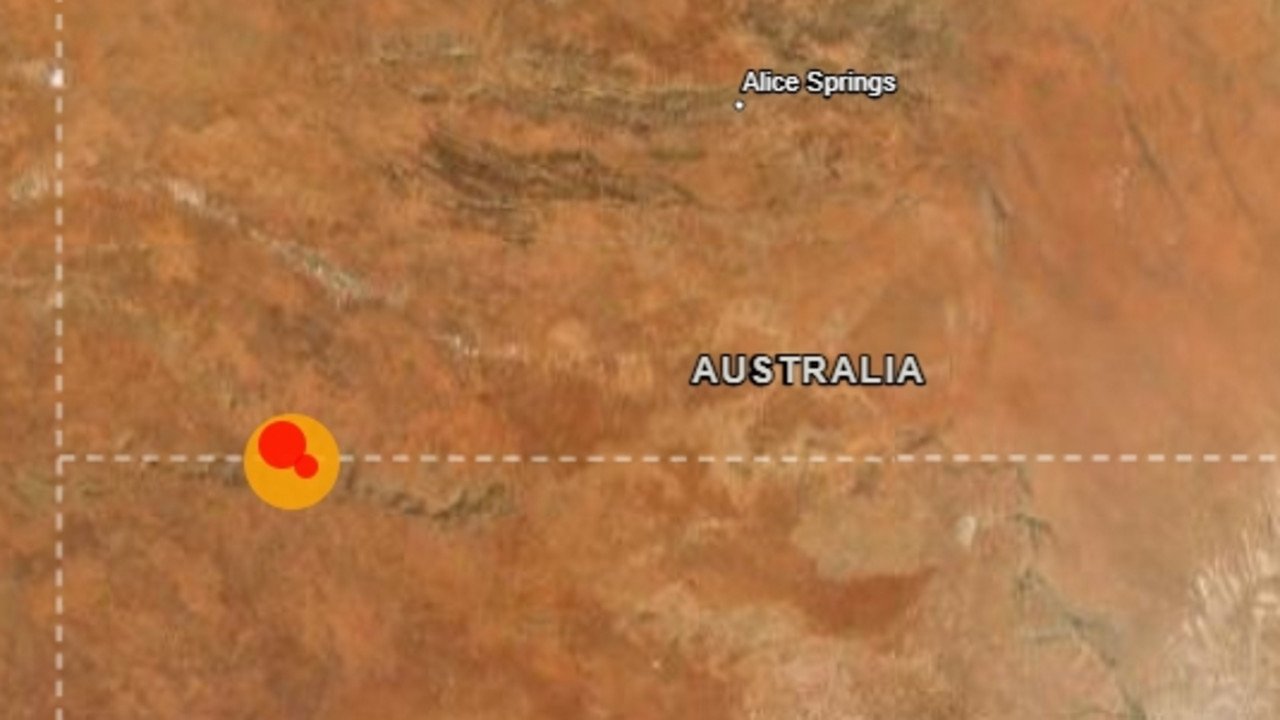
The early morning earthquake that shook the remote community of Amata, formerly Musgrave Park, near the South Australia-Northern Territory border, has sent shockwaves through the region, with fears of aftershocks sparking concern among residents.
According to Geoscience Australia senior seismologist Jonathan Bathgate, the magnitude-5.5 earthquake, which struck at 3:56am on Sunday, was equivalent to the devastating 1989 Newcastle earthquake, which killed and injured dozens, and created a $4 billion damage bill.
“It woke a number of people up from Yulara and around the region with some light to moderate shaking,” Bathgate told 891 ABC Adelaide.
“Some light fixture swinging from the ceiling and some things rattling from shelves and that sort of thing, so it was a bit of an early morning wake-up for quite a few people.”
Several people on social media reported being woken up by the quake in Yulara, Uluru, and Mutitjulu, with some describing the experience as “terrifying” and ” intense”.




The region has a seismic history, with a magnitude-5.4 shock recorded in 2012 and a magnitude-6.1 earthquake in 2016, which left a 20-kilometre-long fault scarp in the landscape.
Bathgate warned that the area could experience “smaller” aftershocks, with several already recorded, including a magnitude-2.8 shock.
“Generally, with an aftershock sequence, they become less frequent and smaller as time progresses, but it doesn’t rule out another larger earthquake in amongst that sequence as well, so it’s difficult to predict,” he said.
Analysis: What This Means for Australia
The earthquake has raised concerns about the region’s seismic activity and the potential for future earthquakes. Security analysts say that the quake highlights the need for emergency preparedness and response plans in remote communities.
“The earthquake is a reminder that Australia is a seismically active country, and we need to be prepared for earthquakes and other natural disasters,” said one analyst.
“The fact that the quake occurred in a remote area highlights the need for emergency response plans that take into account the unique challenges of remote communities.”
Law enforcement insiders warn that the quake could also have implications for border security, particularly in remote areas where surveillance and monitoring may be limited.
“The earthquake highlights the need for increased surveillance and monitoring in remote areas, particularly along the South Australia-Northern Territory border,” said one insider. “We need to ensure that we have the resources and infrastructure in place to respond quickly and effectively in the event of an emergency.”
Industry observers believe that the quake could also have economic implications, particularly for the tourism industry, which is a significant contributor to the regional economy.
“The earthquake is a reminder that natural disasters can have a significant impact on the economy, particularly in regions that are reliant on tourism,” said one observer.
“We need to ensure that we have plans in place to mitigate the impact of natural disasters and support affected businesses and communities.”
As the region continues to experience aftershocks, residents are being urged to remain vigilant and take necessary precautions to ensure their safety.