Albanese’s High-Stakes Mission to Singapore: Can Australia Secure Its Fuel Future as Global Energy Crisis Deepens?
- Australia’s fuel supplies are under threat as the Iran war exposes the country’s vulnerability to global energy shocks.
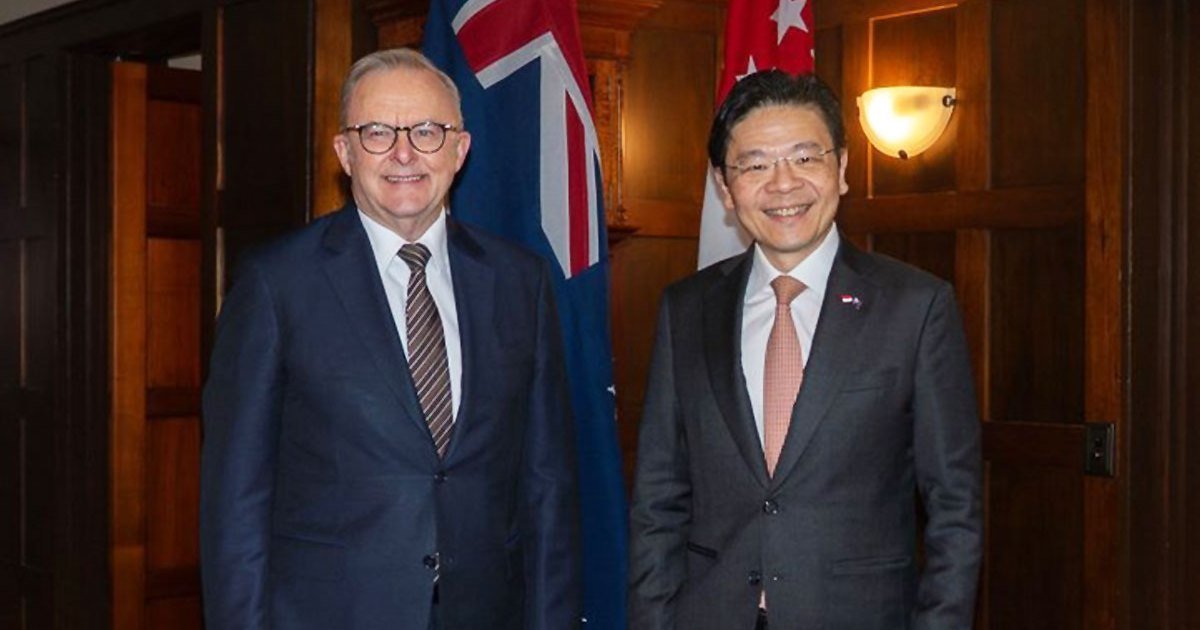
- Prime Minister Anthony Albanese is flying to Singapore for a one-on-one meeting with his counterpart Lawrence Wong to secure crucial fuel supplies.
- Singapore is Australia’s biggest supplier of unleaded petrol, but its refineries are operating at reduced capacity due to the Strait of Hormuz crisis.
- Australia’s fuel imports are being redirected from Asia to the Gulf of Mexico, Sudan, and the UK, adding time and cost to the cargoes.
Australia’s fuel crisis has reached a critical juncture, with Prime Minister Anthony Albanese embarking on a high-stakes mission to Singapore to secure the country’s fuel future.
The Iran war has exposed Australia’s vulnerability to global energy shocks, and the government is scrambling to shore up fuel supplies. As an island nation, Australia imports 90% of its liquid fuels, with Singapore being its biggest supplier of unleaded petrol.
The situation is dire, with Singapore’s refineries operating at reduced capacity due to the Strait of Hormuz crisis.

The three refineries on Jurong Island, which process up to 1.5 million barrels of crude oil a day, have been forced to temporarily cut back production.
This has led to a shortage of fuel supplies, with Australia’s fuel imports being redirected from Asia to the Gulf of Mexico, Sudan, and the UK.



The added costs of these redirected shipments are being passed onto consumers, and the Australian government has agreed to underwrite future fuel shipments to reduce the risk for importers.
However, this is a temporary solution, and the longer the conflict drags on, the more precarious the position will become.
As Malcolm Roberts, CEO of the Australian Institute of Petroleum, warned, “The longer this war continues, the more refineries in Asia that’ll begin to reduce output, and the greater the risk is some countries will put in place export restrictions.”
The crisis has also highlighted Australia’s reliance on its trading partners and global energy giants. The government can only do so much to shield Australians from the worst of it, and the country is at the mercy of its suppliers.
As Anthony Patten, a Singapore-based energy lawyer, noted, “There may be encouragement as a result of that meeting from the Singaporean side, to each of the producers as to the importance of the relationship…
but it would be more soft comfort, soft support, rather than expecting anything directive.”
Analysis: What This Means for Australia
The fuel crisis has significant implications for Australia’s national security, law enforcement, and community safety.
The country’s reliance on imported fuel makes it vulnerable to global energy shocks, and the government must take steps to diversify its fuel supplies and reduce its dependence on Singapore.
The crisis also highlights the need for greater investment in renewable energy and energy efficiency measures.
Security analysts say that the crisis has exposed weaknesses in Australia’s fuel supply chain and that the government must take steps to address these vulnerabilities. Law enforcement insiders warn that the crisis could lead to increased crime and social unrest, particularly if fuel prices continue to rise.
Industry observers believe that the crisis will have significant economic and social consequences for Australia, particularly if the conflict drags on.
As the situation continues to unfold, one thing is clear: Australia’s fuel future is at stake, and the government must take decisive action to secure it.
The prime minister’s mission to Singapore is a critical step in this process, but it is only the beginning. The country must work to diversify its fuel supplies, invest in renewable energy, and reduce its dependence on imported fuel.
Only then can Australia ensure a secure and sustainable fuel future.